
Few sounds worry a French Bulldog owner more than a dog bringing something up. But not everything that comes out of a Frenchie’s mouth is true vomiting. French Bulldog vomiting and regurgitation look similar on the floor, yet they have different causes, and telling them apart helps your vet work out what is going on. This guide explains the difference, why flat-faced breeds are especially prone to regurgitation, the common causes of vomiting, and the red flags that mean you should call your vet right away.
Key takeaways
- Vomiting is active, with heaving and retching. Regurgitation is passive, with no abdominal effort.
- Regurgitated food is usually undigested and often comes up soon after eating or drinking.
- In one study, most French Bulldogs referred for BOAS also had gastrointestinal signs such as regurgitation.
- Repeated vomiting, blood, a bloated belly, lethargy or a vomiting puppy all need prompt vet care.
- If you suspect a toxin or swallowed object, call your vet right away. Don’t wait for more signs.
Vomiting vs. regurgitation: what’s the difference?
Veterinary sources describe vomiting as an active process. The Merck Veterinary Manual defines it as the forceful ejection of the contents of the stomach and upper small intestine, which requires contractions of the abdominal muscles. In practice, you will usually see warning signs first: restlessness, drooling, lip licking, and then visible heaving as your dog’s belly contracts.
Regurgitation is passive. According to Merck, it does not require effort or contraction of the abdominal muscles, and VCA Animal Hospitals notes that it typically happens without warning, often right after eating or drinking. Because the food usually hasn’t reached the stomach (or hasn’t stayed there long), it tends to come back up undigested. Merck notes that regurgitated food may be cylindrical, reflecting the shape of the esophagus, and that coughing and breathing difficulties are more commonly associated with regurgitation than with vomiting.
PDSA adds a third term worth knowing: retching, which means gagging or heaving without bringing anything up. Continuous retching is a reason to contact your vet immediately.
| Feature | Vomiting | Regurgitation |
|---|---|---|
| Effort | Active: heaving, abdominal contractions | Passive: food just “falls out” with little or no effort |
| Warning signs | Often drooling, lip licking, restlessness, retching first | Usually little or no warning |
| Timing | Can happen at any time, not necessarily linked to meals | Often soon after eating or drinking |
| What comes up | Partly digested food, fluid, sometimes yellow bile | Undigested food, water or foam, sometimes tube-shaped |
| Where the problem usually lies | Stomach, intestines or a whole-body illness | Mouth, throat or esophagus |
| Other clues | May come with diarrhea, appetite loss or lethargy | May come with coughing, gagging or noisy breathing |
The distinction is not always clear-cut, and some dogs do both. You don’t need to make the diagnosis yourself; an accurate description is what helps your vet most.
Why French Bulldogs regurgitate so often: the BOAS link
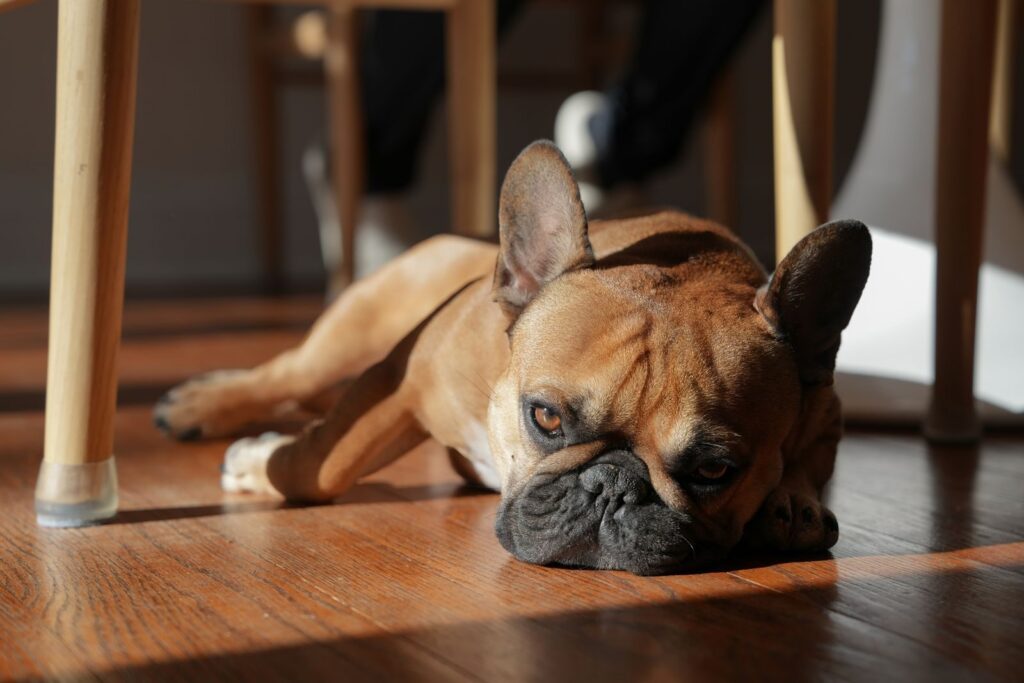
French Bulldogs are a brachycephalic (flat-faced) breed, and many have some degree of brachycephalic obstructive airway syndrome, or BOAS. Most owners think of BOAS as a breathing problem, but it often affects the digestive tract too. VCA Animal Hospitals explains that brachycephalic dogs can develop gastroesophageal reflux, where stomach contents flow back into the esophagus, and that dogs with gastrointestinal effects may show retching, vomiting or a poor appetite.
Research backs this up. A 2018 study in the Journal of Small Animal Practice looked at 98 French Bulldogs, English Bulldogs and Pugs referred to a teaching hospital for brachycephalic airway syndrome, grading drooling, regurgitation and vomiting. Gastrointestinal signs were found in 93% of the French Bulldogs, compared with 58% of English Bulldogs and 16% of Pugs. After corrective airway surgery, gastrointestinal signs improved across the study group, especially in the French Bulldogs. These were dogs referred for airway problems, so the figures don’t apply to every Frenchie, but they show how closely airway and gut are linked in this breed.
If your Frenchie often brings up food or foam after meals, excitement or exercise, mention it to your vet along with any breathing noises, snoring or tiring quickly on walks. Our guide to BOAS and breathing problems in French Bulldogs explains the signs, severity grades and treatment options.
Common causes of French Bulldog vomiting
True vomiting has a long list of possible causes. VCA groups them into minor and more serious causes, and Merck and PDSA list many of the same conditions.
Often minor (but still worth watching)
- Dietary indiscretion: eating garbage, table scraps or something found on a walk.
- Food intolerance: some dogs react to particular foods. PDSA also lists food allergies as a cause.
- Intestinal parasites.
- Sudden diet changes: switching foods abruptly can upset the stomach. See our guide to the best food for French Bulldogs for how to change foods gradually.
More serious
- Toxins and poisons: including toxic human foods. Our list of human foods French Bulldogs can and can’t eat covers the most dangerous ones.
- Foreign bodies: toys, bones, corn cobs or other objects that cause an intestinal blockage.
- Bacterial or viral infections, including parvovirus in puppies that are not fully vaccinated.
- Pancreatitis, which can follow a fatty meal.
- Liver or kidney disease.
- Inflammatory bowel disease and, less commonly, cancer.
- Reactions to medication, which PDSA lists as a possible cause.
Because the causes range from trivial to life-threatening, your dog’s overall condition matters as much as the vomiting itself.
When to worry: red flags that need urgent vet care
Contact your vet promptly, or an emergency clinic out of hours, if your French Bulldog shows any of the following:
- Repeated or continuous vomiting, rather than a single episode.
- Blood in the vomit or bloody diarrhea.
- A bloated or swollen belly, or continuous unproductive retching. PDSA warns these can be signs of gastric dilatation-volvulus (GDV, a twisted stomach), a life-threatening emergency.
- Lethargy, weakness, collapse or disorientation.
- Signs of dehydration, such as sticky or tacky gums or sunken eyes, or being unable to keep water down.
- A painful belly, fever or loss of appetite.
- A suspected toxin or swallowed object, even if your dog seems fine for now. Don’t try to make your dog vomit unless a vet or poison control professional tells you to.
- A vomiting puppy. A Texas A&M veterinarian notes that puppies become dehydrated very quickly, so more than one or two episodes of vomiting or diarrhea in a young dog needs veterinary care. Parvovirus can kill unvaccinated puppies within 24 hours without supportive care. Check where your puppy is in their vaccination schedule.
- Vomiting alongside breathing trouble, such as struggling to breathe, noisy breathing that is worse than usual, or blue or gray gums.
Even without red flags, call your vet if vomiting doesn’t settle. PDSA advises calling your vet if your dog keeps vomiting, still doesn’t seem right after 24 hours, or gets worse, and VCA recommends a vet visit if it doesn’t improve within one to two days. Frequent regurgitation that keeps happening over weeks also deserves a check-up, even if your dog seems well otherwise.
What to tell your vet
Before you call, try to note:
- Was it vomiting or regurgitation? Did you see heaving and retching, or did food come up with little effort?
- Timing: how long after eating or drinking it happened, and how many times.
- What came up: undigested food, digested food, yellow fluid, foam, blood, or any objects. A photo can help.
- Possible access to garbage, toxins, human food, toys or other objects. Merck notes this is one of the first things a vet will ask about.
- Any recent diet change, new treats or new medication.
- Other signs: diarrhea, appetite, energy level, drinking, coughing, and any changes in breathing or snoring.
- For puppies, their vaccination status.
Depending on what they find, your vet may suggest blood and urine tests, fecal tests, X-rays, ultrasound or, in some cases, endoscopy. Mild cases may need very little testing.

Home care: only for mild cases, and check with your vet first
If your adult Frenchie has vomited once, is bright and alert, and has none of the red flags above, your vet may advise monitoring at home. General guidance from veterinary sources includes:
- Keep fresh water available and encourage your dog to drink little and often, as PDSA suggests.
- Rest the stomach. Some vets recommend a short pause in feeding, while others go straight to small, bland meals. Ask your vet which is right for your dog, and never withhold food from a puppy without veterinary advice.
- Offer small portions of a bland, easily digestible, low-fat diet when your vet says it’s time, such as plain boiled chicken or white fish with plain rice.
- Reintroduce the normal diet gradually over a few days once the vomiting has stopped.
- Skip table scraps and fatty foods while your dog recovers.
Don’t give human medications or home remedies. Some are toxic to dogs, and your vet may prescribe something suitable if it’s needed.
For Frenchies who regularly regurgitate, ask your vet whether an airway assessment is worthwhile, and whether feeding changes such as smaller meals could help your individual dog.
Vet note: Any vomiting puppy, any dog with a swollen belly or unproductive retching, and any dog who may have eaten a toxin or object should be seen promptly. Frequent regurgitation in a French Bulldog can be linked to airway problems, so it is worth a full check-up even if your dog seems otherwise well.
FAQ
Is it normal for my French Bulldog to throw up undigested food right after eating?
It’s common in the breed, but that doesn’t make it normal. Undigested food that comes up soon after a meal with little effort sounds more like regurgitation, which in French Bulldogs is often linked to airway problems. Mention it to your vet, especially if it happens regularly or comes with noisy breathing.
My Frenchie vomited once and seems fine. Should I go to the vet?
A single episode in an otherwise healthy adult dog who is bright, alert, eating and drinking often just needs close observation. Call your vet if it happens again, if any red flags appear, if you suspect your dog ate something harmful, or if your dog is a puppy.
What does yellow vomit mean?
Yellow fluid is usually bile from the small intestine, which shows the material came from beyond the esophagus, so it points toward vomiting rather than regurgitation. It doesn’t tell you the cause on its own. Tell your vet how often it happens and when. Our guide to why a French Bulldog throws up yellow foam covers this pattern in detail.
Can BOAS surgery help with regurgitation?
In some dogs, yes. In one study of brachycephalic dogs referred for airway surgery, gastrointestinal signs improved afterward, especially in French Bulldogs. Whether surgery is right for your dog depends on a veterinary assessment.
Sources
- Vomiting in Dogs — VCA Animal Hospitals
- Vomiting in Dogs (Dog Owners version) — Merck Veterinary Manual
- Vomiting in Dogs — PDSA
- Brachycephalic Airway Syndrome in Dogs — VCA Animal Hospitals
- Relationship between brachycephalic airway syndrome and gastrointestinal signs in three breeds of dog (Kaye et al., 2018) — Journal of Small Animal Practice, via PubMed
- When To See A Veterinarian For A Dog’s Stomach Ache — Texas A&M College of Veterinary Medicine & Biomedical Sciences