
Dogs are very good at hiding discomfort, and French Bulldogs are no exception. A Frenchie can still wag their tail and greet you at the door while their back, ears or eyes are hurting. Knowing the signs your French Bulldog is in pain helps you spot trouble early, get the right help, and avoid the mistakes that can make things worse. This guide covers the general signs vets look for, the pain sources that are most relevant to the breed, and what to do next.
Key takeaways
- Dogs instinctively hide pain, so small changes in behavior, posture or appetite matter.
- A hunched back, reluctance to jump or crying when lifted can signal back pain.
- Never give your dog human pain medicine; many are dangerous or even deadly to dogs.
- Note when signs started and take a short video to show your vet.
- Sudden weakness, dragging legs or inability to urinate needs emergency care.
Why pain is easy to miss in dogs
VCA Animal Hospitals notes that dogs have an instinct to hide or mask pain, which makes it difficult to diagnose. The Merck Veterinary Manual adds that a dog might still wag its tail and greet people despite being in pain. In other words, a happy greeting does not rule out a problem.
Vets also distinguish between two broad types of pain. Acute pain follows an injury, surgery, infection or inflammation and usually lasts hours to days. Chronic pain persists beyond the normal healing time and often comes with long-term conditions such as arthritis. Merck points out that chronic pain signs are usually harder to notice than sudden pain from injury or surgery. Because they tend to creep in slowly, they can be mistaken for “just getting older” or “being lazy.”
Because you see your dog every day, you are often the first person able to notice that something has changed.

Common signs your French Bulldog is in pain
The signs below are drawn from veterinary sources, including VCA, Cornell University’s College of Veterinary Medicine and the Merck Veterinary Manual. No single sign proves pain, but a change from your dog’s normal is worth paying attention to.
| Type of change | What you might see |
|---|---|
| Sounds | Groaning or grunting when lying down or getting up; whining, whimpering or yelping, especially when touched or moved |
| Movement | Stiffness, limping, trembling back legs, trouble on slippery floors, reluctance to use stairs, jump on the sofa or get into the car |
| Activity | Restlessness or pacing, getting up and lying down repeatedly, or the opposite: lethargy and less interest in walks and play |
| Posture | Arched or hunched back, head carried low, wanting to stay still, unusual sitting or standing positions |
| Face | A grimace, a vacant stare, partly closed eyes or a half-asleep look |
| Breathing | Panting even while resting in a cool room |
| Behavior | Hiding or withdrawing, clinginess, irritability, growling or snapping when approached, avoiding being handled |
| Self-care | Licking, chewing or rubbing at one area of the body |
| Daily habits | Eating or drinking less, sleeping more or less than usual, house-training accidents |
Some of these overlap with other problems. Frenchies pant for many reasons, for example, so look at the whole picture. If panting or trembling is the main thing you notice, our guide on why a French Bulldog pants so much can help you think through the causes.
Pain sources that matter most for Frenchies
A large UK study of dogs under primary veterinary care (VetCompass) found that French Bulldogs had higher odds than other dogs of several problems that can be painful, including ear discharge, skin fold dermatitis, corneal ulceration and spinal cord disorders. Here is how pain from these areas tends to show up.
Back and neck pain (IVDD)
French Bulldogs are prone to intervertebral disc disease, in which a spinal disc bulges or ruptures and presses on the spinal cord or nerves. Early French Bulldog back pain signs include:
- A hunched back or tense belly
- Reluctance to jump, climb stairs or go for walks
- Crying out when picked up or touched
- Holding the head low or not wanting to turn the neck or lower the head to eat
- Shivering, panting or restlessness without an obvious cause
Back pain is easy to mistake for a tummy upset or a grumpy mood. If your Frenchie suddenly does not want to move or be handled, think about the spine. Our full guide to IVDD and back problems in French Bulldogs explains the warning signs and treatment in detail.
Ears
In the VetCompass study, ear canal inflammation (otitis externa) was one of the most common problems diagnosed in French Bulldogs. Signs of a sore ear include head shaking, scratching at the ear, tilting the head, discharge or a bad smell, and pulling away or yelping when the ear is touched. See our guide to French Bulldog ear infections.
Skin folds
The folds around the face, nose and tail can trap moisture and become inflamed. A dog with sore folds may rub their face on the floor, lick or scratch at the area, or resist having the folds cleaned. Our skin fold care guide covers what healthy folds look like.
Eyes
Frenchies have prominent eyes that are more exposed to injury. Squinting, holding one eye closed, pawing at the face, tearing, redness or cloudiness can signal a painful eye problem such as a corneal ulcer. Eye injuries can get worse quickly, so a squinting eye should be seen by a vet the same day where possible.
Mouth and teeth
Dental pain can occur in any dog. Watch for chewing on one side, dropping food, pawing at the mouth, drooling or bad breath, and reluctance to have the face touched.
Joints and legs
Limping, skipping a step on a back leg, stiffness after rest or reluctance to go on walks can point to joint pain. In the VetCompass study, French Bulldogs had higher odds of kneecap displacement (patellar luxation) than other dogs. Stiffness that slowly gets worse over weeks is a classic chronic pain pattern.
What to do if you think your Frenchie is hurting
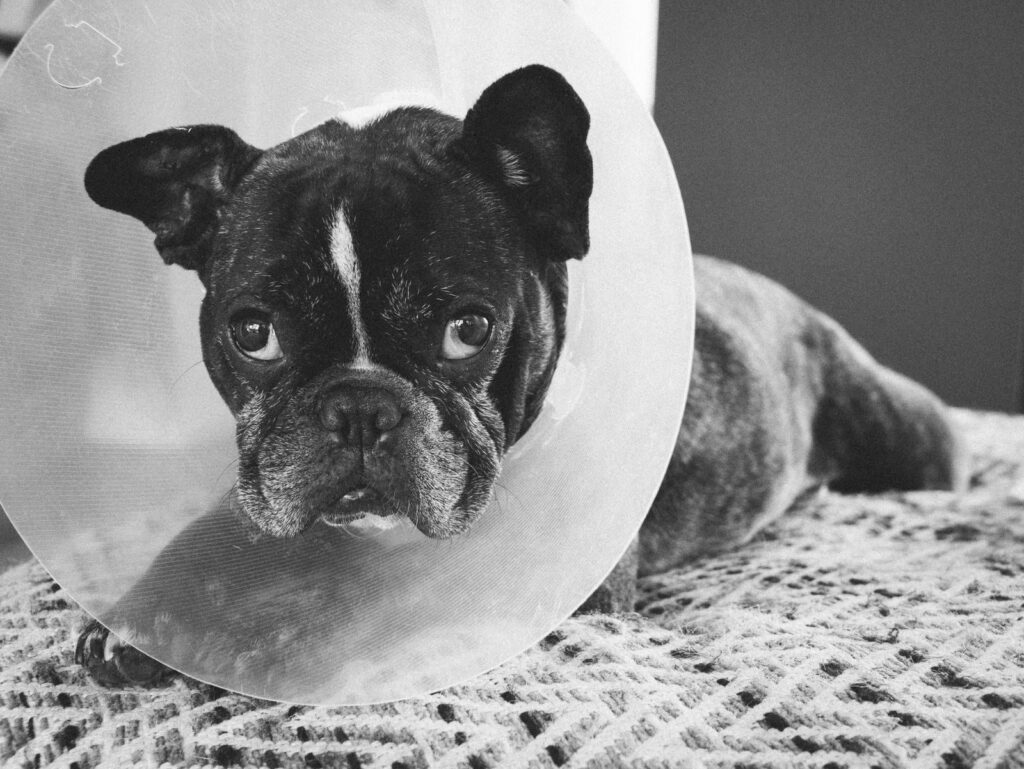
- Do not give human pain medicine. The Merck Veterinary Manual warns that nonprescription human pain medicines can be dangerous or even deadly to pets. Only give pain relief prescribed by your vet for your dog.
- Keep your dog quiet. Limit running, jumping and stairs until your dog has been checked. This is especially important if you suspect back pain.
- Write down what you see. Note when the signs started, whether they are getting better or worse, and anything that may have triggered them, such as a jump off the sofa or a rough play session. Also note changes in eating, drinking, peeing and pooping.
- Take a short video. Cornell recommends photos, videos or notes because anxiety or fear can mask pain behaviors at the clinic. A clip of your dog walking, getting up, or reacting to being lifted can be very useful.
- Call your vet. Explain the signs and ask how soon your dog should be seen. Pain is much easier to manage when it is caught early.
If you suspect a back injury
Restrict movement straight away. Do not let your dog walk around, jump or twist. When you need to move them, keep the spine as still and level as possible by supporting both the chest and the hindquarters, or use a flat board, firm tray or carrier. Then contact your vet or an emergency clinic promptly.
When pain is an emergency
Contact your vet or an emergency clinic straight away if your French Bulldog:
- Suddenly cannot walk or stand, is wobbling, or is dragging the back legs
- Cannot urinate or has lost bladder or bowel control
- Has severe pain that does not settle, or cries out constantly
- Has a swollen, hard or painful belly, or is retching without bringing anything up
- Has a painful eye that is squinting, cloudy or bulging
- Has had a fall, been hit by a car or suffered another injury
- Is struggling to breathe, has pale or blue gums, or collapses
Vet note: This article is for general education only and cannot replace an examination. Vets use structured pain scales and a physical exam to work out where pain is coming from and how severe it is. If you are unsure whether your Frenchie is in pain, it is always reasonable to call your vet. Never give human pain medications to your dog, as many are toxic to dogs.
FAQ
How do I know if my French Bulldog is in pain?
Look for changes from your dog’s normal: reluctance to move or jump, a hunched posture, whimpering, hiding, irritability when touched, licking one area, panting at rest, or eating less. Because dogs hide pain, subtle changes count. Your vet can confirm whether pain is the cause.
Can my Frenchie be in pain and still wag their tail?
Yes. The Merck Veterinary Manual notes that a dog might still wag its tail and greet people in spite of being in pain. A friendly greeting does not rule out discomfort.
Can I give my dog a painkiller from my medicine cabinet?
No. Many human pain medicines can be dangerous or even deadly to dogs. Only use pain relief your vet has prescribed for your dog, at the dose they recommend.
What are the most common French Bulldog back pain signs?
A hunched back, tense belly, reluctance to jump or use stairs, crying out when picked up, holding the head low, and shivering without an obvious reason. Weakness, wobbling or dragging the back legs are emergency signs.
Why does my dog act normal at the vet but sore at home?
Stress and fear at the clinic can mask pain behaviors. Bring notes and a short video of what you see at home so your vet gets the full picture.
Sources
- How Do I Know if My Dog is in Pain? — VCA Animal Hospitals
- Recognizing pain in dogs — Cornell University College of Veterinary Medicine
- Recognizing and Assessing Pain in Animals — Merck Veterinary Manual
- Drugs Used to Relieve Pain in Animals — Merck Veterinary Manual
- French Bulldogs differ to other dogs in the UK in propensity for many common disorders: a VetCompass study — Canine Medicine and Genetics (PMC)