
French Bulldogs pant a lot, and most of the time it is completely normal. Panting is how dogs cool down, and a Frenchie’s flat face makes that cooling system work harder than it does in a long-nosed breed. So if you are wondering “why is my French Bulldog panting so much?”, the honest answer is that it depends on when and how it happens. Panting after a walk on a warm day is expected. Heavy panting in a cool room, while resting, or at night, especially if it is noisy or comes with other signs, deserves a closer look. This guide helps you tell the difference and know when to call your vet.
Quick answer: French Bulldogs pant a lot because their flat faces make cooling harder, and panting after exercise, heat or excitement is normal if it settles within minutes of resting somewhere cool. Heavy panting at rest, in a cool room or during sleep needs a vet visit. Blue or gray gums, collapse or struggling to breathe are emergencies, so go now.
Key takeaways
- Panting after exercise, heat or excitement is normal if it settles within minutes of resting somewhere cool.
- Heavy panting at rest, in a cool room or during sleep is worth a vet visit. Our guide to a French Bulldog breathing hard or fast explains how to count a sleeping breathing rate.
- Count breaths while your Frenchie sleeps; a rising sleeping breathing rate is a useful warning sign.
- Blue or gray gums, collapse or struggling to breathe are emergencies. Go now.
- For overheating, cool first and transport second. Cold water is fine.
Why French Bulldogs pant more than many other dogs
Dogs do not sweat the way people do. Panting moves air over the moist surfaces of the nose, mouth and airway, and evaporation carries heat away. In a typical dog, the nasal cavity does a lot of this work. In a French Bulldog, the short skull leaves less room for that cooling surface, and many Frenchies also have some degree of Brachycephalic Obstructive Airway Syndrome (BOAS): narrow nostrils, a long soft palate and a tight airway. Researchers at the University of Cambridge explain that an obstructed nasal cavity hinders heat exchange, so affected dogs cannot cool down as easily when their body temperature rises during exercise, which puts them at risk of heatstroke.
What matters is whether the panting has an obvious cause and whether it settles.
Normal panting vs. worrying panting
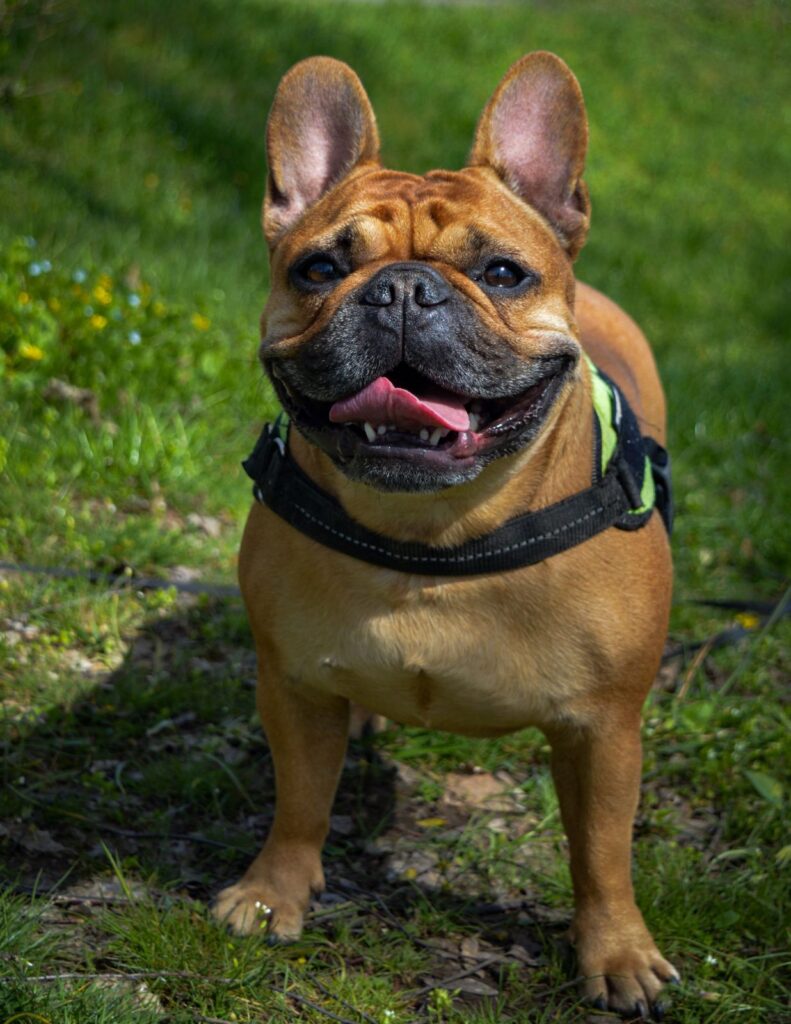
Normal panting has a clear trigger and fades once the trigger is gone. Once your Frenchie is resting in a cool spot, breathing should slow back down within a few minutes.
Panting is more likely to mean something is wrong when:
- It starts or continues while your dog is resting in a cool room
- It happens at night or while your dog is asleep
- It is loud, raspy or high-pitched, or your dog looks like they are working hard to breathe
- It is new for your dog, or clearly worse than their usual
- It comes with other signs: coughing, restlessness, reluctance to lie down, weakness, vomiting, drinking much more, or changes in gum color
Common reasons a French Bulldog pants so much
Heat and humidity
Warm, muggy weather is the most common reason for heavy panting in Frenchies. Humidity reduces how well evaporation cools the airway, so a day that does not feel especially hot can still be hard on your dog. The RSPCA notes that flat-faced breeds cannot pant as effectively because of their shorter snouts, and lists heavy panting and noisy breathing among the signs of overheating. If you are unsure about today’s weather, our “Is it too hot to walk my French Bulldog?” checker can help, and our French Bulldog heat safety guide covers prevention in detail.
Exercise and play
Panting after activity is expected. But if your Frenchie is panting hard after only light activity, needs frequent breaks, or takes a long time to recover, that reduced exercise tolerance can be a sign of airway trouble.
Excitement, stress and anxiety
Fear and stress speed up breathing. Fireworks, thunderstorms, vet visits, car rides and being left alone can all trigger panting, often alongside pacing, trembling, drooling, yawning or clinginess. PDSA vets note that dogs can pant when they feel stressed or anxious. Stress panting tends to fade once the stressful situation ends.
Pain
PDSA vets list pain and injuries as a cause of panting, partly because dogs feel stressed when something hurts. Dogs often hide pain, so panting, restlessness or an inability to settle can be among the few clues. A Frenchie who pants while lying still, shifts position repeatedly, is reluctant to jump or use the stairs, or yelps when picked up may be uncomfortable. Back pain is a particular concern in this breed (see our guide to IVDD and back problems).
BOAS and airway obstruction
BOAS can cause noisy breathing, open-mouth breathing at rest, poor tolerance of heat and exercise, and disturbed sleep. The Cambridge BOAS team describes low-pitched snoring or snorting noises (stertor) and high-pitched noises (stridor) that can point to a narrowed or collapsed larynx, plus labored breathing and pauses in breathing during sleep. BOAS can worsen over time, so a dog whose breathing is gradually getting louder or harder needs a veterinary assessment. Our BOAS guide explains the signs and treatment options, and our overview of common French Bulldog health problems puts it in context.
Extra weight
PDSA notes that overweight dogs, like flat-faced breeds, may be more prone to panting. Extra fat around the neck and chest can add to airway narrowing and holds in body heat, so overweight Frenchies tend to overheat sooner. Keeping your dog lean is one of the most effective things you can do for their breathing.
Fever and illness
A high temperature or fever can make a dog pant and breathe more quickly, and nausea or general illness may do the same. Look for other clues such as lethargy, poor appetite, vomiting, diarrhea or a cough, and call your vet if they appear.
Heart or lung disease
VCA Animal Hospitals lists an increased resting breathing rate or excessive panting, along with coughing and difficulty breathing, among the signs of congestive heart failure. Lung problems such as pneumonia can also make a dog breathe faster at rest. Faster breathing while asleep is a key reason to see a vet at any age.
Hormonal conditions and medications
Some medical conditions cause panting without heat or exercise. PDSA lists Cushing’s disease, a hormonal condition, among the causes of heavy panting. It typically comes with other changes too, such as drinking, urinating and eating more, a pot-bellied look or skin and coat problems. Some medications can also make dogs pant more. If panting started after a new medication, do not stop it on your own; call your vet and ask whether it could be related.
What you can check at home
Count the sleeping breathing rate. Wait until your Frenchie is sound asleep (not dreaming, twitching or panting from a recent walk). Count each time the chest rises over a full minute, or over 30 seconds and multiply by two. Repeat on different days to learn your dog’s normal number. For reference, a 2012 study of 114 apparently healthy adult dogs of mixed breeds, with owners counting at home, found an average sleeping rate of 13 breaths per minute; no dog averaged above 23, and healthy dogs rarely went over 30. That is one study, not French Bulldog-specific, so ask your vet what number to watch for in your dog. VCA advises that a significant increase should be reported to your vet even if it is still within the normal range for an average dog.
Check the gums. Healthy gums are pink. Blue, purple, gray, very pale or dark red gums are a warning sign.
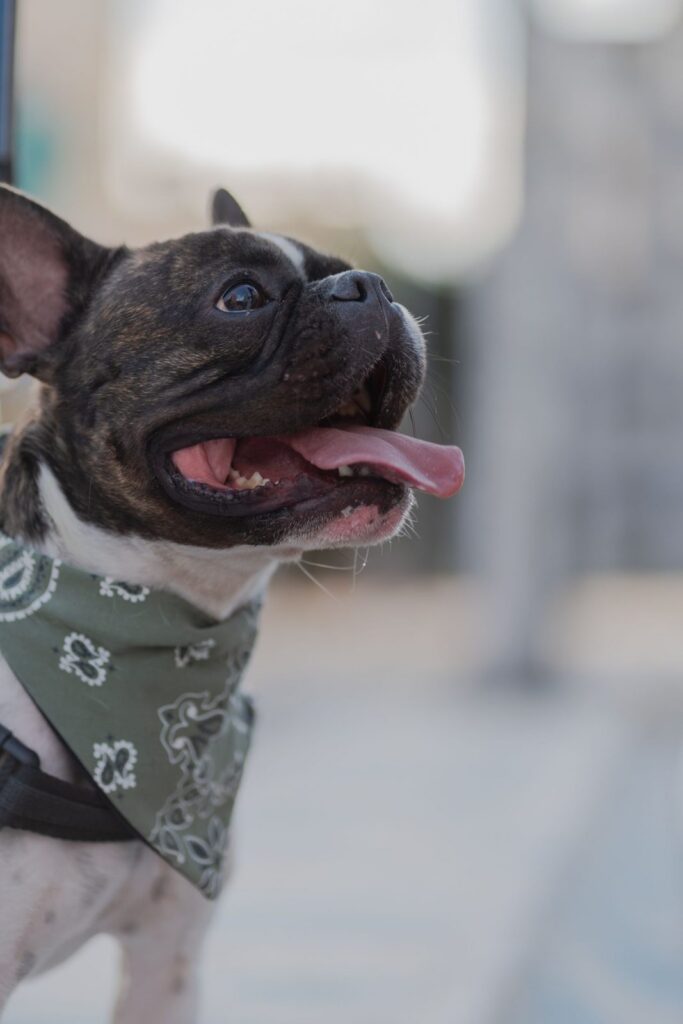
Listen to the sound. Note whether the breathing is quiet, snoring, raspy or high-pitched. A short video on your phone is very helpful for your vet.
Panting quick guide: what it might mean and what to do
| Situation | Likely meaning | What to do |
|---|---|---|
| Panting after a walk or play, settles in a few minutes | Normal cooling | Rest in a cool spot with fresh water |
| Panting during fireworks, car rides or vet visits | Stress or excitement | Reduce the trigger, keep calm and cool; ask your vet about ongoing anxiety |
| Heavy panting on a warm or humid day that does not settle with rest | Heat stress, possible early heatstroke | Stop activity, start cooling, call your vet |
| Panting at rest in a cool room, restless or reluctant to move | Possible pain or illness | Book a vet visit soon |
| Fast breathing while asleep, or sleeping rate rising over days | Possible heart or lung problem | Record the rate and call your vet promptly |
| Loud, raspy or high-pitched breathing that is getting worse | Airway obstruction such as BOAS | Veterinary airway assessment |
| Blue or gray gums, collapse, struggling to breathe | Emergency | Go to an emergency vet now |
Red flags: when panting is an emergency
Contact your vet or nearest emergency clinic immediately if your Frenchie has:
- Blue, purple, gray or very pale gums or tongue
- Collapse, fainting, stumbling or confusion
- Obvious struggle to breathe, extreme noisy effort, or breathing that does not settle with rest in a cool place
- Heavy panting with drooling, vomiting or diarrhea, especially on a warm day or after exercise
- Fast, shallow breathing with a stretched-out neck or reluctance to move
- Seizures or unresponsiveness
If you suspect heatstroke, cool first, transport second. Stop all activity and move your dog to shade or air conditioning. Pour cool or cold water over the neck, belly and thighs, avoiding the head; the RSPCA notes that cold water rarely causes shock in overheated dogs. Fan your dog to keep air moving, and never drape wet towels over them, as this traps heat. Call your vet to warn them you are coming, then travel as soon as cooling is underway, in a well-ventilated or air-conditioned car. The RSPCA stresses that the longer a dog stays overheated, the more damage it can do.
Vet note: You know your Frenchie’s normal better than anyone. If the panting is new, happens at rest or during sleep, or just seems wrong to you, it is always reasonable to call your vet. Bring a video of the breathing and a few sleeping breathing counts.
FAQ
Is it normal for my French Bulldog to pant all the time?
Frequent panting after activity, in warm weather or during excitement is common in Frenchies. Panting that continues while your dog is resting in a cool room, or that seems to be increasing, is not something to accept as “just the breed.” Have it checked by your vet.
Why is my French Bulldog panting at night?
A warm bedroom, anxiety, pain, BOAS-related breathing problems or, less commonly, heart or lung disease can all cause panting at night. Cool the room, count the sleeping breathing rate, and call your vet if fast breathing continues.
How do I know if my Frenchie’s heavy breathing is BOAS?
Signs that suggest BOAS include loud snoring or snorting while awake, open-mouth breathing at rest, tiring quickly on walks, poor heat tolerance and gagging or regurgitation. Your vet can assess your dog’s airway and discuss whether treatment would help.
Sources
- Recognition & Diagnosis — Cambridge BOAS Research Group, University of Cambridge Department of Veterinary Medicine
- Heatstroke in dogs — RSPCA
- Vet Q&A: Is my dog panting too much? — PDSA
- Congestive Heart Failure in Dogs — VCA Animal Hospitals
- Sleeping respiratory rates in apparently healthy adult dogs — Rishniw et al., Research in Veterinary Science (2012)