
If your Frenchie keeps shaking their head, rubbing one side of their face along the sofa or leaving a slightly yeasty smell behind, an ear problem is the first thing to rule out. A French Bulldog ear infection is one of the most common reasons these dogs end up at the vet, and once it has happened, it has a habit of coming back. Most respond well to proper treatment, and knowing why they happen makes them easier to prevent.
Quick answer: A French Bulldog ear infection usually causes head shaking, scratching, a yeasty smell, discharge and redness, often driven by narrow ear canals and allergies. Let your vet examine the ear and choose treatment; avoid vinegar or hydrogen peroxide. A head tilt, loss of balance or unusual eye movements need a vet the same day.
Key takeaways
- Otitis externa (inflammation of the outer ear canal) was the single most common disorder recorded in a large UK study of French Bulldogs under veterinary care.
- Narrow ear canals and allergies are the two big reasons Frenchies get ear infections; the infection itself is usually a symptom of something underneath.
- Head shaking, scratching, odor, discharge and redness are the classic signs. A head tilt, loss of balance or unusual eye movements need a vet the same day.
- Treatment should be chosen by your vet after looking in the ear and checking a sample under the microscope. Avoid home remedies such as vinegar or hydrogen peroxide.
- Prevention comes down to gentle cleaning only when needed, drying ears after water and keeping any underlying allergy under control.
How common are ear infections in French Bulldogs?
Very common. Researchers at the Royal Veterinary College’s VetCompass program looked at the records of 2,228 French Bulldogs seen by UK vets in 2013. Otitis externa was the most frequently recorded specific disorder in the breed, affecting 14.0% of the dogs in that year, ahead of diarrhea, conjunctivitis, overlong nails and skin fold dermatitis. Our guide to common French Bulldog health problems covers the breed’s other main conditions.
Why are Frenchies so prone to ear infections?
Vets tend to think about ear disease in three layers: primary causes that start the inflammation, predisposing factors that make the ear more vulnerable, and perpetuating factors that keep it going once it has started. French Bulldogs tick several boxes at once.
Narrow ear canals
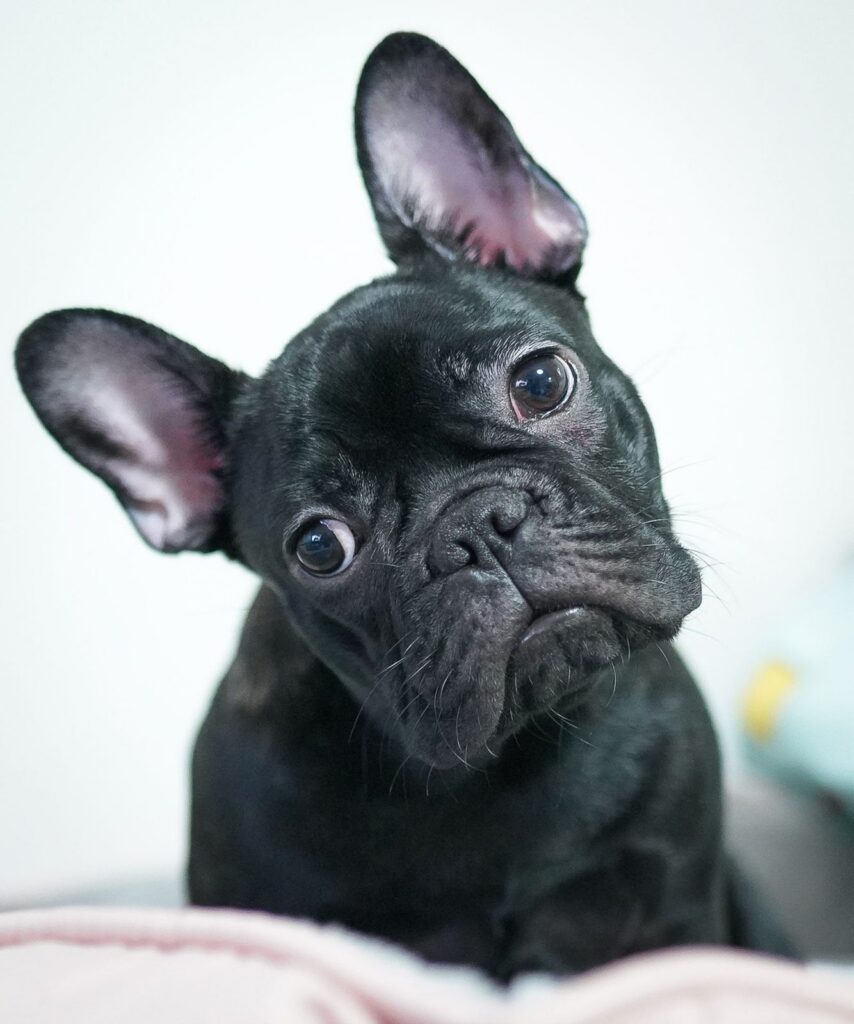
Those big bat ears look wide open, but the canal underneath is a different story. Flat-faced (brachycephalic) breeds generally have narrower ear canals that taper toward the bottom, which makes it harder for wax and debris to work their way out. The Merck Veterinary Manual lists stenotic (narrowed) canals among the conformation factors that raise the risk of otitis externa.
The same skull shape behind BOAS and breathing problems can also affect the middle ear. Flat-faced dogs are more prone to fluid building up in the middle ear cavity, because the Eustachian tube does not always drain as it should.
Allergies: the most important underlying driver
Allergies are the cause most worth chasing. VCA Hospitals notes that allergies are involved in a large share of ear infection cases, especially chronic ones, and the Merck Veterinary Manual lists allergic disease first among the primary causes of otitis externa. Environmental allergies (atopic dermatitis) and food allergies both inflame the skin lining the ear canal, which changes the ear’s environment and lets yeast and bacteria overgrow.
French Bulldogs are well known for itchy skin, so if your dog also licks their paws, scratches their belly or gets red skin folds, read our guide to French Bulldog allergies. Treating the ear without addressing the allergy often means the infection returns.
Other contributors
Moisture left in the ear after baths or swims, ear mites, foreign bodies such as grass seeds, hormonal disease such as hypothyroidism, and over-cleaning with harsh products can all start or worsen the problem.
Signs of an ear infection in your French Bulldog
Ear infections are uncomfortable and often painful. Watch for:
- Frequent head shaking or flapping of the ears
- Scratching at the ear, or rubbing the head on the floor and furniture
- A bad or yeasty smell from the ear
- Brown, black, yellow or greenish discharge
- Redness or swelling inside the ear flap and canal
- Flinching, yelping or pulling away when the ear or head is touched
- A swollen, puffy ear flap (an aural hematoma), a known complication of ear infections
Red flags: when the middle or inner ear may be involved
An outer ear infection that is left untreated can spread deeper. According to the Merck Veterinary Manual, middle and inner ear infections can cause a head tilt toward the affected side, poor coordination, difficulty standing or walking, uncontrollable eye movements and loss of balance. Because the facial nerve runs through the middle ear, some dogs also develop partial facial paralysis and cannot blink properly on one side, which puts the eye at risk.
Do not wait and see: prolonged inner ear inflammation can leave lasting hearing loss or balance problems, so early treatment matters.
How vets diagnose an ear infection
Your vet will usually:
- Look into the ear with an otoscope to check for narrowing, redness, discharge, foreign bodies or masses, and to see whether the eardrum is intact.
- Take a swab for cytology, smearing the material on a slide and examining it under the microscope to see whether yeast, round bacteria (cocci) or rod-shaped bacteria are present. This guides which medication is most likely to work.
- Recommend a culture in severe or chronic cases, to identify the exact organism and which drugs it is sensitive to.
- Suggest imaging (CT or MRI) if middle ear disease is suspected.
Treatment: why it has to come from your vet
Most outer ear infections are treated with prescription ear medication that combines anti-inflammatory, antibacterial and antifungal ingredients, alongside cleaning. Your vet will choose products based on what they see on cytology and whether the eardrum is intact, because some ear medications can damage hearing if they reach the middle ear through a ruptured drum. Middle and inner ear infections usually need longer courses of treatment given by mouth or injection.
A few important points for owners:
- Do not use leftover drops from a previous infection, or drops prescribed for another pet. The organism may be different, and the eardrum may not be intact.
- Do not put vinegar, hydrogen peroxide or other household products into an inflamed ear. The Merck Veterinary Manual warns that vinegar and irritating home remedies can increase swelling and secretions, and the AKC advises against hydrogen peroxide because it irritates healthy skin cells.
- Finish the full course, even if your dog seems better after a few days.
- Go back for the recheck. VCA notes that several recheck examinations may be needed before treatment is successful. Stopping early is a common reason ears flare up again.
Recurring ear infections: finding the root cause
If infections keep coming back, ask your vet about:
- An allergy work-up, including a strict elimination diet trial for possible food allergy (see our guide to the best food for French Bulldogs)
- Culture and sensitivity testing rather than trial-and-error treatment
- Referral to a veterinary dermatologist for stubborn cases
How to clean your French Bulldog’s ears safely
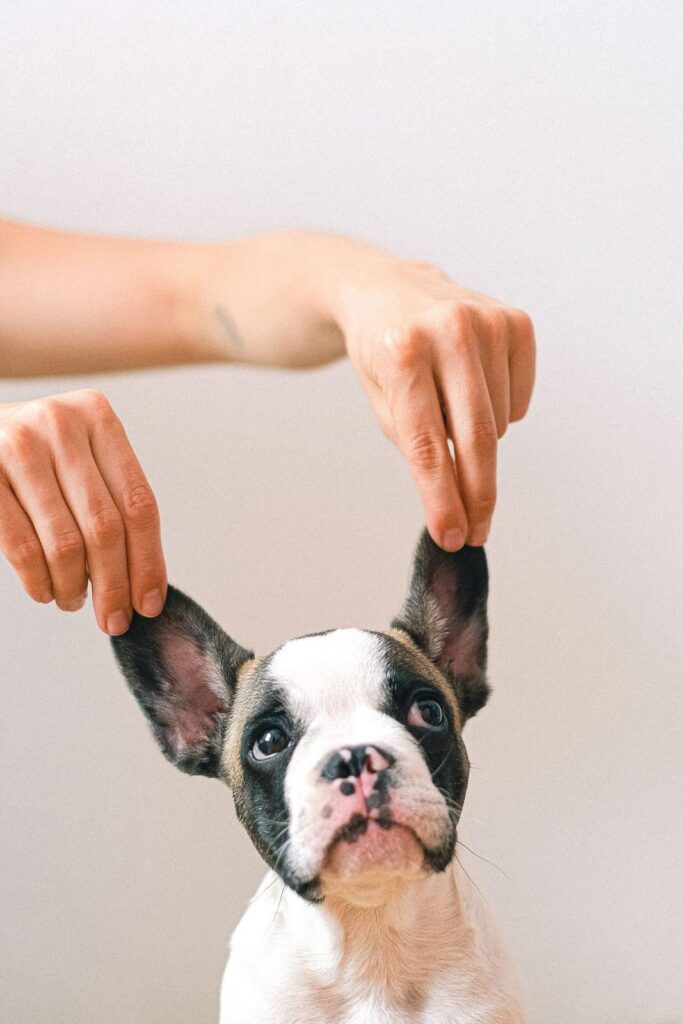
Healthy ears do not need daily cleaning. The AKC advises cleaning when needed rather than on a rigid schedule, as some dogs rarely need it at all. A gentle look-and-sniff check once a week, with a clean when there is visible wax, suits many Frenchies. Never clean an ear that looks red, smells bad or is painful; get it examined first, because some cleaners can cause harm if the eardrum is damaged.
- Pick a calm moment and gather a vet-recommended ear cleaner, cotton balls or gauze, a towel and treats.
- Look first. If you see redness, swelling, discharge or your dog flinches, stop and book a vet visit.
- Hold the ear flap up and gently fill the canal with the cleaning solution, without pushing the bottle tip into the ear.
- Massage the base of the ear for around 30 seconds. You should hear a soft squelching sound as the cleaner loosens wax.
- Let your dog shake their head, standing back or holding a towel up to catch the spray.
- Wipe away loosened wax with a cotton ball or gauze, going no deeper than about one knuckle.
- Never use cotton swabs in the canal. They can push debris deeper and damage the delicate structures of the ear.
Ear checks fit naturally into the rest of your routine. Our French Bulldog grooming guide covers how to combine ears, skin folds, nails and teeth into one quick weekly session.
Everyday prevention tips
- Dry the ears after baths and swims by gently wiping the visible part of the ear, and wash the head with a damp cloth rather than pouring water over it.
- Manage allergies consistently, not just when the ears flare.
- Do not over-clean. Cleaning too often or with harsh products can irritate the canal.
When to see the vet
Book an appointment if you notice:
- Head shaking or ear scratching that lasts more than a day or two
- Any discharge, bad smell, redness or swelling in the ear
- Pain when the ear or head is touched
- A swollen, fluid-filled ear flap
- An ear infection that returns soon after treatment
Seek care the same day for:
- A head tilt, circling, falling over or difficulty walking
- Rapid or uncontrolled eye movements
- A drooping lip or eyelid, or inability to blink on one side
- Sudden apparent hearing loss
Vet note: An ear infection in a French Bulldog is rarely just an ear problem. The bacteria or yeast found on cytology are usually taking advantage of an ear that is already inflamed, most often by allergy, and narrowed by the breed’s anatomy. If your Frenchie needs ear treatment more than a couple of times a year, ask your vet about a longer-term plan.
FAQ
Can a French Bulldog ear infection go away on its own?
It is unwise to wait and see. A true infection usually persists and can spread to the middle or inner ear, rupture the eardrum or permanently thicken the ear canal. A vet check lets you start the right treatment early.
Is it safe to use vinegar or hydrogen peroxide to clean my Frenchie’s ears?
No. Both can irritate the delicate lining of the ear canal, and in an already inflamed ear they can make swelling and discomfort worse. Use only a vet-recommended cleaner.
Why does my Frenchie’s ear infection keep coming back?
Recurring infections usually mean an underlying cause, most often an allergy, has not been controlled, or the previous infection was not fully cleared. Finishing the full course, attending rechecks and working with your vet on allergy management are the most effective steps.
Will my French Bulldog need ear surgery?
Most will not. The large majority of ear infections respond to medication and good follow-up care. Surgery is generally reserved for severe, long-standing cases where the canal has become so swollen or narrowed that medication can no longer do its job, which is why treating early matters.
Sources
- Demography and disorders of the French Bulldog population under primary veterinary care in the UK in 2013 — Canine Genetics and Epidemiology (RVC VetCompass), via PubMed Central
- Otitis Externa in Animals — Merck Veterinary Manual
- Otitis Media and Interna in Dogs — Merck Veterinary Manual
- Ear Infections in Dogs (Otitis Externa) — VCA Animal Hospitals
- How to Clean a Dog’s Ears — American Kennel Club
- When Hearing Hurts: Managing Middle Ear Problems in Flat-Faced Dog Breeds — Texas A&M University