
A Frenchie can wag and greet you at the door while their back, ears or eyes hurt. Watch for small changes from your dog’s normal.
Quick answer: Signs a French Bulldog is in pain include a hunched back, reluctance to jump or use stairs, crying when lifted, panting at rest, hiding, irritability when touched and eating less. Dogs hide pain, so small changes matter. Sudden weakness, dragging back legs, inability to urinate, or pale or blue gums are emergencies. Never give human pain medicine.
Why pain is easy to miss in dogs
VCA notes that dogs instinctively mask pain. Acute pain follows injury, surgery, infection or inflammation and lasts hours to days. Chronic pain, as with arthritis, outlasts normal healing and creeps in slowly, so owners blame “just getting older.”

Common signs your French Bulldog is in pain
No single sign proves pain; look for change from normal.
| Type of change | What you might see |
|---|---|
| Sounds | Groaning or grunting when lying down or getting up; whining, whimpering or yelping, especially when touched or moved |
| Movement | Stiffness, limping, trembling back legs, trouble on slippery floors, reluctance to use stairs, jump on the sofa or get into the car |
| Activity | Restlessness or pacing, getting up and lying down repeatedly, or the opposite: lethargy and less interest in walks and play |
| Posture | Arched or hunched back, head carried low, wanting to stay still, unusual sitting or standing positions |
| Face | A grimace, a vacant stare, partly closed eyes or a half-asleep look |
| Breathing | Panting even while resting in a cool room |
| Behavior | Hiding or withdrawing, clinginess, irritability, growling or snapping when approached, avoiding being handled |
| Self-care | Licking, chewing or rubbing at one area of the body |
| Daily habits | Eating or drinking less, sleeping more or less than usual, house-training accidents |
Frenchies pant for many reasons (see why a French Bulldog pants so much), and trembling has its own list of causes (why a French Bulldog might be shaking).
Pain sources that matter most for Frenchies
A UK VetCompass study found French Bulldogs had higher odds of ear discharge, skin fold dermatitis, corneal ulceration and spinal cord disorders; our French Bulldog health guide covers it.
Back and neck pain (IVDD)
A bulging or ruptured spinal disc presses on the spinal cord or nerves. Early French Bulldog back pain signs include:
- A hunched back or tense belly
- Reluctance to jump, climb stairs or go for walks
- Crying out when picked up or touched
- Holding the head low or not wanting to turn the neck or lower the head to eat
- Shivering, panting or restlessness without an obvious cause
It can pass for a tummy upset. See IVDD and back problems in French Bulldogs and hemivertebrae in French Bulldogs.
Ears and skin folds
A sore ear shows as head shaking, scratching, a tilt, discharge, a bad smell or yelping when touched (French Bulldog ear infections). Inflamed folds make a dog rub their face on the floor, lick the area or resist cleaning (skin fold care guide).
Eyes
Squinting, holding an eye closed, pawing at the face, tearing, redness or cloudiness can mean a corneal ulcer. Eye injuries worsen quickly, so have a squinting eye seen the same day where possible.
Mouth, joints and legs
Dental pain shows as one-sided chewing, dropped food or drooling. Limping, skipping a step on a back leg or stiffness after rest suggests joint pain; Frenchies had higher odds of patellar luxation. See why your Frenchie is limping.
What to do if you think your Frenchie is hurting
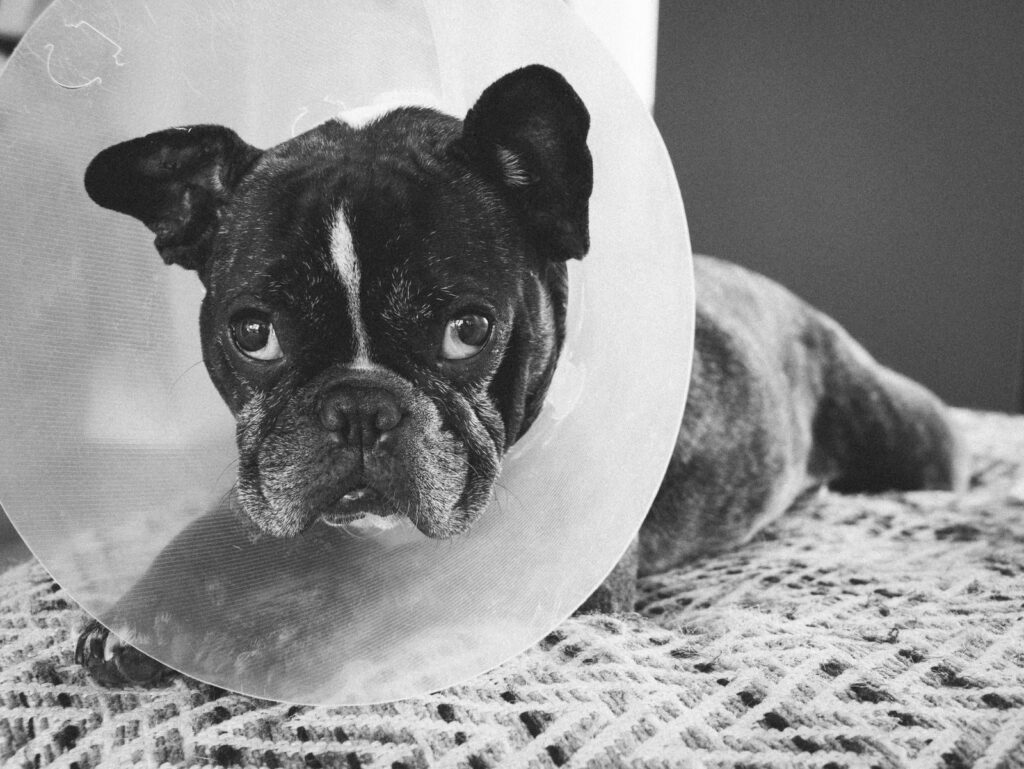
- Do not give human pain medicine. Merck warns these can be dangerous or even deadly to pets. Use only what your vet prescribed.
- Keep your dog quiet. No running, jumping or stairs until checked, especially with suspected back pain.
- Write down what you see: when it started, whether it is changing, possible triggers, and eating, drinking, peeing and pooping.
- Take a short video. Cornell notes fear can mask pain at the clinic, so film walking, getting up or being lifted.
- Call your vet.
Suspected back injury: stop all walking, jumping and twisting. Move your dog with the spine level, supporting chest and hindquarters or using a flat board or carrier, and contact your vet or an emergency clinic promptly.
When pain is an emergency
Contact your vet or an emergency clinic straight away if your French Bulldog:
- Suddenly cannot walk or stand, is wobbling, or is dragging the back legs
- Cannot urinate or has lost bladder or bowel control
- Has severe pain that does not settle, or cries out constantly
- Has a swollen, hard or painful belly, or is retching without bringing anything up
- Has a painful eye that is squinting, cloudy or bulging
- Has had a fall, been hit by a car or suffered another injury
- Is struggling to breathe, has pale or blue gums, or collapses
Vet note: This is general education, not an examination. If you are unsure whether your Frenchie is in pain, call your vet. Never give human pain medications, as many are toxic to dogs.
FAQ
Can my Frenchie be in pain and still wag their tail?
Yes. Merck notes a dog in pain might still wag and greet people.
Why does my dog act normal at the vet but sore at home?
Clinic stress masks pain behaviors. Bring notes and a video from home.
Sources
- How Do I Know if My Dog is in Pain? — VCA Animal Hospitals
- Recognizing pain in dogs — Cornell University College of Veterinary Medicine
- Recognizing and Assessing Pain in Animals — Merck Veterinary Manual
- Drugs Used to Relieve Pain in Animals — Merck Veterinary Manual
- French Bulldogs differ to other dogs in the UK in propensity for many common disorders: a VetCompass study — Canine Medicine and Genetics (PMC)