
Those big, round eyes are part of what makes a French Bulldog so appealing, but they are also one of the breed’s weak spots. French Bulldog eye problems range from mild, lifelong nuisances like tear staining to painful emergencies such as a deep corneal ulcer that can threaten the eye within days. This guide gives you an overview of the common conditions, explains why flat-faced dogs are so vulnerable, and, most importantly, shows which warning signs mean you should see a vet the same day.
Key takeaways
- Shallow eye sockets leave Frenchie eyes exposed, poorly protected and easily injured.
- Corneal ulcers are the big risk: UK studies link the breed to several times higher odds.
- Squinting or a cloudy, blue eye needs a vet today; a bulging eye is an emergency.
- Flat-faced dogs can feel less pain on the eye surface, so mild signs can hide serious damage.
- A yearly vet eye exam and health-tested parents are the best prevention.
Why French Bulldog eyes are so vulnerable
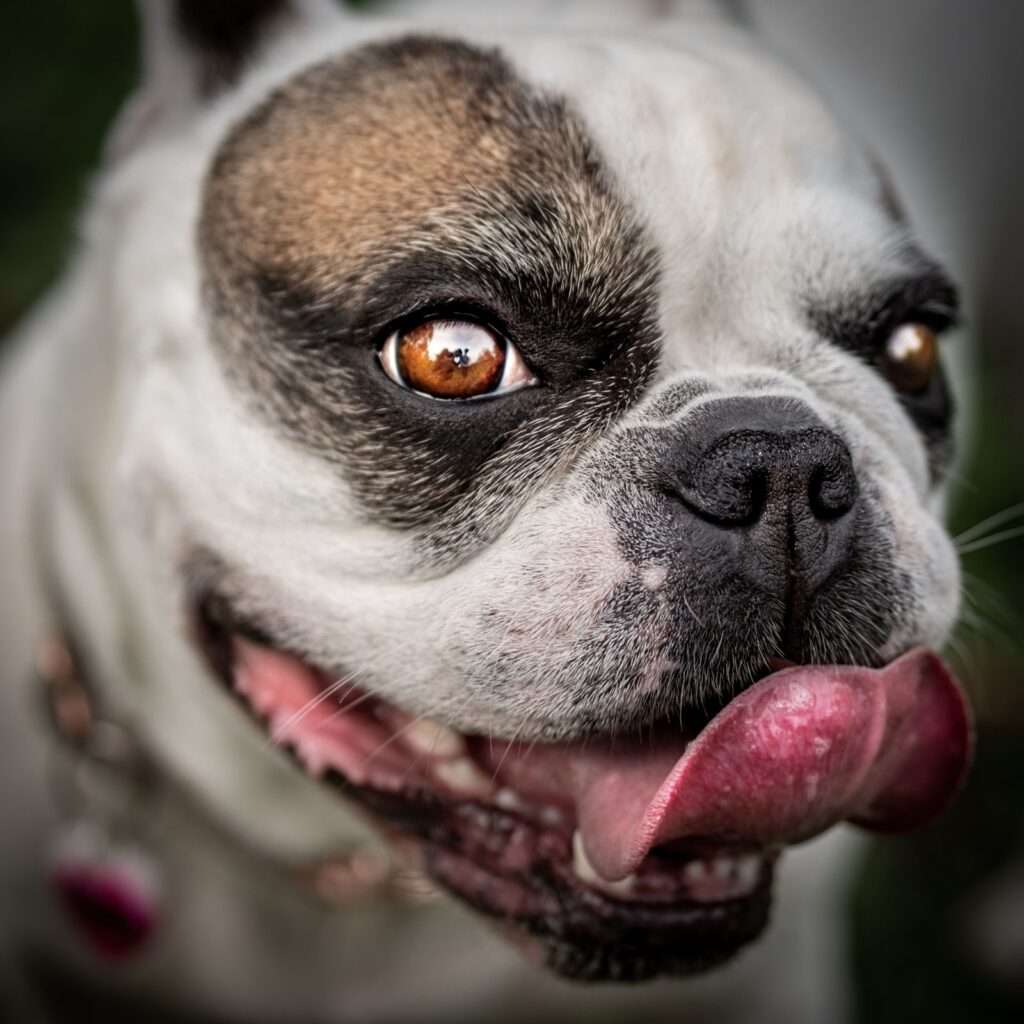
The American College of Veterinary Ophthalmologists (ACVO) groups the eye problems of flat-faced (brachycephalic) breeds under the name brachycephalic ocular syndrome. It is not one disease but a set of anatomical features that work together against the eye:
- Shallow eye sockets. The flattened skull leaves less bone around the eye, so the eyeball sits far forward and protrudes. Merck notes this is common in short-headed breeds.
- Eyelids that don’t fully close. Because the eye bulges, the lids often can’t cover it completely, a problem called lagophthalmos. These dogs also blink less often and may sleep with their eyes partly open.
- Oversized eyelid openings. A larger-than-normal lid opening exposes more of the eye.
- Nose folds and inward-rolling lids. Prominent nasal skin folds and a lower lid that turns in at the inner corner can push hair against the cornea, rubbing it all day.
- Reduced sensation. ACVO points out that these pets have less feeling on the eye surface. So a Frenchie may not show obvious pain even when the eye is seriously injured.
Common French Bulldog eye problems at a glance
Many eye conditions look alike, and a dog can have several at once. Use this table as a guide to urgency, not diagnosis.
| Condition | What you may see | Urgency |
|---|---|---|
| Corneal ulcer | Squinting, holding the eye shut, tearing, redness, a cloudy or bluish patch, a dent on the surface | Same-day vet |
| Proptosis (eye pushed out of the lids) | Eyeball bulging forward in front of the eyelids, often after a minor knock or restraint | Emergency, go now |
| Cherry eye | Smooth red or pink lump in the inner corner of the eye | Vet within a few days; sooner if the eye is sore |
| Entropion and nose-fold rubbing | Squinting, constant tearing, mucky discharge, hair touching the eye | Vet within a few days; same day if squinting |
| Distichiasis and ectopic cilia (abnormal lashes) | Watering, redness, blinking; one sore eye that keeps flaring | Vet within a few days; same day if squinting |
| Dry eye (KCS) | Thick gray, white, yellow or green discharge, red eyes, dull surface | Vet within 24 hours |
| Conjunctivitis | Red, swollen eye tissue and discharge, sometimes with itching | Vet within 24 hours |
| Pigmentary keratitis | Brown or black film slowly spreading across the clear front of the eye | Routine vet visit soon |
| Juvenile (hereditary) cataract | Cloudy white look deep in the pupil in a young dog, bumping into things | Routine vet visit soon |
Corneal ulcers: the most important French Bulldog eye issue
The cornea is the clear window at the front of the eye. A corneal ulcer is a wound in that surface, anything from a shallow scratch to a deep crater.
The research is clear. A Royal Veterinary College VetCompass study of more than 100,000 dogs in English first-opinion practices found that 0.80% of all dogs had corneal ulcerative disease in a year. Compared with crossbred dogs, brachycephalic dogs as a group had 11.18 times the odds, and French Bulldogs specifically had 7.25 times the odds. A later VetCompass study comparing French Bulldogs with other dogs found the breed had 4.38 times the odds of a corneal ulcer diagnosis compared with non-French Bulldogs, and the authors called it an “ultra-predisposition” of the breed.
Triggers include scratches, grit, rubbing lashes or nose-fold hair, inward-rolling lids and dry eye. ACVO warns that ulcers can become infected, deepen, or “melt,” putting the eye itself at risk.
Signs to look for:
- Squinting, holding the eye half or fully closed, or blinking more than usual
- Pawing at the eye or rubbing the face on the floor
- A red eye with increased tears or a change in discharge
- A cloudy, hazy or blue look, or a visible dent (“divot”) on the surface
Your vet will usually stain the eye with a fluorescent dye, which makes an ulcer glow under a blue light. Treatment depends on depth and may include eye medication, pain relief, a protective cone and, for deep or non-healing ulcers, surgery or referral to a veterinary ophthalmologist. Until you get there, stop your dog rubbing the eye and don’t put any drops in it. For tearing and discharge colors, see our watery eyes guide.
Cherry eye
Cherry eye is a tear gland in the third eyelid that slips out of place and shows as a smooth red lump in the inner corner of the eye. Frenchies are clearly predisposed, and it most often appears in dogs under a year old. Vets now aim to put the gland back surgically rather than remove it, because it produces a large share of the eye’s tears. Read our full guide to cherry eye in French Bulldogs for treatment options and what to do while you wait for an appointment.
Eyelid and eyelash problems
Entropion
Entropion means the edge of the eyelid rolls inward so lashes and fur rub against the eye. The Merck Veterinary Manual describes it as the most frequent inherited eyelid defect in many breeds. ACVO notes that in flat-faced dogs it typically affects the lower lid at the inner corner. Long-term entropion can cause scarring, abnormal coloring and slow-healing sores on the cornea. Established entropion usually needs surgery.
Distichiasis and ectopic cilia
These are lash problems. With distichiasis, extra lashes grow from the edge of the eyelid; with ectopic cilia, a lash grows through the inner surface of the lid and pokes straight at the cornea. Merck notes that fine extra lashes often cause no trouble, but lashes that stick out through the back of the lid can cause “profound pain” and slow-healing corneal sores. If lashes are damaging the eye, a vet may remove them or destroy the follicles.
Nose folds rubbing the eye
The fold of skin above a Frenchie’s nose can carry hair onto the eye surface. When fold and lid shape are causing repeated problems, ACVO describes a surgery called medial canthoplasty, which shortens the lid opening at the inner corner, as the “gold standard.” It helps blinking and can stop inward-rolling lids.
Dry eye, conjunctivitis and pigment
Dry eye (keratoconjunctivitis sicca, or KCS) happens when the eye doesn’t make enough of the watery part of the tear film. Oddly, it often shows up as thick, sticky goop rather than a dry-looking eye. Your vet can measure tears with a quick paper-strip test, and treatment is usually lifelong eye medication. Dogs that have had cherry eye are more likely to develop it later.
Conjunctivitis is inflammation of the pink tissue around the eye. It can come from infection, allergies, dry eye or eyelid problems, so it is often a symptom of something else.
Pigmentary keratitis is a brown or black film that spreads across the cornea after long-term irritation, and ACVO notes it may lead to vision loss.
Juvenile hereditary cataracts and the HSF4 DNA test
A cataract is clouding of the lens inside the eye, so it looks like a white or gray haze deep in the pupil rather than on the surface. An inherited form linked to a mutation in the HSF4 gene is known in Staffordshire Bull Terriers and Boston Terriers, and a review in Canine Genetics and Epidemiology reports the same mutation in a small number of French Bulldogs with a clinically identical cataract. In those breeds the cataract starts to develop from a few months of age and can progress to total cataract within two to three years if untreated. The review describes the mutation as recessive in the Staffordshire Bull Terrier and related breeds.
The Royal Kennel Club lists a DNA test for hereditary cataracts (HC-HSF4-2) and eye testing under the BVA/KC/ISDS Eye Scheme as “Best Practice” for French Bulldog breeders. When you look for a puppy, ask whether both parents have been tested. Our guide to choosing a French Bulldog breeder explains which other health tests to ask about.
Same-day vet signs
Because Frenchies can hide eye pain, it is safer to act early. Contact your vet the same day if you notice:
- Squinting, holding an eye closed or pawing at it
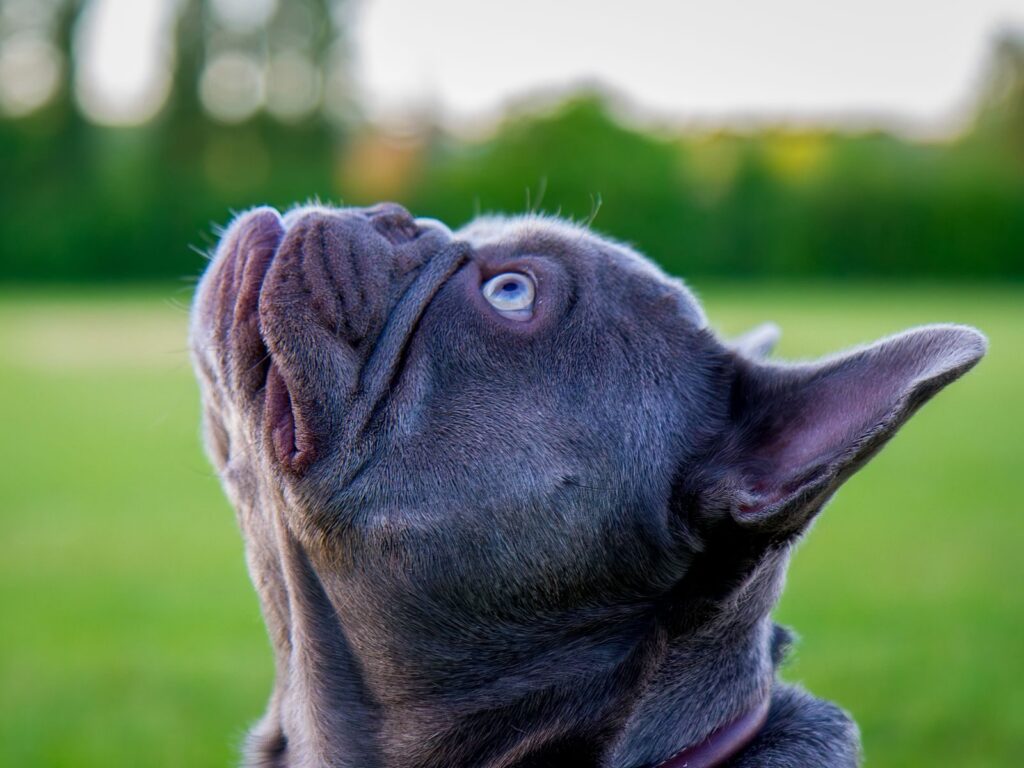
- A cloudy, hazy or blue patch on the eye, or a visible dent
- Sudden changes in vision, such as bumping into things
An eye that bulges forward out of the lids (proptosis), or an injury such as a cat scratch or a poke from a stick, is an emergency. ACVO notes it can happen after only minimal trauma or restraint in flat-faced breeds. Prevent rubbing and go straight to the nearest vet. A harness instead of a neck collar and gentle handling of the head may lower the risk.
Vet note: ACVO recommends that flat-faced dogs have a veterinary eye exam at least once a year, even if their eyes seem fine. Early treatment of exposure, rubbing lashes or inward-rolling lids can significantly reduce the risk of future ulcers. Never use human eye drops or leftover medication without your vet’s advice.
FAQ
Are French Bulldogs prone to eye problems?
Yes. Their shallow eye sockets, prominent eyes and nose folds make them more vulnerable than many breeds, especially to corneal ulcers.
How can I tell if my Frenchie’s eye problem is an emergency?
Squinting or a cloudy or blue eye needs a vet the same day. A bulging eye or an eye injury needs one immediately.
Why does my French Bulldog’s eye look cloudy?
Cloudiness on the surface often points to a corneal ulcer or swelling and needs a prompt vet visit. A haze deeper inside the pupil may be a cataract.
Can I prevent eye problems in my Frenchie?
You can lower the risk. Choose a puppy from eye-tested parents, keep the nose fold clean and dry, use a harness, protect the eyes from scratches and get any squinting checked early. Our French Bulldog health guide covers other everyday prevention.
Sources
- Understanding Brachycephalic Ocular Syndrome (BOS) — American College of Veterinary Ophthalmologists
- Corneal ulcerative disease in dogs under primary veterinary care in England: epidemiology and clinical management — Canine Genetics and Epidemiology (O’Neill et al., 2017)
- French Bulldogs differ to other dogs in the UK in propensity for many common disorders: a VetCompass study — Canine Medicine and Genetics (O’Neill et al., 2021)
- Disorders of the Eyelids in Dogs — Merck Veterinary Manual
- The genetics of eye disorders in the dog — Canine Genetics and Epidemiology (2014)
- French Bulldog breed standard and health — The Royal Kennel Club