
Where your puppy comes from shapes how well they breathe, how often you see the vet and how confident they grow up to be. High demand for Frenchies attracts sellers who cut corners. A responsible French Bulldog breeder health tests the parents, lets you meet the mother, asks you plenty of questions and stays in touch for the dog’s whole life. This guide explains which health tests to ask for, what to look for when you visit, what the paperwork should cover, and the red flags that mean you should walk away.
Key takeaways
- Ask for proof of health testing on both parents, including a breathing (BOAS) assessment, not just verbal reassurance.
- In the US, a CHIC number shows the required tests were done and published. It does not mean every result was normal.
- Always see the puppy with its mother where the litter was raised. Excuses here are a major red flag.
- “Rare” colors and very flat faces are selling points to avoid, not features worth paying extra for.
- Never pay a deposit before visiting. Rescue is a good alternative to buying a puppy.
Why the breeder matters so much for Frenchies
French Bulldogs are prone to breathing, spine, eye and skin problems, and many of these are linked to how the parents were built and bred. A Royal Veterinary College study of 700 dogs of many breeds found that the risk of brachycephalic obstructive airway syndrome (BOAS) rises sharply as the muzzle gets shorter. Thicker necks and obesity added to the risk. The researchers concluded that breeders and buyers should keep this in mind when choosing dogs. If you are still weighing up the breed, read is a French Bulldog right for you? first.
Health tests to ask a French Bulldog breeder for
A good breeder will know the breed club’s screening list well and show you the results without being asked twice.
US: French Bull Dog Club of America and CHIC
The French Bull Dog Club of America (FBDCA) works with the Orthopedic Foundation for Animals (OFA) through the Canine Health Information Center (CHIC). To earn a CHIC number, a French Bulldog must be permanently identified by microchip or tattoo and have these results registered with OFA:
- Hips: an OFA or PennHIP hip evaluation
- Eyes: an eye exam by a board-certified veterinary ophthalmologist, with yearly rechecks recommended
- Patellas (kneecaps): a veterinary evaluation for luxating patella
- Heart: a basic cardiac exam with a stethoscope or an advanced exam with an echocardiogram
The FBDCA also recommends testing for tracheal hypoplasia (a narrow windpipe), elbow dysplasia, juvenile hereditary cataracts (an HSF4 DNA test) and cystinuria type 3, plus the Respiratory Function Grading Scheme described below.
OFA states that a CHIC number does not mean the dog’s results were normal. It only shows that all the required tests were done and the results were made public. So ask to see the actual results. Because CHIC results are public, you can look the parents up yourself in the OFA database using their registered names.
Breathing: the Respiratory Function Grading Scheme
The Royal Kennel Club and the University of Cambridge run the Respiratory Function Grading Scheme (RFGS) to assess BOAS. Dogs can be tested from 12 months of age, and the Royal Kennel Club recommends repeating the assessment every two years. A specially trained vet listens to the dog’s breathing at rest, then again after three minutes of exercise. Dogs are graded from 0 to 3:
| Grade | What it means |
|---|---|
| 0 | Unaffected, with no respiratory signs |
| 1 | Unaffected, but with some breathing noise that does not affect exercise |
| 2 | Clinically affected, with moderate signs that should be monitored and may need veterinary treatment |
| 3 | Severely affected; needs a full veterinary examination. Breeding is not recommended |
On its French Bulldog breed page, the Royal Kennel Club lists this breathing test as the minimum “Good Practice” test breeders should do before breeding, and adds hip and elbow screening, eye testing and a hereditary cataract DNA test as “Best Practice.” The FBDCA recommends it too, so ask any breeder whether both parents have had a formal breathing assessment. Our guide to BOAS and breathing problems explains why this matters so much.
Meeting the mother (and the puppies)
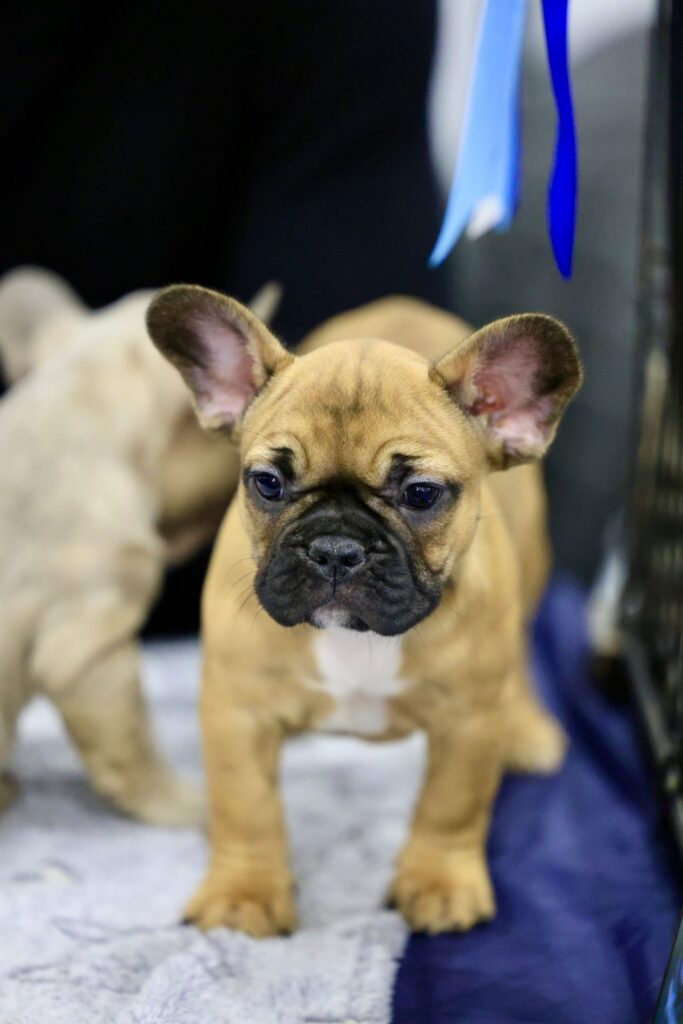
Every major welfare organization says the same thing: see the puppies with their mother, in the place where they were born and raised. Dogs Trust advises that a good breeder will encourage you to visit and will let you come back more than once. Look for:
- Her breathing. Does she breathe quietly at rest, or does she snore and snort while awake? Noisy breathing in a calm, cool dog is a sign of BOAS, not “just how Frenchies are.”
- Her face and body. Open nostrils, a visible muzzle and a moderate build are good signs. Pinched nostrils, an extremely flat face and heavy skin folds can be passed on to puppies.
- The setting. A clean, warm home where the puppies are getting used to everyday sights and sounds.
- The puppies. Clear eyes without discharge, no coughing or wheezing, and alert, curious behavior.
If the father is not on site, ask for his details and test results.
Questions to ask (and expect to be asked)
A responsible breeder will also ask about you: your home, your schedule and whether you understand the breed. A seller who only asks how you plan to pay is a warning sign. Questions to ask:
- Can I see the health test results for both parents? What are their registered names?
- Have the parents had a breathing assessment? How do they cope with exercise and warm weather?
- Have any of your dogs needed airway or spinal surgery?
- How are the puppies socialized, and what health care have they had so far?
- At what age will the puppy come home? (Dogs Trust says a good breeder will never sell a puppy younger than 8 weeks.)
- Will you take the dog back at any age if I can no longer keep them?
Contracts, health records and paperwork
Before you pay, you should be able to read everything you will sign. Expect:
- A written contract that sets out the breeder’s and your responsibilities, any health guarantee and what it covers, and a take-back clause.
- Vet records for the puppy, showing any vaccinations, deworming and a health check.
- Microchip details and how to update the registration in your name.
- Copies of the parents’ health test results, not just a statement that they were “vet checked.”
- Registration papers, if promised. Registration records parentage. It is not a guarantee of health or quality.
Read any health guarantee closely so you know exactly which conditions it covers.
Why “rare colors” and very flat faces are red flags
Blue, lilac, chocolate, merle and “fluffy” Frenchies are often marketed as rare and priced well above standard colors. The Royal Kennel Club says these colors are often not truly rare, that a puppy should not cost more because of its color, and that breeding for color puts appearance ahead of health and temperament. It also notes that color dilution alopecia, a coat and skin condition, has been linked to breeding for fashionable shades. See French Bulldog colors explained for the details.
Extreme looks are a similar problem. A very short nose, pinched nostrils and heavy wrinkles may be advertised as “cute,” but the research above links shorter muzzles to higher BOAS risk, and narrow nostrils restrict airflow from the first breath. Look for a breeder who is breeding away from extremes, not toward them.
Puppy mills and online scams
Puppy mills breed for profit with little regard for health, and online scammers may have no puppy at all. Dogs Trust lists these warning signs:
- The same photos or wording appear in several different ads
- Several breeds are for sale at the same time
- The seller knows little about the breed
- They suggest meeting somewhere other than the puppies’ home, or make excuses about the mother
- They pressure you to pay a deposit before you visit
- They will not let you visit more than once
Run a reverse image search on ad photos, and be wary of extra fees that appear after you agree to buy. Our guide to French Bulldog cost covers scam warning signs and realistic prices.
Good signs vs red flags: a quick checklist
| Good signs | Red flags |
|---|---|
| Shows you written health test results for both parents | Says the parents are “vet checked” but has no results |
| Parents have a breathing (BOAS) grade or other formal assessment | Dismisses snoring and snorting as normal for the breed |
| You meet the mother with her puppies at home | Mother is “out,” or the meeting is in a parking lot |
| Prices are the same regardless of color | “Rare” colors at premium prices |
| Parents have open nostrils and moderate features | Extremely flat faces and pinched nostrils marketed as desirable |
| Asks you plenty of questions and may keep a waiting list | Several litters or breeds always available |
| Puppies go home at 8 weeks or older, with a contract and records | Puppies offered younger, with no paperwork |
| Offers to take the dog back at any age | No contact or support after the sale |
| Happy for you to visit more than once | Pushes for a deposit before you visit |
Consider rescue as an alternative
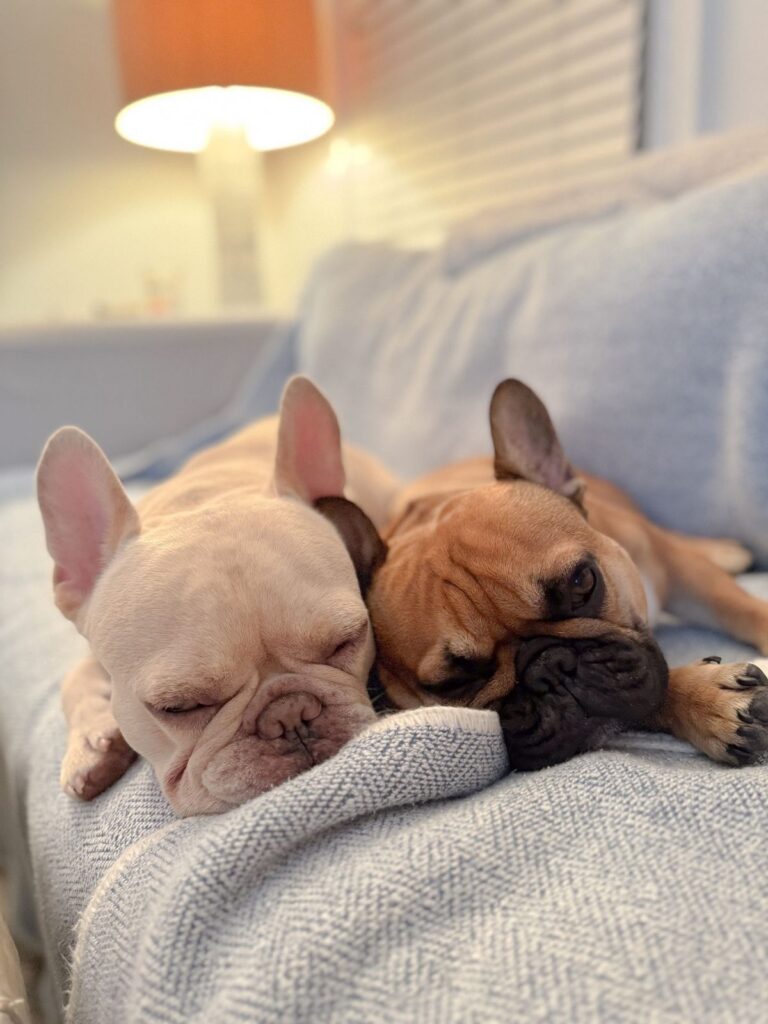
Buying a puppy is not the only route. French Bulldogs regularly turn up in shelters and breed-specific rescues. Adopting an adult dog means you already know their size, personality and, often, some of their health history. Some rescue Frenchies have existing conditions, so ask what is known and budget for ongoing care.
Vet note: Book a vet check within the first few days of bringing your puppy home, and take the breeder’s records with you. Ask your vet to look at the nostrils, listen to the breathing and check the eyes and kneecaps. If anything concerns you, raise it with the breeder promptly.
FAQ
Is AKC registration a sign of a good breeder?
Not on its own. Registration records a puppy’s parentage. It does not show that the parents were health tested or well cared for. Ask for health results separately.
How can I check a breeder’s health test claims?
Ask for the parents’ registered names and look them up in the OFA database, where CHIC results are public. Read the actual results, since a CHIC number alone does not mean every test was normal.
My Frenchie puppy snores. Should I be worried?
Noisy breathing while awake and calm is a sign of airway obstruction, not a normal breed trait. Mention it to your vet so they can assess it early.
Sources
- Health Testing and Registries — French Bull Dog Club of America
- CHIC Program — Orthopedic Foundation for Animals
- Respiratory Function Grading Scheme — The Royal Kennel Club
- French Bulldog (breed information and health screening) — The Royal Kennel Club
- Rare and unusual colours — The Royal Kennel Club
- Impact of Facial Conformation on Canine Health: Brachycephalic Obstructive Airway Syndrome — PLOS ONE (Packer et al., 2015)
- Finding a good, responsible breeder — Dogs Trust