

A flat face changes how a dog eats, so choosing the best bowl for French Bulldog mealtimes is about shape, stability, material and speed, not looks. Here is what to look for, and where the evidence is thinner than the marketing.
Quick answer: The best bowl for a French Bulldog is usually wide and shallow (or gently tilted), heavy or non-slip, and made of stainless steel or intact, food-safe ceramic rather than scratched plastic. Fast eaters may do well with a slow feeder. Whatever you choose, wash it with hot, soapy water after each meal.
Key takeaways
- Wide, shallow or tilted bowls are easier for flat-faced dogs to reach into.
- Stainless steel or lead-free, unchipped ceramic beats scratched plastic for hygiene.
- Slow feeders do slow eating, but proof that they prevent health problems is limited.
- Evidence on raised bowls is mixed and comes from large breeds, not Frenchies.
- Wash food bowls after every meal, and clean the water bowl often, too.
Why bowl shape matters for flat-faced dogs
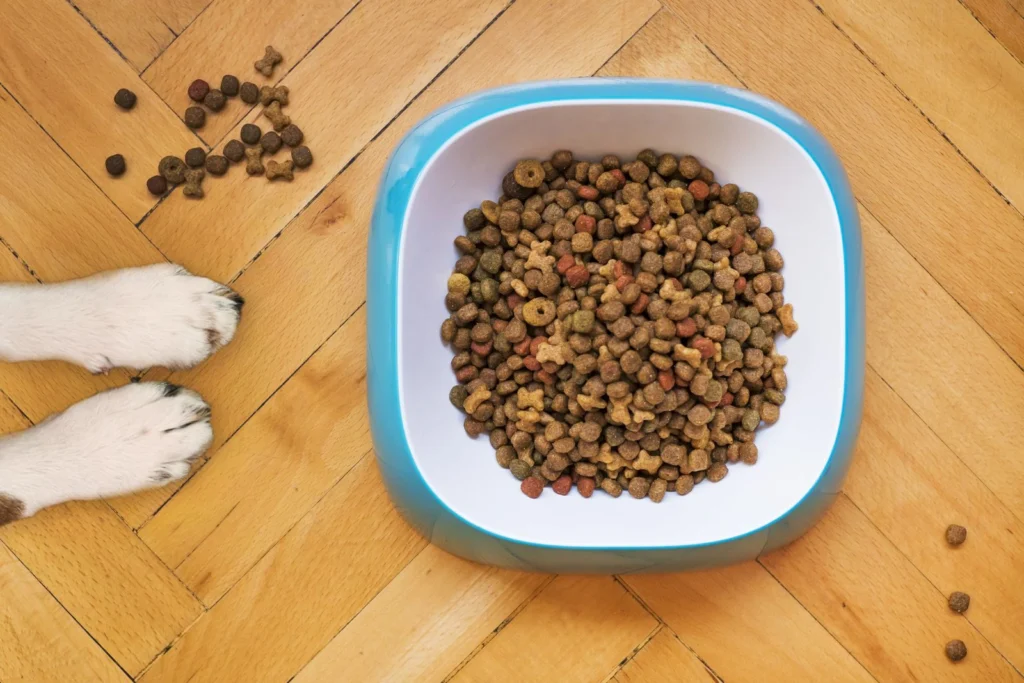
French Bulldogs are brachycephalic, with a short muzzle and a flat face. A peer-reviewed article in Today’s Veterinary Nurse notes that brachycephalic breeds may have trouble reaching into a bowl for food or water, and suggests wide, shallow bowls so they can access the contents more easily and still see their surroundings while eating. The same article mentions shallow, tilted bowls that let food slide toward the front.
Best bowl for French Bulldog mealtimes: what to look for
| Feature | What to look for | Why it helps |
|---|---|---|
| Shape | Wide and shallow, or gently tilted | Easier for a short muzzle to reach the food |
| Stability | Heavy base, anti-skid ring or non-slip bottom | Stops the bowl sliding or tipping while your dog eats |
| Material | Stainless steel (grade 304 or 18/8) or lead-free, food-safe ceramic | Easier to keep clean than scratched plastic |
| Condition | No cracks, chips, deep scratches or chew marks | Damaged surfaces are harder to clean and can be unsafe |
| Cleaning | Dishwasher-safe if possible | Makes washing after every meal realistic |
Bowl materials: stainless steel, ceramic or plastic?
The Today’s Veterinary Nurse article summarizes the main options:
- Stainless steel is lightweight, durable and affordable, and some designs have anti-skid rings. The article advises looking for grade 304 or 18/8 stainless steel, because lower grades used to cut costs may contain contaminants.
- Ceramic or stoneware is heavy and hard to tip over. But glazes can contain lead or cadmium if poorly made, so choose bowls labeled lead-free and meant for food, and stop using any bowl that is cracked or chipped.
- Plastic is light and cheap, which suits travel. However, it scratches easily, and scratches let bacteria stick and form biofilms. Chewed plastic can also leave sharp edges or loose pieces, so it is a poor choice for puppies and chewers.
The research here is small and preliminary. A 2018 Hartpury University conference poster on the water bowls of just six dogs found no significant difference in total bacteria between plastic, ceramic and stainless steel, although plastic bowls had the highest counts after 14 days, and most of the MRSA and Salmonella identified came from the ceramic bowls. No material is automatically safe; regular cleaning matters more.
Slow feeders for French Bulldogs: do they work?
Many Frenchies are food-motivated and eat quickly. VCA Animal Hospitals notes that eating too fast increases swallowed air and that slowing eating decreases it, which is why slow feeders come up so often in our guide to French Bulldog gas.
Do slow feeders actually work? There is some evidence that they slow dogs down, but it is limited. In a small 2016 conference poster published by Veterinary Evidence, Harper Adams University researchers tested a go-slow feeder with just 10 pet dogs. It reduced eating speed, and although dogs got quicker with practice, they still ate more slowly than from a standard bowl. Given a choice, the dogs did not pick the slow feeder over a regular bowl, and the researchers cautioned against marketing these feeders as a fun game.
So a slow feeder can slow eating and stretch a meal, but it has not been shown to prevent bloat, regurgitation or other health problems in Frenchies. Practical tips:
- Choose a pattern shallow enough for a flat face, since brachycephalic dogs may already struggle to reach into ordinary bowls.
- Puzzle feeders, snuffle mats and food toys are alternatives; supervise so your dog doesn’t chew or swallow pieces.
- Feed dogs in separate areas to reduce competition, as VCA suggests.
If your Frenchie often brings food back up soon after eating, a slower bowl won’t fix the cause. Regurgitation in flat-faced breeds is often linked to the airway, so read our guide to French Bulldog vomiting and regurgitation and talk to your vet.
Raised bowls: what the evidence says
Raised or elevated bowls are popular, but the evidence is mixed, and most of it isn’t about French Bulldogs. A 2017 Veterinary Evidence knowledge summary found only two studies on raised feeders and gastric dilatation-volvulus (GDV, or bloat), and their results conflict.
The better-known one, by Glickman and colleagues in 2000, followed 1,637 dogs from 11 large and giant breeds, such as Great Danes, Rottweilers and Saint Bernards. Dogs fed from a raised bowl had about twice the risk of GDV (adjusted relative risk 2.10). The second study, from 2012, found no significant effect of feeding from a raised bowl. Neither study found that raised bowls reduce GDV risk. The summary also warns against applying the Glickman results to breeds that weren’t studied, and Frenchies weren’t among them.
On the other hand, the Today’s Veterinary Nurse article notes that elevated dishes can help dogs with neck pain or spinal arthritis, and may help brachycephalic dogs whose anatomy puts them at higher risk of aspiration. If you try one, it suggests a height slightly below the withers (the top of the shoulders). Ask your vet whether it suits your dog.
Water bowl hygiene
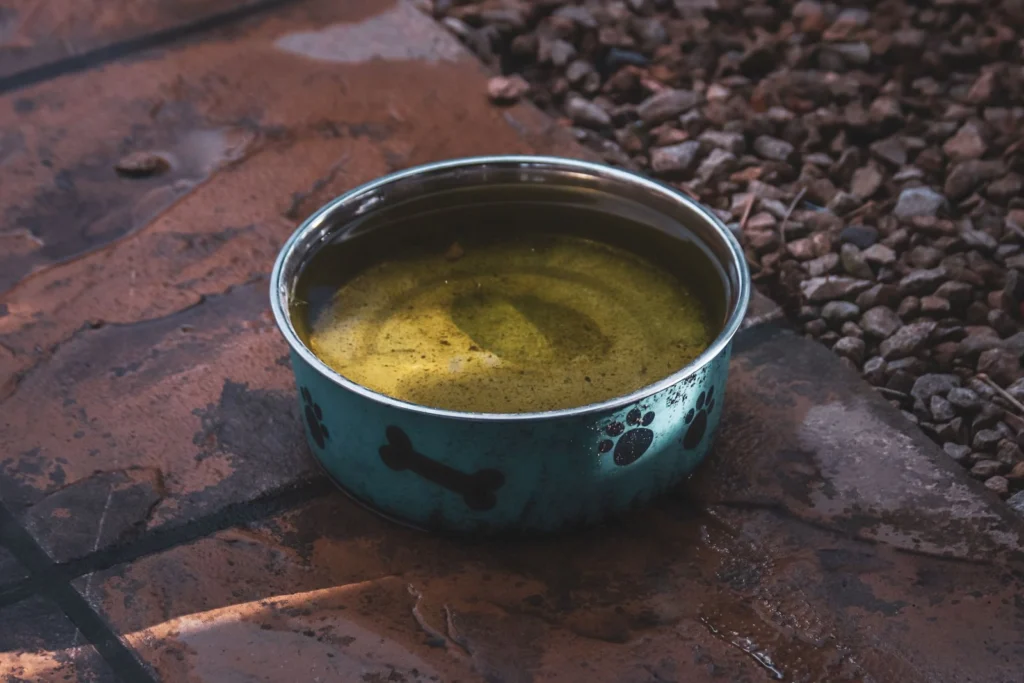
The Hartpury researchers describe the dog water bowl as the third most contaminated item in the home, and in their small study bacteria built up significantly within one to two weeks.
- Refresh water daily and wash the bowl with hot, soapy water regularly, not just topping it up. A slimy film is biofilm.
- Avoid scouring pads that scratch the surface, and use a pet-only sponge or brush.
For food bowls, the FDA advises washing pet food bowls and scoops with soap and hot water after each use, using a dedicated scoop rather than the bowl itself, and promptly refrigerating or throwing out leftover canned or pouched food.
Match the bowl to the right portion
Even the best bowl won’t help if the portion is too big. Use our French Bulldog food calculator for a starting amount, measure each meal with a scoop or kitchen scale, and see our French Bulldog feeding schedule by age for how many meals to split it into.
Vet note: A new bowl is not a treatment. See your vet if your Frenchie regularly brings up food, gags, coughs or breathes noisily while eating, loses weight, or has a swollen belly. A swollen, hard belly with retching or unproductive vomiting is an emergency.
FAQ
Are plastic bowls bad for French Bulldogs?
Not dangerous in themselves, but plastic scratches easily, and scratches help bacteria stick. Replace scratched or chewed plastic bowls, and consider stainless steel for everyday use.
Is a slanted bowl good for a French Bulldog?
It can be. Today’s Veterinary Nurse mentions shallow, tilted bowls that let food slide toward the front, which is easier for a short muzzle to reach. Pick one with a heavy or non-slip base so it doesn’t slide or tip.
Should my Frenchie eat from a raised bowl?
It depends on the dog. Raised bowls can help dogs with neck or back pain, but the only research on raised bowls and bloat studied large and giant breeds, and its findings conflict. Ask your vet what suits your dog.
Can a slow feeder stop my French Bulldog from throwing up?
Not reliably. Slow feeders slow eating, but they have not been shown to prevent vomiting or regurgitation. Frequently bringing up food needs a vet check.
Sources
- Counseling Clients on Food Bowl Selection: What’s the Dish? — Today’s Veterinary Nurse (2022)
- Are Dogs That Are Fed from a Raised Bowl at an Increased Risk of Gastric Dilation Volvulus Compared with Floor-Fed Dogs? — Veterinary Evidence (2017)
- Go slow feeding bowls: how effective are they at getting dogs to eat more slowly? — Harper Adams University / Veterinary Evidence (2016)
- Microbiological Assessment of Canine Drinking Water and the Impact of Bowl Construction Material — Hartpury University (2018)
- Tips for Safe Handling of Pet Food and Treats — U.S. Food and Drug Administration
- Dogs and Gas — VCA Animal Hospitals