
Neutering a French Bulldog (spaying a female or castrating a male) is something AAHA recommends for every dog not intended for breeding, yet the timing advice can feel contradictory.
Quick answer: AAHA guidelines suggest that dogs expected to weigh under 45 lb, which includes Frenchies, are generally spayed or neutered at around 5-6 months, adjusted for the individual dog. Spaying prevents pyometra and lowers mammary tumor risk. After surgery, labored breathing, pale or blue gums, collapse or a gaping or bleeding incision need a vet right away.
When to spay a French Bulldog: what the guidelines say
The 2019 AAHA Canine Life Stage Guidelines split dogs by expected adult weight. Dogs not intended for breeding and expected to weigh under 45 lb, which includes Frenchies, should generally be sterilized by 5-6 months of age:
| Procedure | Small breeds (under 45 lb) | Large breeds (45 lb and over) |
|---|---|---|
| Castration (males) | About 6 months of age | Wait until growth stops (about 9-15 months) |
| Spay (females) | Before the expected first heat (about 5-6 months) | About 5-15 months, using clinical discretion |
AAHA admits the research mostly shows association, not cause, and that “better data are needed” for particular breeds. Treat 5-6 months as a starting point, not a fixed rule.
What the Hart breed study does (and doesn’t) tell Frenchie owners
A 2020 UC Davis study by Hart and colleagues reviewed hospital records for 35 breeds, looking at joint disorders, cancers and incontinence by neuter age. Small breeds did not appear to have a higher risk of joint disorders with neutering.
French Bulldogs were not among the 35 breeds. Three related breeds were, though their results can’t be assumed to apply:
- Bulldog: joint disorders seemed more common when neutered before 6 months, though not significantly.
- Pug: no evident increase in joint disorders or cancers.
- Boston Terrier: males neutered before a year had a significantly higher rate of the cancers studied; no increase in females.
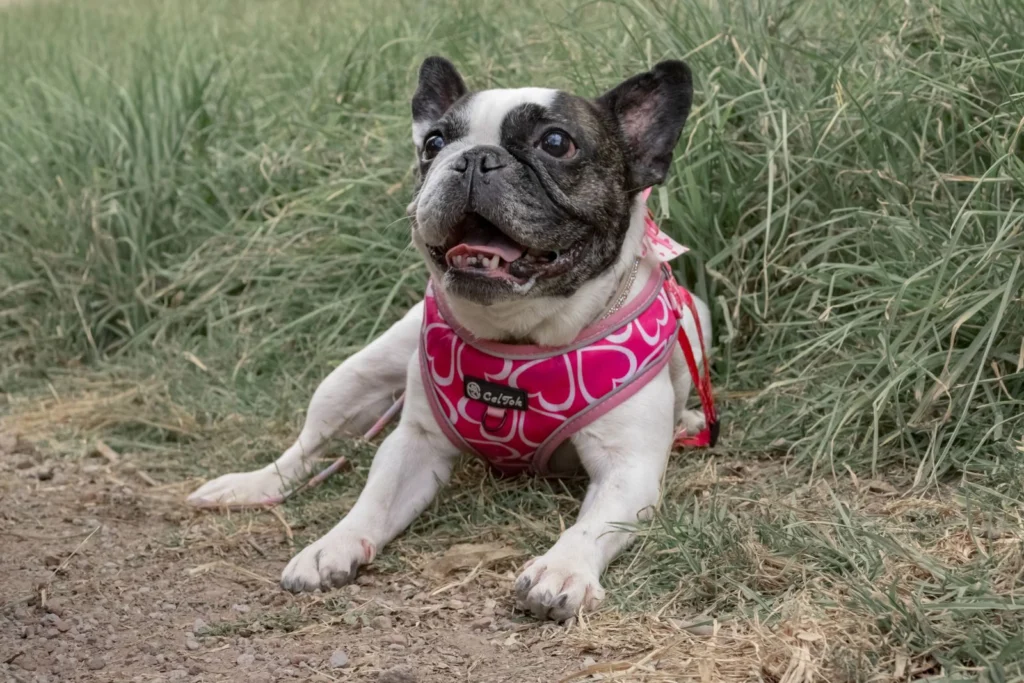
Pros of spaying and neutering a French Bulldog
- No pyometra. VCA notes that spaying prevents this potentially fatal uterine infection.
- Lower mammary tumor risk. VCA says dogs spayed before their first heat have less than a 0.5% chance of breast cancer. AAHA cites 8% in females spayed after one heat and 26% after a second.
- No unwanted litters. Many Frenchies cannot give birth naturally; see our guide to French Bulldog pregnancy and C-sections.
- Longer average lifespan, according to AAHA.
Cons and trade-offs to discuss with your vet
- Weight gain. AAHA notes a higher obesity risk after sterilization, greatest in the first two years. Overfeeding and too little exercise are the main causes. See our guide to helping an overweight French Bulldog.
- Urinary incontinence is more common in spayed females.
- Joint and some cancer risks. Early neutering has been linked with joint problems and certain cancers, mostly in larger breeds, plus prostate cancer and mast cell tumors.
- Anesthesia needs extra planning in flat-faced dogs.
Neutering a French Bulldog safely: anesthesia and the airway
Most of a Frenchie’s extra anesthetic risk comes from the narrow airway, especially while waking up; regurgitation is another concern. Our guide to French Bulldog anesthesia and surgery covers fasting, the airway plan and questions to ask.
Some dogs have airway surgery at the same visit, as the ASPCA has described; that means one fewer anesthetic but a longer one, so ask your vet.
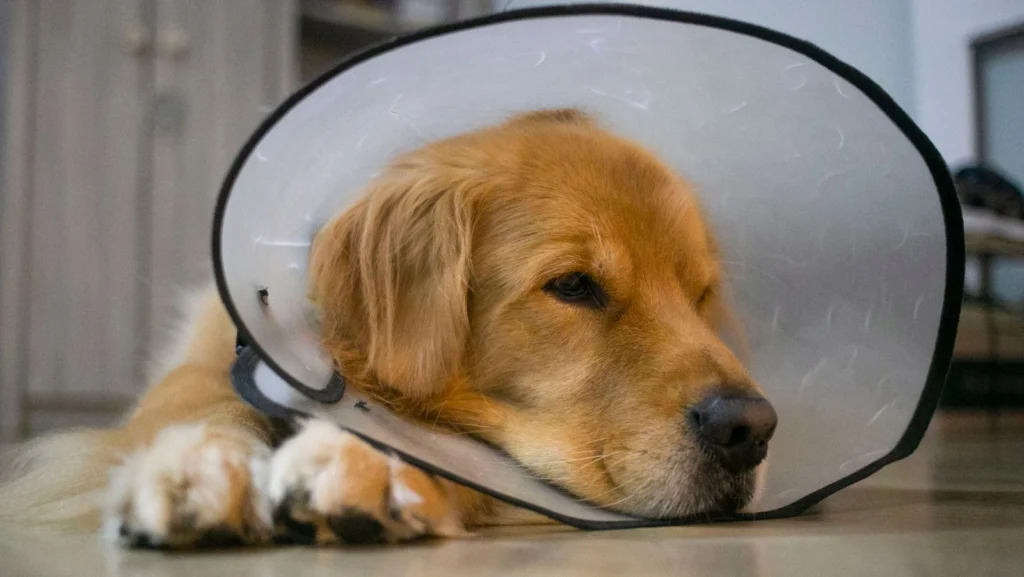
French Bulldog spay recovery at home
Your vet’s discharge instructions come first. General VCA guidance:
- Rest. Most dogs return to normal activity 5-10 days after surgery. Until then, leash walks only.
- Cone or recovery suit to stop licking or chewing the incision.
- Check the incision at least twice a day. It should be clean, with edges touching. Slight redness in the first few days and a little seepage in the first 24 hours can be normal.
- Keep it dry, with no creams unless your vet says so.
- Keep your dog cool and calm, with a harness instead of a collar and short potty breaks out of the heat.
Warning signs: when to call the vet
Go to a vet or emergency clinic immediately if your dog struggles to breathe or breathes very noisily, has pale, gray or blue gums, collapses, or is very hard to wake.
Call your clinic the same day for continuous bleeding or seepage, seepage lasting more than 24 hours, swelling, marked redness, a bad smell or discharge at the incision, an incision that is opening, or stitches your dog has removed. Repeated vomiting or refusing food also deserves a call.
For the breed’s main health risks, see our French Bulldog health guide.
Vet note: This is general information, not veterinary advice. French Bulldog timing guidance comes from small-breed recommendations, not breed-specific studies, so plan timing, anesthesia and aftercare with a vet comfortable with brachycephalic patients.
FAQ
What is the best age to neuter a French Bulldog?
AAHA suggests about 6 months for small-breed males and about 5-6 months, before the first heat, for females. Decide with your vet.
Should I wait until after my female’s first heat?
Waiting raises mammary tumor risk: below 0.5% when spayed before the first heat, per VCA, versus 8% after one heat, per AAHA. See our guide to French Bulldog heat cycles.
How long does recovery take?
VCA says most dogs return to normal activity 5-10 days after surgery.
Sources
- 2019 AAHA Canine Life Stage Guidelines — American Animal Hospital Association (JAAHA)
- Assisting Decision-Making on Age of Neutering for 35 Breeds of Dogs: Associated Joint Disorders, Cancers, and Urinary Incontinence — Hart et al., Frontiers in Veterinary Science (2020)
- Spaying in Dogs — VCA Animal Hospitals
- Neutering in Dogs — VCA Animal Hospitals
- Care of Surgical Incisions in Dogs — VCA Animal Hospitals
- Specialized Surgery Helps Dogs Like Billy Breathe Easy — ASPCA