
Neutering a French Bulldog (spaying a female or castrating a male) is something AAHA recommends for every dog not intended for breeding, yet the timing advice can feel contradictory. This guide sets out what the guidelines and research actually say, where the evidence is thin for Frenchies, and how to help your dog recover at home.
Quick answer: AAHA guidelines suggest that dogs expected to weigh under 45 lb, which includes Frenchies, are generally spayed or neutered at around 5-6 months, adjusted for the individual dog. Spaying prevents pyometra and lowers mammary tumor risk. After surgery, labored breathing, pale or blue gums, collapse or a gaping or bleeding incision need a vet right away.
Key takeaways
- AAHA suggests about 5-6 months for small breeds under 45 lb, tailored to each dog.
- Spaying prevents pyometra; spaying before the first heat greatly lowers mammary tumor risk.
- The well-known UC Davis breed study did not include French Bulldogs, so its results can’t be applied directly.
- Neutered dogs are more prone to weight gain, so adjust food and keep up gentle exercise.
- Plan anesthesia around the airway, and check the incision at least twice a day at home.
When to spay a French Bulldog: what the guidelines say
The 2019 AAHA Canine Life Stage Guidelines, written for veterinary teams by the American Animal Hospital Association, split dogs by expected adult weight. For dogs not intended for breeding and expected to weigh under 45 lb when full-grown, the guidelines say they should generally be sterilized by 5-6 months of age. A Frenchie easily falls into this group. Their summary table suggests:
| Procedure | Small breeds (under 45 lb) | Large breeds (45 lb and over) |
|---|---|---|
| Castration (males) | About 6 months of age | Wait until growth stops (about 9-15 months) |
| Spay (females) | Before the expected first heat (about 5-6 months) | About 5-15 months, using clinical discretion |
AAHA is also candid about the limits of the evidence. The guidelines note that much of the spay-neuter research shows association rather than cause and effect, that findings in one breed may not apply to all breeds, and that “better data are needed” on the best age for particular sizes and breeds. They also say the age range can be individualized, for example to spay before the first heat or to fix retained baby teeth under the same anesthetic. In other words, 5-6 months is a starting point for a conversation, not a fixed rule.
What the Hart breed study does (and doesn’t) tell Frenchie owners
Many owners have read about a 2020 study by Hart and colleagues at UC Davis, published in Frontiers in Veterinary Science. It looked back at up to 15 years of veterinary hospital records for 35 breeds and asked whether neutering at different ages was linked to joint disorders, certain cancers and urinary incontinence. Its main finding was that risk varied a lot by breed and was generally related to body size: small breeds did not appear to have a higher risk of joint disorders with neutering.
French Bulldogs were not among the 35 breeds. The study did include three related breeds, and their results are interesting, though they come from a few hundred dogs per breed and can’t be assumed to apply to Frenchies:
- Bulldog: joint disorders seemed more common in dogs neutered before 6 months, but the difference was not statistically significant. The authors left the age to owners, adding that some may wish to be cautious.
- Pug: no evident increase in joint disorders or cancers with neutering.
- Boston Terrier: males neutered before a year of age had a significantly higher rate of the cancers studied, so the authors suggested waiting until after a year for males. No increase was seen in females.
The authors list their own limitations, including the limited number of breeds and no information on why owners chose to neuter or not. The honest summary is that there is no breed-specific timing evidence for French Bulldogs yet, so your vet will weigh general small-breed guidance against your dog’s own health.
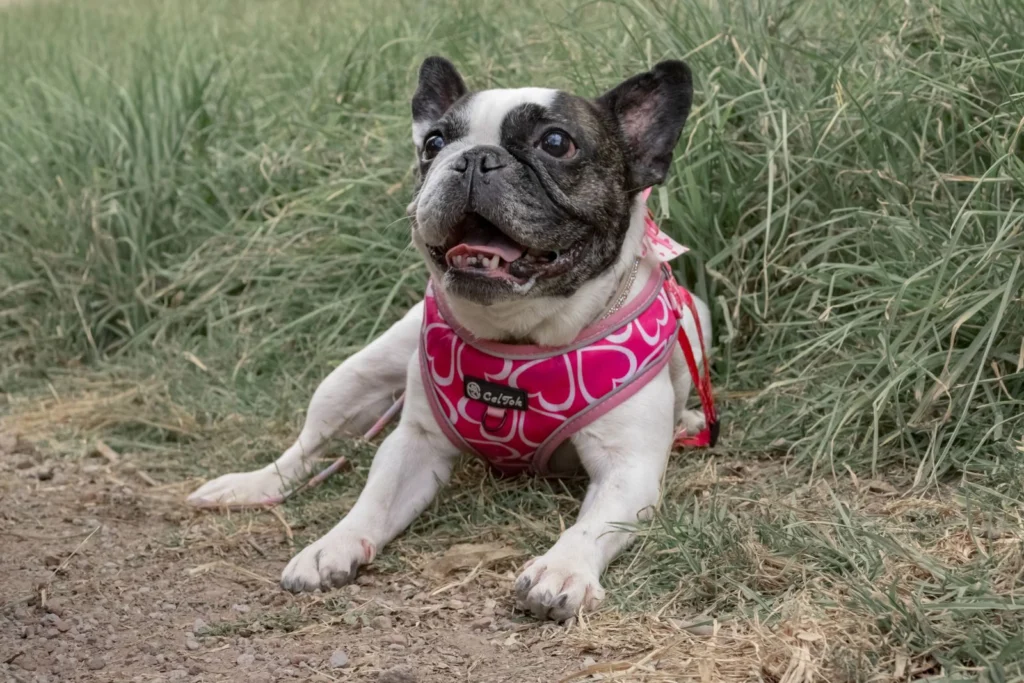
Pros of spaying and neutering a French Bulldog
- No pyometra. VCA Animal Hospitals notes that spaying prevents pyometra, a potentially fatal infection of the uterus. In the Hart study, it was recorded in 2% of intact female Bulldogs, 5% of intact female Pugs and 7% of intact female Boston Terriers.
- Lower mammary tumor risk. VCA says dogs spayed before their first heat have less than a 0.5% chance of developing breast cancer. AAHA cites a reported incidence of 8% in females spayed after one heat and 26% after a second.
- No uterine, ovarian or testicular cancer. Removing these organs removes their cancers. VCA also notes neutering lowers the risk of some prostate problems.
- No unwanted litters. This matters more than usual in Frenchies, because many cannot give birth naturally. Our guide to French Bulldog pregnancy and C-sections explains why.
- Longer average lifespan. AAHA states that sterilized dogs of both sexes live longer on average than intact dogs.
Cons and trade-offs to discuss with your vet
- Weight gain. AAHA notes that most, but not all, studies find a higher risk of obesity after sterilization, greatest in the two years after surgery. VCA explains that the surgery lowers metabolism, but overfeeding and too little exercise are the main causes. For a breed whose breathing and spine suffer under extra pounds, this is the trade-off most owners can manage. See our guide to helping an overweight French Bulldog.
- Urinary incontinence. AAHA says this is more common overall in spayed females.
- Joint and some cancer risks. In some breeds, especially larger ones, early neutering has been linked with joint problems and certain cancers. AAHA also notes that sterilized dogs overall have a higher risk of some cancers, such as prostate cancer and mast cell tumors. Evidence for small breeds is more reassuring, but not specific to Frenchies.
- Anesthesia. Any surgery means anesthesia, which needs extra planning in flat-faced dogs (see below).
Neutering a French Bulldog safely: anesthesia and the airway
French Bulldogs are brachycephalic, and most of their extra anesthetic risk comes from the narrow airway, especially while waking up. Regurgitation is another concern. Our detailed guide to French Bulldog anesthesia and surgery covers the questions to ask, fasting and the airway plan.
Because spay or neuter is often a Frenchie’s first anesthetic, it can be a chance to look at the airway too. AAHA encourages vets to consider breed-specific problems that can be treated at the time of sterilization under a single anesthetic. Some dogs have airway surgery at the same visit: the ASPCA has described a group of Bulldog-type dogs in its care who were spayed and neutered during their airway surgeries. Combining procedures means one fewer anesthetic but a longer one, so whether it suits your dog is a decision for your vet or surgeon.
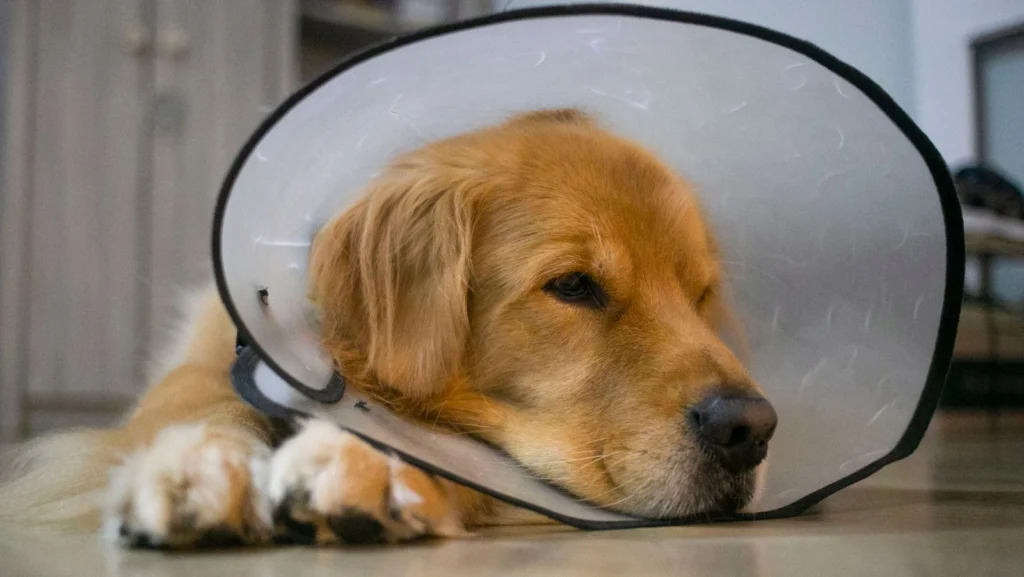
Recovery at home after spay or neuter surgery
Your vet’s discharge instructions always come first. General guidance from VCA Animal Hospitals includes:
- Rest. Most dogs can return to normal activity 5-10 days after surgery. Until then, keep your dog quiet, with leash walks only and no running, climbing stairs, swimming or bathing.
- Cone or recovery suit. Don’t let your dog lick or chew the incision. A cone works for most dogs, and a recovery garment that covers the incision is an alternative. Your vet can suggest which suits your Frenchie.
- Check the incision at least twice a day. It should be clean, with edges touching. Slight redness in the first few days and a little seepage in the first 24 hours can be normal.
- Keep it dry. No baths, and no creams, peroxide or alcohol on the wound unless your vet says so.
- Keep your dog cool and calm. A quiet, comfortable room, a harness instead of a collar and short potty breaks out of the heat help an already narrow airway.
Warning signs: when to call the vet
Go to a vet or emergency clinic immediately if your dog struggles to breathe or breathes very noisily, has pale, gray or blue gums, collapses, or is very hard to wake.
Call your clinic the same day for continuous bleeding or seepage, seepage lasting more than 24 hours, swelling, marked redness, a bad smell or discharge at the incision, an incision that is opening, or stitches your dog has removed. Repeated vomiting or refusing food also deserves a call.
For more on the breed’s main health risks, see our French Bulldog health guide.
Vet note: This article is general information, not a substitute for veterinary advice. Timing guidance for French Bulldogs is based on small-breed recommendations rather than breed-specific studies. Talk through timing, the anesthetic plan and aftercare with a vet who knows your dog and is comfortable with brachycephalic patients.
FAQ
What is the best age to neuter a French Bulldog?
AAHA guidelines suggest about 6 months for small-breed males and about 5-6 months, before the first heat, for small-breed females, adjusted to the individual dog. No study has yet set a French Bulldog-specific age, so decide with your vet.
Should I wait until after my female’s first heat?
Waiting lets the first heat happen, which raises mammary tumor risk: VCA puts the risk below 0.5% when spayed before the first heat, and AAHA cites 8% after one heat. Your vet may still advise a different timing for your dog. For what the first heat looks like, see our guide to French Bulldog heat cycles.
Will neutering make my Frenchie gain weight?
It can make weight gain more likely, especially in the first two years. VCA notes that overfeeding and lack of exercise are the main causes, so measuring food and keeping up gentle daily activity helps prevent it.
Can airway surgery be done at the same time?
Sometimes. Some brachycephalic dogs have airway surgery under the same anesthetic as their spay or neuter. It avoids a second anesthetic but makes the procedure longer, so ask your vet or surgeon whether it makes sense for your dog.
How long does recovery take?
VCA says most dogs return to normal activity 5-10 days after surgery. Follow your vet’s instructions on activity and rechecks.
Sources
- 2019 AAHA Canine Life Stage Guidelines — American Animal Hospital Association (JAAHA)
- Assisting Decision-Making on Age of Neutering for 35 Breeds of Dogs: Associated Joint Disorders, Cancers, and Urinary Incontinence — Hart et al., Frontiers in Veterinary Science (2020)
- Spaying in Dogs — VCA Animal Hospitals
- Neutering in Dogs — VCA Animal Hospitals
- Care of Surgical Incisions in Dogs — VCA Animal Hospitals
- Specialized Surgery Helps Dogs Like Billy Breathe Easy — ASPCA