
Traveling with a French Bulldog by car, whether puppy or adult, is usually easier and safer than flying, but it still takes planning. A Frenchie needs a proper restraint, a cool car, regular breaks and a calm introduction to the road, and should never be left alone in a parked vehicle.
Quick answer: Secure your French Bulldog in a crash-tested harness that works with the seat belt, or in a secured crate in the back, never the front passenger seat. Keep the car cool, stop about every two hours for water and a potty break, and never leave your dog in a parked car: interiors can heat up about 19°F in 10 minutes.
Key takeaways
- Use a crash-tested car harness that works with the seat belt, or a secured crate in the back of the car.
- Keep your Frenchie out of the front passenger seat because of airbags, and away from open windows.
- Never leave a French Bulldog in a parked car: cracking the windows makes no real difference.
- On long drives, stop about every two hours for a short walk, a potty break and small amounts of water.
- Build car confidence with short, rewarded trips, and ask your vet about motion sickness medicine.
Why French Bulldog car travel needs extra care
Frenchies have less margin for error than most dogs. As a short-nosed breed, they cool themselves poorly by panting, and many have some degree of brachycephalic obstructive airway syndrome (BOAS). The AVMA notes that short-nosed pets are more at risk than others of overheating or breathing problems during travel.
Choosing a restraint: crash-tested harness or crate
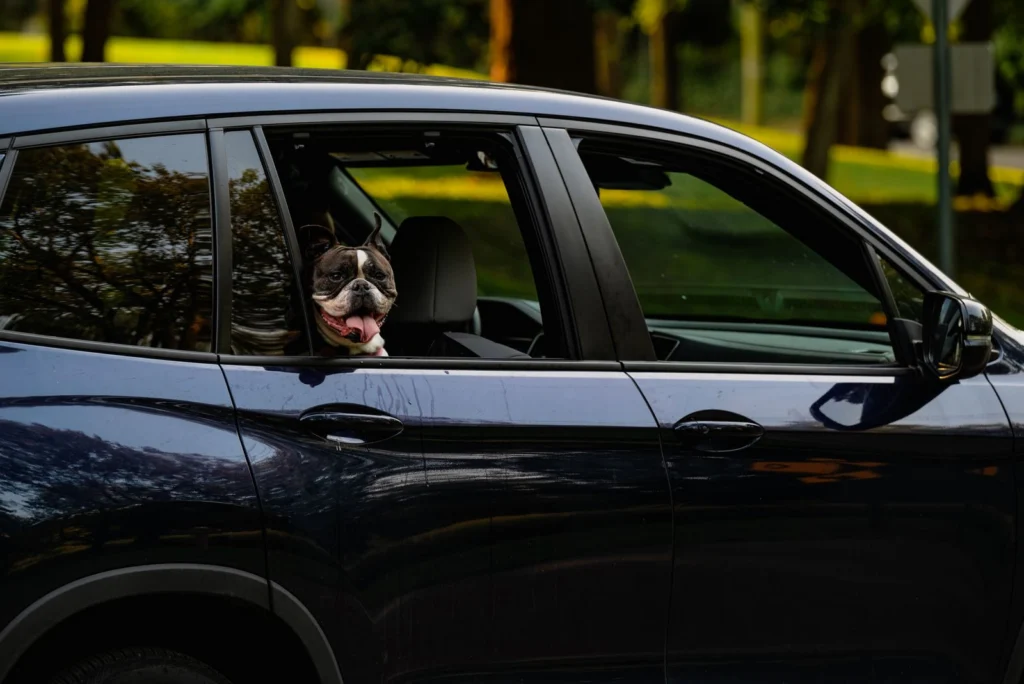
A loose dog can end up in the footwell near the pedals, and the AVMA warns that in a collision an unrestrained pet can be crushed by an airbag or thrown through a window or windshield. Always use a safety harness, crate or carrier.
The catch: pet restraints have no required safety standards or industry tests. AVMA News describes the Center for Pet Safety as the only nonprofit with testing and performance requirements for these products, and it publishes its crash-test results online. Choose a product that has passed independent crash testing, not one that simply says “safety” on the box.
| Option | What to look for | Good to know |
|---|---|---|
| Car safety harness | Crash-tested, connects to the vehicle’s seat belt, keeps your dog sitting upright | A car harness is not the same as a walking harness |
| Crate | Big enough to stand up, turn around and lie down comfortably; strapped or belted in place | Place it as near the center of the vehicle as possible, or in the far back of an SUV |
| Carrier | Secured so it cannot slide or tip; good ventilation | Many adult Frenchies are too heavy or broad for small carriers |
The harness and crate advice comes from the AVMA, which says a car harness should be crash-tested, work with the seat belt and keep your dog sitting upright. Dr. Elisa Mazzaferro, an emergency and critical care veterinarian quoted by AVMA News, adds that crates can be belted into a sedan or placed in the far back of an SUV.
Wherever your dog rides, keep them out of the front passenger seat if the car has airbags, never let them sit on the driver’s lap, and don’t let them ride with their head out the window. The AVMA warns that flying debris can injure a dog’s eyes, ears, nose and mouth. If your Frenchie already loves their crate at home, travel gets much easier; our French Bulldog crate training guide explains how to build that positive association.
Never leave your Frenchie in a parked car
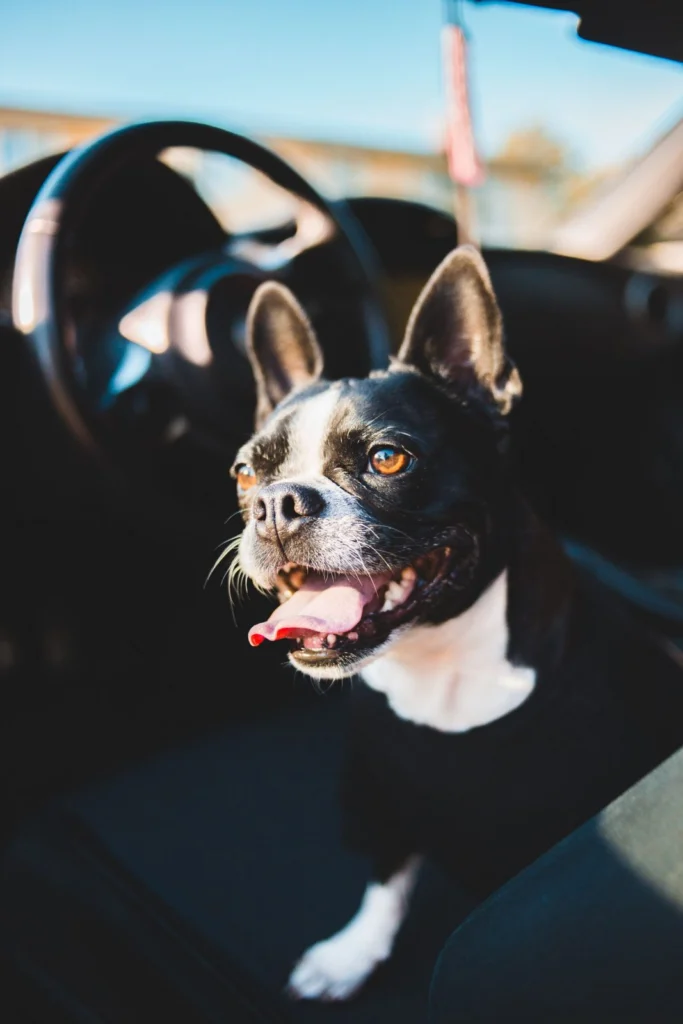
This is the single most important rule. According to the AVMA, a car’s interior can rise about 19°F in 10 minutes, 29°F in 20 minutes and 43°F in an hour, and the rise is roughly the same whether it is 70 or 110 degrees outside. On a 70°F day, that can mean more than 110°F inside the car. Parking in the shade doesn’t make it safe, and the AVMA says cracking the windows makes no difference. The National Weather Service says it is never safe to leave a pet locked in a car.
For a flat-faced dog, that heat can become an emergency fast. The RSPCA notes that brachycephalic breeds are at higher risk of heatstroke because they cannot pant as effectively. If your dog can’t come inside with you at a stop, leave them at home or have someone stay with them in the running, air-conditioned car.
If your dog overheats on the road
Follow the “cool first, transport second” rule from our French Bulldog heat safety guide. Stop, move your dog into shade or air conditioning, pour cool water (cold water is fine too) over the neck, belly and inner thighs, and use moving air to help it evaporate. Don’t drape wet towels over your dog. Once cooling has started, call ahead and drive to the nearest vet with the air conditioning on. Stumbling, vomiting, collapse, or dark red, pale or bluish gums are emergency signs.
Keeping the car cool and comfortable
- Pre-cool the car before your dog gets in, and keep the air conditioning on in warm weather.
- Check the air where your dog rides. Make sure cool air actually reaches the back seat or the crate, not just the front of the car.
- Shade the windows beside your dog and drive in the cooler hours in summer.
- Watch your dog. Heavy panting that doesn’t settle means stop and cool down.
Breaks, food and water on long trips
The AVMA recommends stopping every two hours on long trips so dogs can stretch their legs and relieve themselves, and feeding small portions of food and water along the way. Clip on the leash before the door opens, and make sure ID tags are on. Choose shaded spots and keep walks short on hot pavement.
Before a long trip, Dr. Mazzaferro helps clients find emergency clinics along the route and at the destination, and recommends carrying a copy of your dog’s medical records and prescriptions if they have a chronic health problem.
Motion sickness and car anxiety
VCA Animal Hospitals explains that car sickness is more common in puppies, whose inner-ear balance structures are still developing, and many outgrow it by about a year old. Adult dogs that rarely ride, except to the vet, may link the car with stress. Watch for whining, pacing, heavy drooling, lip licking, lethargy, vomiting or pooping in the car.
Gradual, positive training helps many dogs. VCA suggests a step-by-step approach:
- Sit with your dog in the parked car with the engine running, and reward calm behavior with praise and treats.
- Back out of the driveway and return.
- Drive around the block.
- Slowly build up to about 20 to 30 minutes of comfortable riding.
This can take days or weeks. If your dog seems anxious, stop and try another day; never scold. A familiar blanket, a car-only toy and a cool, quiet cabin can help. VCA adds that skipping a meal for a few hours before the trip may reduce nausea, as long as water stays available (ask your vet first for young puppies). If your Frenchie still gets sick or very stressed, talk to your vet about motion sickness medicine.
Traveling with a French Bulldog: what to pack
Based on the AVMA’s travel checklist, pack:
- Collar, ID tags and microchip details (check that the registry has your current phone number)
- A leash, plus your harness or secured crate
- Food for the whole trip, food and water bowls, and water in case a stop has none
- All medications your dog needs, since refills may be hard to get on the road
- Vaccination records (especially rabies), medical records and any health certificate needed to cross borders
- A recent photo, a first aid kit and the numbers of your vet and a 24-hour clinic at your destination
- Extras for a Frenchie: a cooling mat, poop bags, wipes and a familiar blanket
Road trip or flight?
For most French Bulldogs, driving is the gentler option: you control the temperature, watch your dog and stop whenever needed. The AVMA singles out air travel as especially risky for short-nosed pets, and many airlines restrict them. If flying is unavoidable, our guide to flying with a French Bulldog covers airline rules and preparation.
When travel isn’t a good idea
The AVMA suggests asking first whether your pet really needs to come along. A trusted pet sitter or vet-recommended boarding may be kinder if:
- Your Frenchie has moderate or severe BOAS and the trip falls in hot or humid weather
- Your dog is recovering from surgery, unwell, very young or frail
- Your dog panics in the car despite training
Vet note: Book a checkup before a long trip, especially if your French Bulldog has breathing problems, is overweight or gets carsick. If your dog overheats, start cooling right away and get to a vet.
FAQ
Can my French Bulldog ride in the front seat?
It’s best not to. The AVMA advises keeping dogs out of the front passenger seat in cars with airbags. The back seat or the secured cargo area of an SUV is safer.
How often should I stop on a road trip with my Frenchie?
About every two hours, per the AVMA. Stop sooner if your dog is panting heavily or the day is warm.
Is it OK to leave my Frenchie in the car for a few minutes?
No. A car can heat up about 19°F in 10 minutes, even in the shade with the windows cracked, and flat-faced dogs overheat easily.
Is a dog car seat or booster safe for a French Bulldog?
Only if it has passed independent crash testing. Pet restraints have no required safety standards, so a “safety” label alone means little. A crash-tested harness that works with the seat belt, or a secured crate in the back, is the safer choice.
Will my French Bulldog puppy grow out of car sickness?
Many do, often by about a year old, according to VCA. Short, positive practice trips help in the meantime.
Sources
- Pet safety in vehicles — American Veterinary Medical Association
- Traveling with your dog or cat — American Veterinary Medical Association
- Data, safety regulations lacking when it comes to pets and vehicles — AVMA News
- Motion Sickness in Dogs — VCA Animal Hospitals
- How to Recognise & Treat Heatstroke in Dogs — RSPCA
- Children, Pets and Vehicles — National Weather Service