
Sooner or later, most French Bulldogs need to be put under, whether for a spay or neuter, a dental cleaning, an eye procedure or airway surgery. If you have read anything about French Bulldog anesthesia, you have probably come across warnings that flat-faced dogs are “high risk.” That is partly true, but most of the extra risk comes from the airway, and much of it can be planned for. This guide explains where the risk really lies, what to ask your vet before the big day, and how to prepare your home for a safe recovery.
Key takeaways
- Most of the extra anesthetic risk in Frenchies comes from their narrow airway, and much of it can be planned for.
- Waking up, around and after removal of the breathing tube, is an especially vulnerable phase for flat-faced dogs.
- Regurgitation and aspiration are key concerns, so tell your vet if your dog often brings up food or foam.
- Ask about bloodwork, monitoring, the airway plan and who watches your dog during recovery.
- At home: keep your dog calm and cool, use a harness, keep the cone on and watch breathing closely.
Why French Bulldog anesthesia needs extra planning
French Bulldogs are a brachycephalic (flat-faced) breed. Their short skull leaves a lot of soft tissue packed into a small space, which narrows the airway at the nostrils, soft palate and larynx. Many Frenchies have some degree of brachycephalic obstructive airway syndrome (BOAS). When a dog is awake, it can usually work around that narrowing. Under sedation and anesthesia, the muscles that hold the throat open relax, and the airway can close down much more easily.
Veterinary research points to three main concerns:
- Airway obstruction. A narrowed upper airway can become blocked, especially when a dog is sedated but not fully intubated, or after the breathing tube comes out.
- Regurgitation and aspiration. Flat-faced dogs commonly have reflux and regurgitation. If stomach contents come up while the dog is groggy, they can be inhaled into the lungs. A 2025 study in the Journal of Small Animal Practice notes that aspiration pneumonia is the most common post-operative anesthetic complication reported in brachycephalic dogs, and that dogs with a history of regurgitation are more likely to regurgitate after surgery.
- Recovery. A 2026 paper in Frontiers in Veterinary Science notes that serious adverse events in small animals cluster around extubation (removal of the breathing tube) and early recovery, and that flat-faced breeds are overrepresented among breathing problems, low oxygen levels and unplanned re-intubation at that stage. A dog that looks awake does not necessarily have full control of its airway yet.
Our French Bulldog health guide covers a well-known study showing the gap between flat-faced and other dogs is widest after the procedure, not during it.
How risky is it, really?
Here is the reassuring part. Anesthesia deaths in dogs are rare. A large 2025 study published in Animals analyzed more than 55,000 canine anesthetics from 405 centers in 21 countries, tracking each dog from premedication to 48 hours after extubation. Overall anesthetic-related mortality was 0.69%, or about 7 in 1,000. Brachycephalic dogs as a group had a slightly higher crude rate (0.82% versus 0.65%), but the difference shrank and was no longer statistically significant once the researchers accounted for how healthy each dog was before anesthesia. French Bulldogs, with 2,621 anesthetics in the dataset, did not have a higher death rate than mixed-breed dogs.
The authors’ conclusion is worth knowing: a dog’s overall health matters more than its breed, and flat-faced dogs still deserve airway-centered planning. That includes experienced intubation, readiness for a difficult airway, protection against reflux and aspiration, temperature management, careful extubation and close recovery observation.
In short: breathing trouble and regurgitation are more common in Frenchies, but with good planning anesthesia is usually completed safely.
Questions to ask your vet before surgery
A survey of more than 1,300 veterinary professionals, reported in Today’s Veterinary Practice in 2026, found that the way clinics manage flat-faced dogs around anesthesia varies widely, from pre-visit calming medication to oxygen before induction and recovery care. That makes it reasonable, and helpful, to ask questions.
| Ask about | Why it matters |
|---|---|
| Pre-anesthetic exam and bloodwork | Overall health is a major driver of anesthetic risk. Bloodwork can pick up problems that change the plan. |
| Experience with brachycephalic dogs | Intubating and recovering a narrow airway is a skill that improves with practice. |
| Airway plan | Ask whether they give oxygen before induction, how quickly they place the breathing tube, and what happens if the airway is difficult. |
| Monitoring during anesthesia | Ask what is monitored (for example oxygen levels, breathing, heart rate, blood pressure, temperature) and who is watching. |
| Reflux and regurgitation | Your vet may give anti-nausea or stomach-protecting medication. Mention any history of regurgitation. |
| Extubation and recovery | Ask whether the tube stays in until your dog is properly awake and swallowing, and whether someone stays with your dog after it comes out. |
| Combining procedures | Ask whether BOAS surgery or another procedure can be done under the same anesthetic, and how that changes the length of the procedure. |
| Discharge timing | Ask when your dog will come home and whether an overnight stay is recommended. |
Should BOAS surgery be done at the same time?
There is no single right answer. Combining procedures means one fewer anesthetic, which many owners and vets prefer. On the other hand, longer anesthetics carry more risk. In a 2020 JAVMA study of 45 brachycephalic dogs, every extra 15 minutes of anesthesia raised the odds of a post-anesthetic complication by 12%. The same study found that dogs who had already had corrective airway surgery had 79% lower odds of post-anesthetic complications after a later anesthetic. It was a small study, but it suggests that fixing a significantly obstructed airway can make future anesthetics smoother. Your vet or surgeon can weigh these factors for your individual dog.
Before the procedure, tell your vet about any snoring, noisy breathing, heat intolerance and especially regurgitation or vomiting, plus all medications and supplements.
Fasting: follow your vet’s instructions
Fasting before anesthesia helps reduce the chance of vomiting or regurgitation, but the right timing depends on your dog, the procedure and the clinic’s protocol. The Today’s Veterinary Practice report noted that fasting times in practice range from very short to very prolonged, and that both extremes carry risk. Don’t guess or “play it safe” by fasting longer than advised. Ask your vet:
- When to give the last meal, and whether water is allowed and until when.
- Whether to give your dog’s usual medications that morning.
- Whether any special instructions apply to a young puppy or a dog with a medical condition.
Preparing at home before the procedure
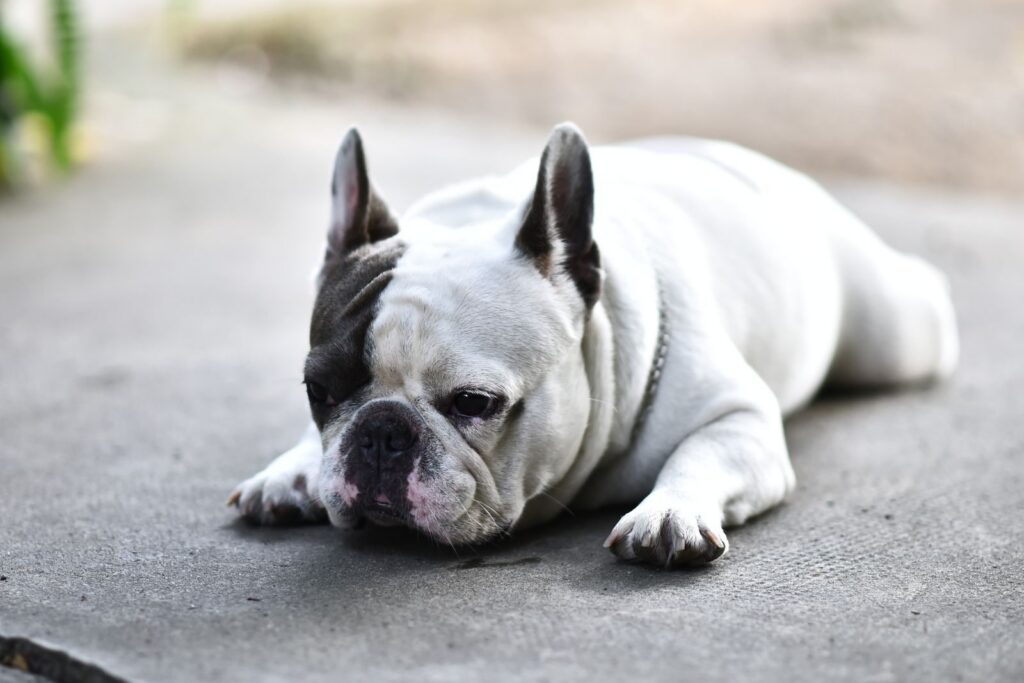
- Keep things calm. Stress and excitement make a Frenchie breathe harder, which narrows the airway further. A quiet morning and a calm car ride help. If your dog gets very anxious at the vet, ask whether anything can be done to help in advance.
- Keep your dog cool. Avoid hot cars and warm waiting rooms where possible, and schedule around the heat of the day in summer if you can.
- Use a harness, not a collar. A well-fitted harness avoids pressure on the neck and throat. See our guide to the best harnesses for French Bulldogs.
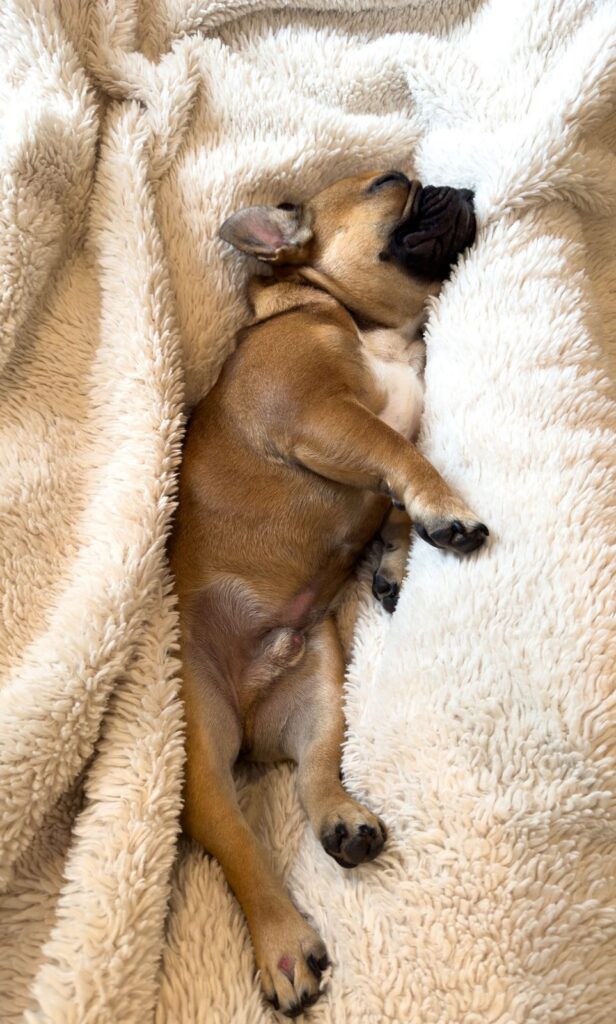
- Set up a recovery space. A soft bed in a quiet room, away from stairs, other pets and young children.
Aftercare: the first days at home
Your vet’s written discharge instructions always come first. VCA Animal Hospitals offers general guidance that fits most procedures:
- Rest and comfort. A soft, clean bed in a quiet, draft-free room at about 68–75°F (20–24°C). Keep your dog indoors overnight and take short leash walks only for potty breaks.
- Grogginess. Anesthetic drugs can take hours to wear off, and some drowsiness may last about a day. Behavior should return to normal within 24 to 48 hours.
- Food and water. VCA suggests offering about half the usual meal a few hours after you get home. Smaller portions may reduce nausea. Don’t restrict water unless your vet tells you to.
- Mild cough. A slight cough from the breathing tube is common and usually fades over a few days. A cough that persists or worsens needs a call to the clinic.
- Cone or recovery suit. Keep it on to stop licking and chewing. If your dog is licking the incision and you weren’t given one, ask the clinic.
- Activity restriction. For most procedures this lasts 7 to 10 days or longer. No running, jumping, swimming or baths until your vet says it is okay.
Watch breathing closely
For a Frenchie, breathing is the most important thing to monitor after anesthesia, especially after airway surgery, when the throat may be swollen. Watch your dog while it sleeps and rests. Also watch for regurgitation or vomiting, as these can lead to aspiration.
When to call the vet
Call immediately or go to an emergency clinic if your dog:
- Struggles to breathe, breathes very noisily or with obvious effort, or can’t settle because of breathing
- Has pale, gray, blue or purple gums or tongue
- Collapses or is very hard to wake
- Coughs repeatedly, breathes fast at rest or seems weak after regurgitating or vomiting
Call the clinic right away for continuous or heavy bleeding, light seepage that lasts beyond 24 hours, or chewed or removed stitches. Also call for swelling, redness, odor or discharge at the incision, a persistent cough, repeated vomiting, refusal to eat, or drowsiness that seems to go on too long.
Vet note: This article is general information, not a substitute for your veterinarian’s advice. Every dog, procedure and clinic is different. Follow your vet’s specific instructions on fasting, medications and aftercare, and call them whenever you are unsure.
FAQ
Is anesthesia dangerous for French Bulldogs?
Flat-faced dogs have more airway-related complications, particularly during recovery. Deaths are rare, though, and one large study found French Bulldogs did not have a higher anesthetic death rate than mixed-breed dogs. Careful planning and monitoring make a real difference.
Why is waking up the riskiest part?
Once the breathing tube is removed, the soft tissues of a narrow airway can collapse or swell while your dog is still drowsy. That is why many vets keep the tube in until a flat-faced dog is properly awake, and why someone should watch closely after it comes out.
Should my Frenchie stay overnight after surgery?
It depends on the procedure and your dog’s breathing. Some dogs go home the same day, while others benefit from overnight monitoring. Ask your vet what they recommend and why.
Can my Frenchie wear a collar after surgery?
A harness is a better choice for walks, because it keeps pressure off the throat. The cone or recovery suit your vet provides is separate and is there to protect the incision.
Sources
- Breed-Specific Anaesthetic Mortality in Dogs: Evidence from an Analysis of 55,019 Cases — Animals (MDPI), via PubMed Central
- Evaluating the impact of a standardised pre-operative patient management protocol on major post-operative complications in dogs undergoing BOAS surgery — Journal of Small Animal Practice, via PubMed Central
- Timing-controlled concept for extubation in brachycephalic dogs — Frontiers in Veterinary Science, via PubMed Central
- Anesthetic risk during subsequent anesthetic events in brachycephalic dogs that have undergone corrective airway surgery: 45 cases (2007-2019) — Journal of the American Veterinary Medical Association, via Europe PMC
- The Data Behind the Variable Perianesthesia Management of Brachycephalic Dogs — Today’s Veterinary Practice
- Post-Operative Instructions in Dogs — VCA Animal Hospitals