
French Bulldog Christmas safety is mostly about the things that only come out once a year: a tree with water underneath, strands of tinsel, glass ornaments on low branches, new cords, candles, festive plants and a house full of visitors. This guide covers decorations, plants and guests. Holiday food is covered separately in our guide to Thanksgiving and Christmas foods for French Bulldogs.
Quick answer: To keep a French Bulldog safe at Christmas, anchor the tree, cover the tree stand and add nothing to the water, skip tinsel, hang breakables high, unplug lights when you are out and never leave candles burning alone. Keep mistletoe, holly, amaryllis and poinsettias out of reach. Call your vet or ASPCA Poison Control for anything swallowed.
Key takeaways
- Secure the tree so it can’t tip, cover the stand and don’t put additives in the tree water.
- Skip tinsel and thin ribbon. Swallowed strands can block the intestines and may need surgery.
- Chewed light cords can burn the mouth or electrocute a dog. Unplug decorations when nobody is home.
- Poinsettias are less toxic than their reputation. Mistletoe, holly and amaryllis deserve more caution.
- Give your dog a quiet room away from guests, and watch the front door when visitors come and go.
Christmas safety for French Bulldogs: where the risks are
Christmas brings things into the house that aren’t there the rest of the year. A tree in the living room, a pile of presents on the floor and bowls of greenery are all new, interesting and at nose height for a small dog.
Most problems fall into four groups: your Frenchie swallows something that blocks the gut, chews something that burns or shocks, eats something toxic, or gets frightened or slips out the door in the bustle. The sections below take each hazard in turn, with the fixes vets and welfare groups recommend.
Setting up the Christmas tree safely
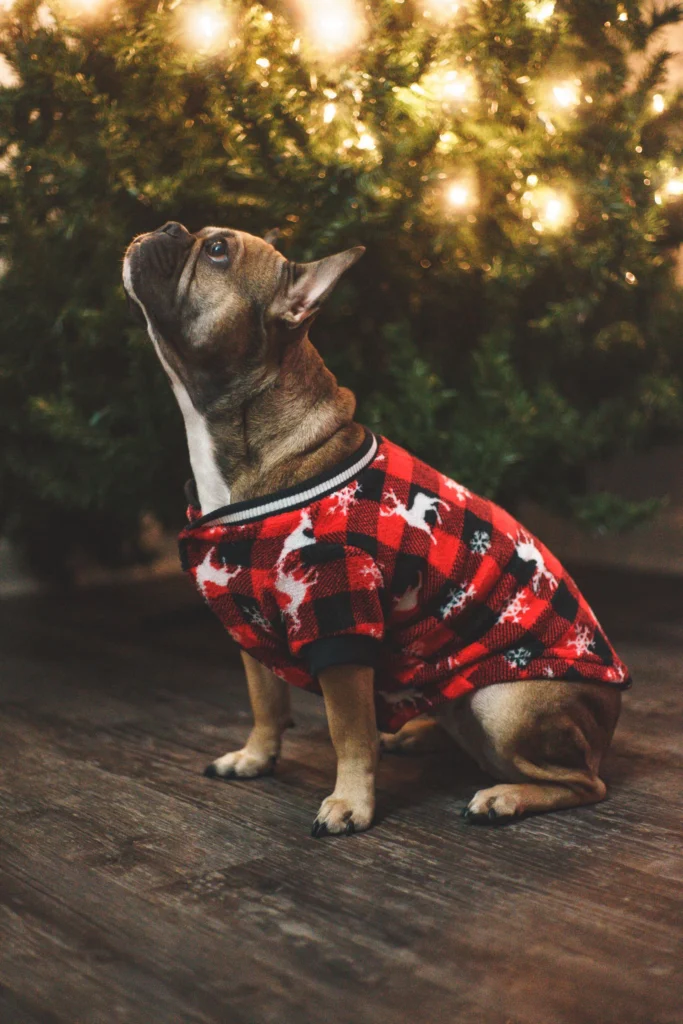
- Anchor it. The ASPCA advises securing the tree so there is no chance it can tip over onto a pet. The American Veterinary Medical Association (AVMA) suggests tying the tree to the ceiling or a doorframe with fishing line.
- Cover the stand. The ASPCA warns that tree water can harbor bacteria that cause stomach upset, and Cornell University’s College of Veterinary Medicine adds that it may contain chemicals. Use a covered stand or block access to it.
- Add nothing to the water. The AVMA says tree water additives can be hazardous if swallowed and advises not adding anything if you have pets.
- Keep up with needles. Cornell notes that eating needles from Christmas trees can irritate the mouth and lead to vomiting, diarrhea, or even intestinal blockage or perforation. Sweep or vacuum around the tree every day.
- Consider a barrier. A baby gate or exercise pen around the tree keeps a curious Frenchie away from the water and lower branches.
Tinsel, ribbon and ornaments
The ASPCA recommends skipping tinsel altogether, because a pet that swallows it can end up with a blocked digestive tract and dehydration, and may need surgery. The AVMA adds ribbons, wreaths and other decorative materials to the same list, since swallowing them whole or in part can cause choking or intestinal blockage.
- Choose wide ribbon over thin curling ribbon and small bows. A veterinary toxicologist interviewed by AAHA notes that wider ribbon is harder for an animal to swallow.
- Hang glass, ceramic and other breakable ornaments on upper branches. According to the ASPCA, broken shards can injure the mouth and digestive tract.
- Keep salt-dough and other food-based ornaments out of reach, or skip them. Cornell explains they can cause salt toxicity, a potentially life-threatening electrolyte problem.
- Check under the tree each morning for dropped hooks, ornaments and garland.
If you saw your dog swallow tinsel or ribbon, or you find a strand coming out of either end, don’t pull it. Call your vet. Call too if your dog vomits, has belly pain or won’t eat after a decoration goes missing.
Lights, cords and candles
Cornell warns that chewed cords can cause electrical burns or even electrocution, and the ASPCA describes a wire as a potentially lethal shock. The Merck Veterinary Manual calls electrical injury a true emergency and notes that mouth burns from cord chewing can lead to fluid in the lungs.
- Run cords behind furniture or along walls, or cover them, so they don’t cross open floor.
- The AVMA advises unplugging decorations whenever nobody is home.
- If your dog is lying near a chewed cord, switch off the power before you touch them. Merck warns that live electrical sources can still be dangerous.
Candles and oil lamps are the other fire risk. The AVMA says never to leave a pet alone in a room with a lit candle or lamp, and Cornell notes that a candle knocked over by a dog is a fire hazard. Keep candles on high, stable surfaces and blow them out when you leave the room.
Which holiday plants are toxic to dogs?
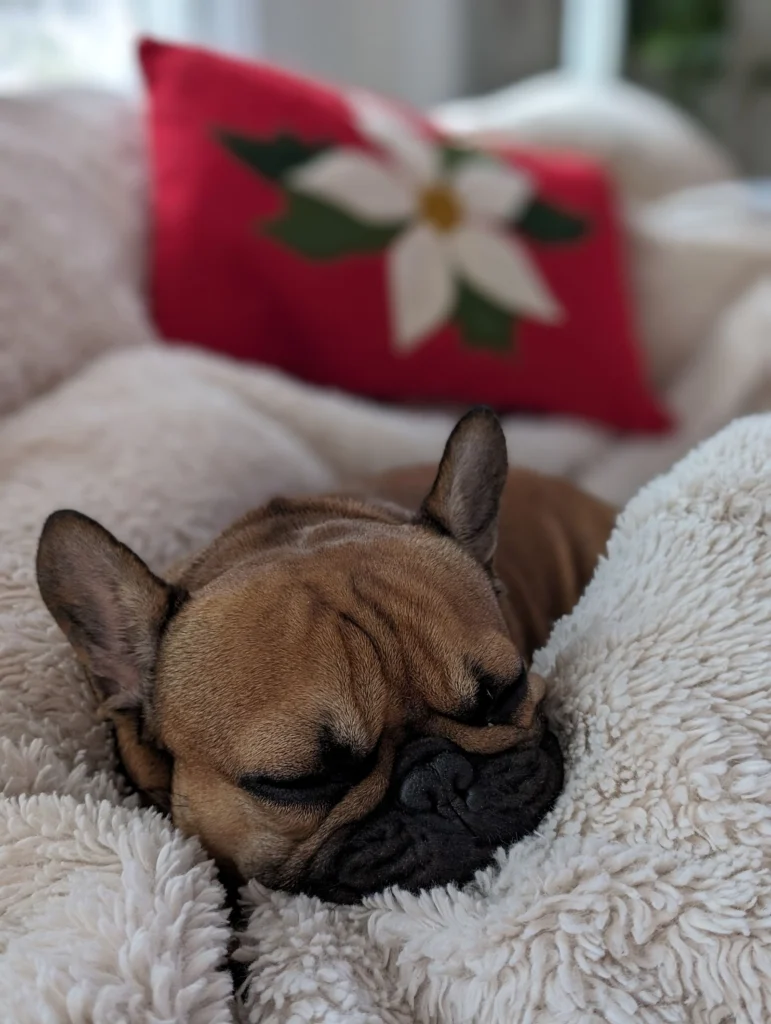
The AVMA lists poinsettias, amaryllis, mistletoe, balsam, pine, cedar and holly among common holiday plants that can be dangerous and even poisonous to pets who eat them. They are not equally risky, though.
| Plant | What the sources say | How cautious to be |
|---|---|---|
| Poinsettia | Mild to moderate stomach irritation (ASPCA). Drooling, vomiting and diarrhea, but should not be fatal (veterinary toxicologist via AAHA). | Keep out of reach; usually mild |
| Holly | Stomach upset and heart problems (ASPCA). Not highly toxic, but causes digestive upset, and spiky leaves can injure the mouth (Cornell). | Keep out of reach |
| Mistletoe | Stomach upset and heart problems (ASPCA). Large amounts can cause vomiting, diarrhea, heart problems and low blood pressure (Cornell). | Hang well out of reach; call if eaten |
| Amaryllis | Among holiday plants that can be dangerous and even poisonous (AVMA). | Keep out of reach; call if eaten |
| Yew in wreaths and garlands | Can cause significant heart issues if eaten (veterinary toxicologist via AAHA). | Ask your florist what greenery is used |
| True lilies | Toxic to cats, with kidney failure; listed as non-toxic to dogs (ASPCA). | Keep out of any home with a cat |
The toxicologist AAHA spoke to said poinsettias “really get the bad rap.” Holly, mistletoe and amaryllis are the ones to keep firmly out of reach, including fallen berries and leaves under hanging mistletoe. If your Frenchie eats a plant you can’t identify, take a photo or sample and call your vet. Artificial plants avoid the question.
Gifts, batteries, potpourri and snow globes
- Batteries. A veterinary toxicologist interviewed by AAHA calls gifts that contain or come with batteries the first red flag. Swallowed button batteries can damage the stomach lining, and regular AA and AAA batteries can have corrosive effects. The ASPCA and Cornell warn that a chewed or punctured battery can burn the mouth and esophagus. Keep spare batteries in a closed drawer.
- Food gifts. The ASPCA notes that pets can smell food inside wrapped presents, so keep wrapped chocolate, candy and treats off the floor until they’re opened.
- Wrapping and packaging. The AVMA advises clearing away sparkly ribbon and other packaging before your dog plays with or eats it.
- Liquid potpourri. The AVMA warns that liquid potpourri contains essential oils and other ingredients that can severely damage a pet’s mouth, eyes and skin. Dry potpourri made of flowers, bark or spices can also cause problems if eaten.
- Snow globes. According to the AAHA interview, some snow globes contain ethylene glycol, the toxic ingredient in antifreeze, and a smaller dog drinking a lot of the liquid from a broken globe could be at risk. Keep them on high, stable shelves.
For year-round hazards like medications, rodent bait and household cleaners, see our French Bulldog home safety guide.
Guests, open doors and a quiet room
The AVMA notes that visitors, noise and party excitement can upset pets, and that even dogs who aren’t normally shy can become nervous during a holiday gathering.
- Set up a quiet room. The AVMA advises giving every pet a room or crate away from the commotion, where guests won’t follow, that the dog can go to at any time. Cornell suggests a comfortable bed, toys and long-lasting treats there.
- Keep the routine. Cornell recommends sticking to regular meal and walk times and giving your dog short periods of focused attention.
- Watch the exits. The AVMA warns that while you’re welcoming guests and collecting coats, a pet can slip out the door and get lost. Use a gate or closed door during arrivals.
- Check ID. Make sure your dog wears a tag with your current number and that the microchip registration is up to date, as the AVMA advises.
- Ask guests to store medications. The ASPCA suggests that houseguests keep medications in a closed cabinet, not in a bag or suitcase on the floor.
- Plan for visiting dogs. If you don’t know how a guest’s dog will get along with yours, the AVMA suggests politely declining or supervising closely.
If your dog is very unsettled by houseguests, the AVMA suggests talking to your vet, and Cornell advises doing that early, before the event. Reward calm behavior, and never punish a dog for hiding.
Holiday travel, boarding and winter walks
If your dog travels with you, the AVMA notes that crossing state lines requires a health certificate from your vet, even by car, and that pets should be restrained and never left alone in a vehicle. It also says short-nosed dogs may have difficulty with air travel, so talk with your vet before flying. See our guide to car travel with a French Bulldog.
If your dog is boarding, the AVMA advises asking your vet about canine flu and other contagious diseases and checking vaccines are current. For winter walks, our guide to French Bulldogs in cold weather covers ice melt on sidewalks, paw care and antifreeze.
Vet note: Before the holidays, find out where your nearest 24/7 emergency clinic is and save its number, your vet’s number and ASPCA Poison Control, (888) 426-4435 (a fee may apply). The AVMA lists sudden behavior changes, depression, pain, loss of appetite, vomiting and diarrhea as signs your pet may have eaten something it shouldn’t. Call right away if you see them, or if your dog chewed a cord, swallowed tinsel, ribbon or a battery, or ate a holiday plant.
FAQ
Is a real or artificial tree safer for my French Bulldog?
An artificial tree avoids tree water and fallen needles, which Cornell says can irritate the mouth and cause vomiting or a blockage. Both can still tip over and carry ornaments and cords, so anchor either one.
My Frenchie ate a poinsettia leaf. Is that an emergency?
Usually not. The ASPCA describes mild to moderate stomach irritation, and Cornell lists drooling, vomiting and diarrhea. Call your vet or ASPCA Poison Control for advice, especially if your dog ate a lot or seems unwell.
Can I use tinsel if I hang it high on the tree?
The ASPCA advises skipping tinsel altogether rather than trying to keep it out of reach. Loose strands can still fall to the floor, so lights and ornaments are the safer choice.
What should I do if my dog chewed through a light cord?
Switch off the power or unplug the cord before touching your dog, then call your vet right away, even if your dog seems fine. Merck notes that complications can develop later, and mouth burns from cord chewing can lead to fluid in the lungs.
Sources
- Winter holiday pet safety — American Veterinary Medical Association
- Holiday Safety Tips — ASPCA
- Holiday hazards for dogs — Cornell University College of Veterinary Medicine, Riney Canine Health Center
- Festive hazards pets might get into during the holidays — American Animal Hospital Association (NEWStat)
- Lily — ASPCA Animal Poison Control Center
- Lightning Strike and Electrical Injury — Merck Veterinary Manual