
French Bulldog home safety comes down to a few breed-specific risks: a back that doesn’t love stairs or jumping, a front-heavy build that struggles in water, a short airway that struggles in heat, and a habit of eating things it shouldn’t. This room-by-room guide doubles as a puppy-proofing plan for a new Frenchie.
Quick answer: To make your home safe for a French Bulldog, gate stairs and add ramps to furniture, lay non-slip rugs on hard floors, fence and cover pools, keep rooms cool, and lock away medications, rodent bait, antifreeze and toxic foods. If your dog swallows something harmful, call your vet or a pet poison hotline right away.
Key takeaways
- Limit stairs and jumping: use ramps or steps for the sofa and bed, and gates where stairs are steep or your dog is a puppy.
- Non-slip rugs and runners on hard floors help your dog walk, turn and stand up safely.
- Frenchies are poor swimmers. Fence and cover pools and never leave your dog alone near water.
- Store medications, rodent bait, antifreeze, cleaners and toxic foods where your dog can’t reach them.
- Don’t make your dog vomit at home. Call your vet or a poison hotline first.
Why French Bulldog home safety needs a breed-specific plan
The French Bull Dog Club of America describes the Frenchie as both a short-faced (brachycephalic) and a dwarf (chondrodystrophic) breed. The club notes that Frenchies have less tolerance of heat, exercise and stress, and that “lifelong exercise precautions are warranted, such as limited use of stairs and jumping.” It also warns that they are poor swimmers and can easily drown because of their front-heavy build.

Puppy proofing for a French Bulldog: cords and small objects
Teething puppies chew everything. Unplug or cover electrical cords, or run them behind furniture. Pet Poison Helpline warns that dogs often chew batteries and battery-containing devices like remote controls and phones, and swallowed batteries can cause serious chemical burns. Pick up coins, rubber bands and small toys daily, and use a crate or playpen when you can’t watch.
Stairs, furniture and jumping
- Gate the stairs where it matters. VCA says that when a vet advises avoiding unnecessary stairs, baby gates may be the best solution. Gates make the most sense for puppies, dogs with a history of back pain and long or steep flights; put one at the top and one at the bottom.
- Add grip to any stairs your dog does use. VCA suggests non-slip surfaces such as carpet runners or grip tape.
- Use ramps or pet steps for the sofa, bed and car so your dog isn’t jumping down several times a day. VCA advises choosing a ramp that is sturdy, doesn’t slip, has good grip and is built so the dog can’t fall off the side, then helping your dog get comfortable using it.
- Carry your dog with one arm under the chest and one under the back end so the spine stays level.
Reluctance to jump or climb, a hunched back or crying out when picked up can point to a disc problem and need a vet visit. Our guide to IVDD and back problems in French Bulldogs explains the signs and what the research says about stairs and jumping.
Slippery floors
VCA notes that hard flooring like hardwood, laminate and tile is not good for dogs who struggle with grip. You don’t need wall-to-wall carpet:
- Lay area rugs and runners where your dog spends the most time and along the routes they use, such as hallways and the path to the water bowl.
- Choose rugs with a non-slip backing and no raised corners or edges that could trip your dog.
- Keep nails short and fur between the toes trimmed for better grip. VCA notes that most dogs need a nail trim at least once a month.
Pools, ponds and hot tubs
A Frenchie’s heavy front end and short legs make water dangerous. VCA says stocky, short-legged breeds like bulldogs and pugs will always need a life jacket in the water. Its advice for homes is simple: fence off and cover your pool, teach your dog how to climb out using steps or a dog ramp, and never leave your pet unattended around water. Apply the same caution to garden ponds and hot tubs. Our guide to whether French Bulldogs can swim covers life jackets and water safety in more detail.
Heat: rooms that overheat
Short airways mean Frenchies can overheat indoors too. Sunrooms, upper floors, west-facing rooms and garages can heat up quickly, and a parked car is never safe. Air conditioning is one of the most effective ways to keep a Frenchie comfortable in hot weather, and fans help move the air. Close blinds on sunny windows, offer a cool floor or mat, and keep water in more than one room.
Heavy panting, noisy breathing, drooling, weakness or collapse can mean heatstroke. Cool your dog first (cold water is fine), then get to a vet. Read our French Bulldog heat safety guide for the full plan.
Kitchen and pantry: toxic foods
ASPCA Animal Poison Control lists human foods alongside plants, human medications and household products as poison risks for pets. Keep these well out of reach:
- Xylitol (in some sugar-free gum, candy, baked goods and toothpaste): can cause low blood sugar and possibly liver damage, per the ASPCA.
- Grapes and raisins: can lead to kidney damage.
- Chocolate: the darker the chocolate, the greater the risk; baking chocolate and cocoa powder are the most dangerous.
- Onions, garlic and chives: can cause stomach upset and damage red blood cells.
- Bones and corn cobs: bones can injure or block the digestive tract, and cobs can cause a blockage.
Use a trash bin with a locking or heavy lid, or keep it behind a closed door. Our list of human foods French Bulldogs can and can’t eat sorts everyday foods into safe, caution and never.
Bathroom, bedroom and bags: medications
Pet Poison Helpline advises keeping prescription and over-the-counter pills, inhalers and supplements in secure cupboards, never on countertops or tables. It also warns that plastic zipper bags are easily chewed through. Some common human painkillers are highly poisonous to dogs, so never give your Frenchie any human medicine unless your vet tells you to. Hang up purses and backpacks, which can hide pills, cigarettes and sugar-free gum.
Garage, yard and plants
- Antifreeze: Pet Poison Helpline says ethylene glycol antifreeze is extremely toxic and has a sweet taste that appeals to pets. Choose propylene glycol-based products where you can, and clean up spills right away.
- Rodent bait: store it in a closed cabinet. If you use it, put it in a pet-resistant bait station placed where your dog can’t reach it, since a determined dog can chew into a station.
- Other garage hazards: windshield washer fluid, fuel, paint thinner and ice melt belong in a closed or locked cabinet your dog can’t reach.
- Toxic plants: sago palm is a serious one. Pet Poison Helpline says any part of it, especially the seed, can cause severe vomiting, seizures, liver failure and even death. Check every houseplant and yard plant on a poison-control list before you bring it home.
Choking and swallowed objects
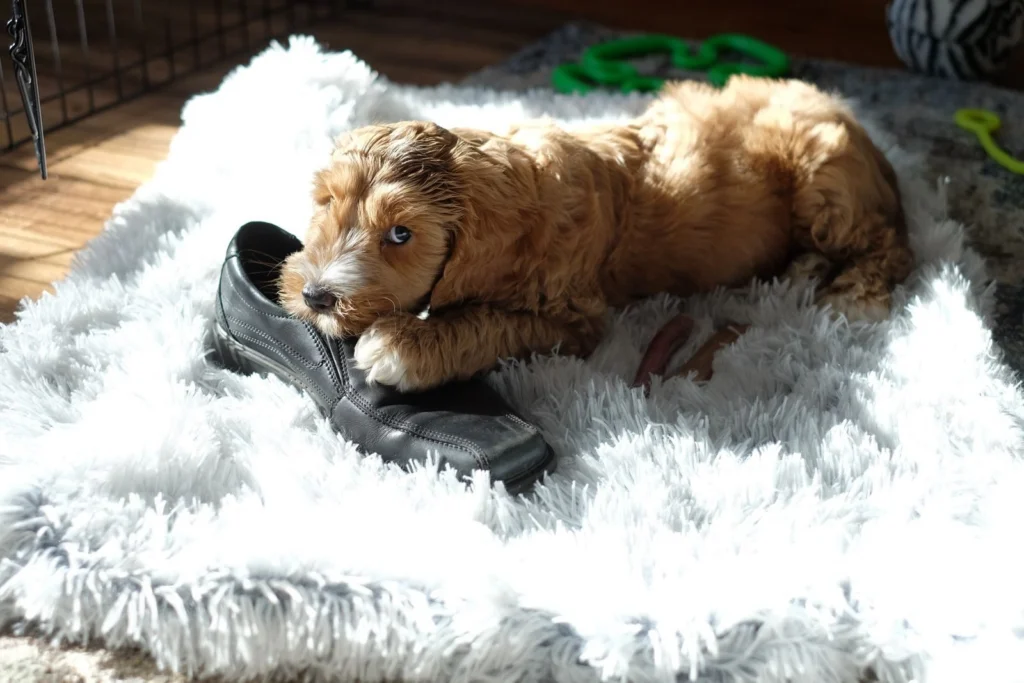
VCA calls foreign body obstruction one of the more common and potentially life-threatening problems vets see. It notes that dogs are known for swallowing paper, tissues, clothing, sticks, bones, food wrappers and rocks. Signs include vomiting, diarrhea, belly pain, loss of appetite, straining to pass stool and lethargy, and an obstruction can be fatal without treatment. If your dog shows these signs or you saw them swallow something, call your vet.
- Keep laundry lidded and socks behind closed doors.
- Choose toys sized for your dog, bin them once they break up, and supervise all chews. The PDSA also advises against throwing food or toys for a dog to catch in midair.
Balconies, windows and holiday decorations
Don’t leave your Frenchie alone on a balcony. Check railing gaps, keep furniture away from the edge, and fit screens on open windows. During the holidays, the FDA advises keeping tinsel off the tree, picking up ribbons and string after gifts are opened, and keeping pets away from poinsettias, mistletoe, holly and salt-dough ornaments. Keep light cords tidy and candles out of reach.
French Bulldog home safety checklist
| Area | Check | Done |
|---|---|---|
| Stairs | Gates at top and bottom; grip tape or runners on steps used | ☐ |
| Living room and bedroom | Ramps or steps to sofa and bed; non-slip rug at landing spots | ☐ |
| Floors | Non-slip runners on main routes; nails trimmed monthly | ☐ |
| Kitchen | Locking trash bin; xylitol, grapes, chocolate and onions out of reach | ☐ |
| Bathroom | Medications in a closed cupboard; toilet lid down | ☐ |
| Bags and laundry | Purses hung up; socks and hair ties behind closed doors | ☐ |
| Cords and small items | Cords covered or unplugged; batteries, coins and small toys picked up | ☐ |
| Garage | Antifreeze, rodent bait, fuel and ice melt on high shelves or locked | ☐ |
| Yard and pool | Pool fenced and covered; toxic plants removed; no unsupervised water time | ☐ |
| Heat | AC working; blinds closed; water in several rooms | ☐ |
| Balcony and windows | No unsupervised balcony time; screens on open windows | ☐ |
| Emergency | Vet, emergency clinic and poison hotline numbers saved | ☐ |
Emergency: if your Frenchie eats something toxic
Vet note: Move your dog away from the source and call your vet, an emergency clinic or an animal poison hotline right away, even if your dog seems fine. In the US, ASPCA Animal Poison Control, (888) 426-4435, says a consultation fee may apply. Pet Poison Helpline, (855) 764-7661, charges a $99 per-incident fee that includes follow-up calls. Both lines are open 24/7. Do not induce vomiting unless a vet or the hotline tells you to, and don’t try home remedies. If your dog is choking, struggling to breathe, collapsing or having a seizure, go straight to the nearest emergency clinic.
FAQ
Can my French Bulldog use the stairs at all?
The breed club advises limited use of stairs and jumping throughout life. Gate long or steep stairs, especially for puppies and dogs with past back pain, carry your dog with the spine level when you can, and ask your vet what suits your dog’s back.
When should I puppy-proof my home?
Before your puppy arrives. Fit gates, cover cords, clear low shelves and lock the trash bin, then recheck each room as your puppy grows.
Are poison hotlines free?
Not usually. Pet Poison Helpline charges a $99 per-incident fee, with follow-up calls for that incident included, and ASPCA Animal Poison Control says a consultation fee may apply. Fees can change, so check each line’s website.
Sources
- French Bulldog club flier — French Bull Dog Club of America (via AKC)
- Creating a Comfortable Home for Your Mobility Compromised Dog — VCA Animal Hospitals
- The Dos and Don’ts of Dog Water Safety — VCA Animal Hospitals
- Ingestion of Foreign Bodies in Dogs — VCA Animal Hospitals
- Animal Poison Control — ASPCA
- Pet Poison Helpline — Pet Poison Helpline
- People Foods to Avoid Feeding Your Pets — ASPCA
- Poison Proof Your Bathroom — Pet Poison Helpline
- Poison Proof Your Living Room — Pet Poison Helpline
- How to Poison Proof Your Garage — Pet Poison Helpline
- Sago Palm Is Toxic To Dogs — Pet Poison Helpline
- First aid for choking — PDSA
- Keep Your Dogs and Cats Safe from Holiday Hazards — U.S. FDA