
A French Bulldog rescue dog can be a wonderful companion, but adopting one works best when you know what you’re signing up for. Many Frenchies in rescue arrive with health needs, a patchy history or both. This guide covers where to look, what to ask, how to budget and how to help your new dog settle.
Quick answer: To adopt a French Bulldog, contact a breed rescue (the French Bull Dog Club of America lists ones it supports, and the AKC Rescue Network lists breed contacts) or your local shelter. Expect an application and a fee. Ask for full medical records, budget for breathing, skin and spine care, and give your dog quiet time to settle.
Key takeaways
- Start with breed rescues listed by the French Bull Dog Club of America or the AKC Rescue Network, plus local shelters.
- The RSPCA recorded a 3,800% rise in French Bulldog types coming into its care from 2016 to 2025.
- Ask for complete medical records and about any chronic conditions, behavior issues and bite history.
- Insurance usually won’t cover pre-existing conditions, so budget for known problems separately.
- Give your dog a quiet routine for the first days and use reward-based training only.
How to find a French Bulldog rescue
A good place to start is the breed’s national club, the French Bull Dog Club of America (FBDCA). Its rescue page says it supports two 501(c)(3) nonprofits that rescue, rehabilitate and rehome French Bulldogs: the French Bulldog Rescue Network, which is run by volunteers who foster the dogs, and French Bulldog Village Rescue. The AKC Rescue Network also keeps a list of breed rescue contacts, including one for the FBDCA. Contact details on lists like this can change, so confirm them directly with the group.
Don’t overlook general shelters. The ASPCA notes there are nearly 5,000 shelters and over 9,500 rescues in the US, and that online adoption search sites can help you find shelters, rescues and adoptable pets near you. Some rescues have a building, while others keep dogs in foster homes, which can be a plus: a foster carer can often tell you how the dog behaves day to day. If you are open to a cross, our guide to French Bulldog mixes explains what to expect.
Whatever group you approach, do your own checks. A listing or a recommendation, including any mentioned here, isn’t a guarantee. Look at how long the group has been operating and how it answers your questions.
Why so many French Bulldogs end up in rescue
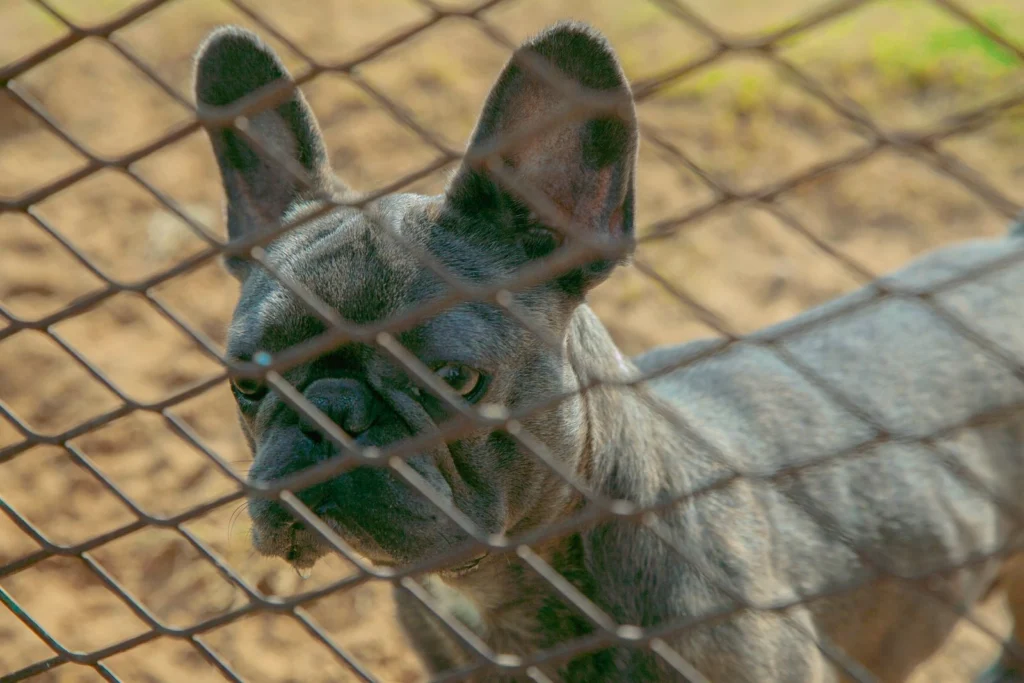
French Bulldogs are one of the most popular breeds, and rescues are feeling the effects. In its 2026 report The Shape of Suffering, the UK’s RSPCA states that between 2016 and 2025 it recorded a 3,800% increase in French Bulldog types coming into its care, alongside a 192% increase in pug types. The charity notes that both breeds typically have several extreme physical traits, including flat faces, excessive skin folds, protruding eyes and absent or corkscrew tails.
The same report explains part of the reason: large numbers of animals with extreme conformation are given up to charities because their owners are no longer willing or able to meet their high care needs and costs. It also points out that these pets are likely to cost far more than healthier dogs, both to buy and in vet bills for problems bred into them.
In the US, the FBDCA rescue page notes that the French Bulldog Rescue Network takes in dogs from commercial breeding kennels, import brokers, public shelters, private rescue groups, owners and Good Samaritans. A rescue Frenchie isn’t a “problem dog” by default.
What the adoption process usually looks like
The ASPCA stresses that every organization has its own process, fees and rules. Some offer same-day adoptions, while others take longer, and many post their application online. Typical steps include:
- Application: questions about your home, schedule, other pets and experience.
- Matching: the rescue reads your application against each dog’s needs. The ASPCA notes that the shelter or rescue will help you work out whether the dog is a good match.
- Meet and greet: the AKC notes that many rescues want a resident dog to meet the new dog before adoption.
- Adoption fee: according to the ASPCA, fees vary and typically help cover vet care, spay or neuter surgery, vaccines and food, and fund future rescue work.
Questions to ask about a rescue Frenchie’s health and history
The AKC suggests a set of questions for anyone adopting from a shelter or rescue. For a French Bulldog, these are the ones that matter most:
| Topic | What to ask |
|---|---|
| Medical records | Can I see the complete medical records? Which vaccines are current? Is the dog spayed or neutered? |
| Ongoing conditions | Does the dog have any ongoing or chronic health conditions? What treatment or follow-up is needed? |
| History | Was the dog surrendered by an owner or found as a stray? How many homes has the dog had, and why did they move? |
| Behavior | Any known behavior issues, such as resource guarding or separation anxiety? Any bite history? |
| Daily life | Is the dog house trained? Used to a crate? What are the current feeding, walk and sleep routines? |
| Support | Will you take the dog back if necessary? Do you offer help after adoption? |
With a Frenchie, it’s also worth asking specifically about breathing, skin and back health. For example: Does the dog snore heavily, struggle on walks or in warm weather? Has a vet mentioned airway surgery? Any history of skin or ear infections? Any episodes of back pain, wobbliness or weakness in the legs? Our guide to BOAS breathing problems explains which signs to watch for.
Budgeting for pre-existing conditions
Adopting doesn’t make a French Bulldog a cheap dog. The RSPCA report describes these breeds as likely to have much higher vet costs than healthier dogs, and gives the example of a three-year-old English Bulldog in its care whose airway and eye surgeries cost about £3,000. It adds that similar or greater bills are common when pets need treatment for problems linked to extreme features.
Insurance needs extra thought. The ASPCA advises signing up before health issues arise, because many plans have a waiting period and do not cover pre-existing conditions. With a rescue dog, problems may already be in the records on the day you adopt, so any policy is likely to exclude them. Before you commit:
- Get a copy of the medical records and go through them with your own vet.
- Ask your vet what ongoing care any known condition usually needs, such as skin treatment, eye checks or monitoring after airway surgery.
- Read policy wording carefully for how it treats existing, chronic and hereditary conditions. Our French Bulldog pet insurance guide explains the key terms.
- Set aside a separate savings fund for anything insurance won’t cover.
The first days at home: decompression
A move is a big change, even for a dog leaving a loving foster home. The ASPCA notes that some pets adjust quickly while others need more time, and suggests remembering its “3-3-3” guideline:
- First 3 days: your dog may feel nervous and overwhelmed. Keep a routine, stay calm, let them explore at their own pace and don’t force contact with people or other pets.
- Next 3 weeks: they start to settle and show more personality. Focus on basic training, reward good behavior and book a vet visit.
- First 3 months: trust grows and you learn their likes, dislikes and fears.
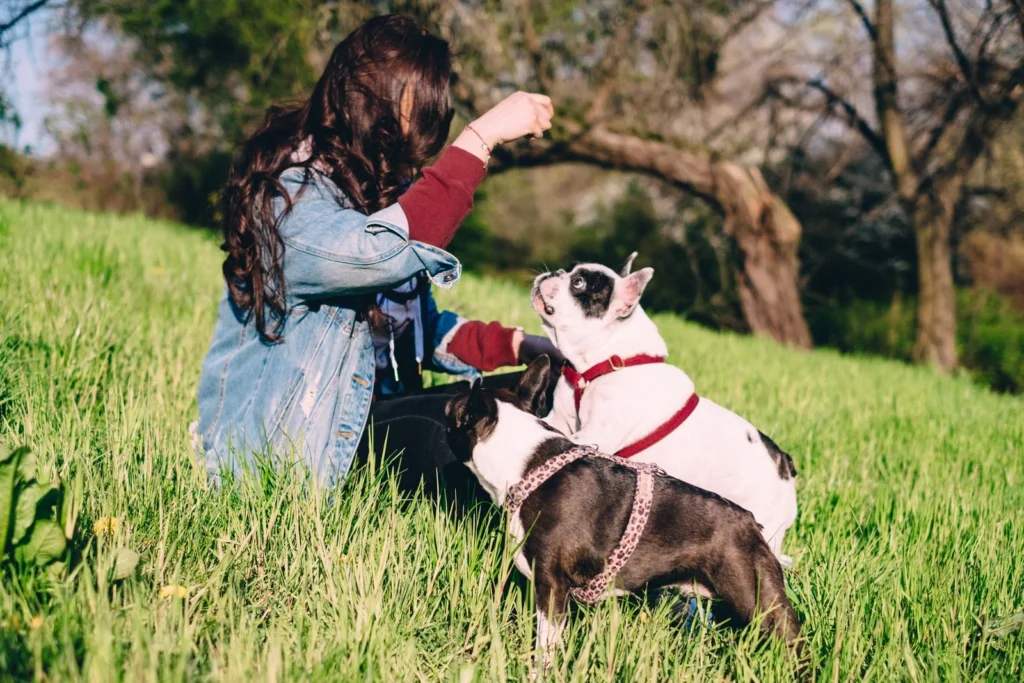
Practical tips from the ASPCA include setting up a quiet, safe space such as a room, crate or bed, and using gates to limit access while your dog learns the house. If your dog already knows a crate, our crate training guide shows how to keep it a positive place. Many settling-in basics for puppies also apply to adult dogs, as covered in our first week guide.
For adult dogs, keep visitors to a minimum at first, let your dog come to you and use reward-based training. Treats, praise and calm repetition build trust. Punishment or forcing contact can make a worried dog more fearful. Because Frenchies overheat easily, keep early walks short and avoid the hottest part of the day.
Watch out for fake “rescue” ads
Popular breeds attract scammers, so check any group or person offering a Frenchie, including one calling itself a rescue. The US Federal Trade Commission (FTC) warns that scammers offer a “perfect pet” for a fee and then disappear. Its advice:
- Search the rescue’s or seller’s name with words like “complaint” or “scam.”
- Do a reverse image search on the photos. Stock or copied pictures are a warning sign.
- Move on if they won’t let you visit, video chat or talk by phone.
- Never pay by gift card, wire transfer or cryptocurrency. Payment apps make money hard to recover, and a credit card gives the most protection.
The FTC also suggests starting with a local rescue or animal shelter, where adoption usually costs a small fee. If you spot a pet scam in the US, report it at ReportFraud.ftc.gov.
Vet note: Book a vet check soon after adoption, as the ASPCA recommends, and bring every record the rescue gave you. Seek urgent care if your dog struggles to breathe, has blue or gray gums, collapses, suddenly can’t walk normally or seems in severe pain.
FAQ
How much does it cost to adopt a French Bulldog?
Fees vary by organization. The ASPCA notes that adoption fees typically cover vet care, spay or neuter surgery, vaccines and food. The bigger cost is usually ongoing care, so budget for vet bills, insurance and savings too.
Are rescue French Bulldogs always unhealthy?
No. Some have chronic conditions, while others came into rescue because their owners could no longer cope. Ask for the medical records and have your own vet look over them so you know what to expect.
Will pet insurance cover my rescue Frenchie’s existing problems?
Usually not. The ASPCA points out that many plans don’t cover pre-existing conditions and have a waiting period. Check the policy wording and plan to pay for known conditions yourself.
How long does a rescue French Bulldog take to settle in?
It varies. The ASPCA’s 3-3-3 guideline suggests a few days to feel less overwhelmed, a few weeks to start settling and around three months to fully show their personality. Some dogs need longer.
Sources
- The shape of suffering (2026) — RSPCA
- French Bulldog Rescue Organizations — French Bull Dog Club of America
- AKC Rescue Network: F breeds — American Kennel Club
- Questions to Ask When Rescuing a Dog to Find a Great Match — American Kennel Club
- Navigating Adoption: Finding and Welcoming Home Your Pet — ASPCA
- Get the dog or cat instead of the scam — Federal Trade Commission