
Many puppies already carry roundworms when they are born, so French Bulldog puppy deworming starts at the breeder, weeks before your puppy comes home. Parasite control for Frenchies is not a special breed protocol; it follows the same published guidance as for any puppy.
Quick answer: French Bulldog puppy deworming follows standard puppy guidance: CAPC advises starting at 2 weeks of age and repeating every 2 weeks until regular broad-spectrum parasite control begins. US guidance favors year-round protection against worms, fleas and ticks, with heartworm prevention started by 8 weeks. A weak puppy, or one with repeated vomiting or bloody diarrhea, needs a vet promptly.
Why puppies need deworming so early
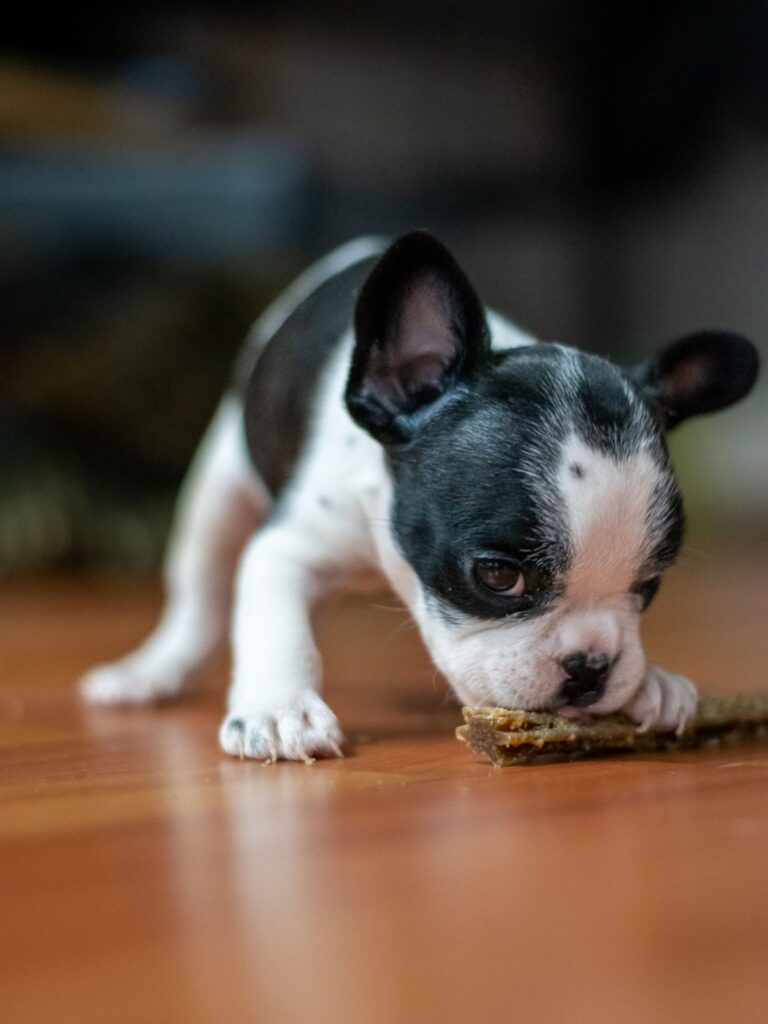
VCA Animal Hospitals explains that roundworm larvae resting in the mother’s tissues can become active during pregnancy and cross the placenta, and can also pass to puppies in her milk. Even a puppy from a clean, well-run breeder can be born with worms, and large numbers can cause life-threatening problems in puppies.
French Bulldog puppy deworming schedule
The Companion Animal Parasite Council (CAPC) recommends a dewormer from 2 weeks of age, repeated every 2 weeks until regular broad-spectrum control begins. VCA describes the same pattern for roundworms: start at about two weeks and repeat every two weeks for four treatments. This typical pattern is not a prescription:
| Age | What typically happens | Who usually handles it |
|---|---|---|
| 2 weeks | First deworming treatment | Breeder, with their vet |
| 4, 6 and 8 weeks | Repeat treatments every 2 weeks | Breeder, with their vet |
| 8 weeks | Heartworm prevention started no later than this age (AHS) | Breeder or your vet |
| From about 8 weeks onward | Move onto regular, broad-spectrum parasite control (often monthly), chosen by your vet | You and your vet |
| Through the first year | Fecal (stool) tests at least four times (CAPC) | Your vet |
| 6 months after the first vet visit, 6 months later, then yearly | Heartworm tests (AHS, for puppies started on prevention before 7 months) | Your vet |
Ask for written records of every treatment when you collect your puppy (our first-week guide for French Bulldog puppies has a checklist). Parasite checks often line up with the French Bulldog puppy vaccination schedule.
Deworming does not replace testing. CAPC advises stool tests at least four times in the first year and at least twice a year for healthy adults; roundworm is found by examining a small stool sample under a microscope.
UK and European readers
ESCCAP, the European parasite body, advises roundworm treatment from the 14th day after birth, then every 2 weeks until 2 weeks after weaning, and then sorts adults into lifestyle risk groups. It also flags lungworm, with slug- or snail-eating dogs at higher risk.

Heartworm prevention for French Bulldog puppies
The American Heartworm Society (AHS) explains that heartworm passes from infected mosquitoes, not other dogs. Mosquitoes get indoors, so a mostly indoor Frenchie is still exposed. The AHS recommends:
- Starting a preventive as early as the label allows, and no later than 8 weeks of age.
- For puppies under 7 months, starting without a test, then testing 6 months after the first visit, 6 months later, and yearly.
- Year-round protection, even with cold winters; heartworm has been diagnosed in all 50 states.
- Annual tests even on prevention, since doses get missed.
French Bulldog flea prevention and ticks
CAPC’s core advice is year-round, broad-spectrum control against heartworm, intestinal parasites, fleas and ticks. The Merck Veterinary Manual notes that fleas can cause anemia in young puppies and transmit tapeworm. Most of the problem lives off the dog, as eggs fall onto bedding, carpet and soil, so treat every pet, wash blankets and vacuum sleeping spots. Full control can take 6 weeks to 3 months.
Frenchies are prone to itchy skin, and fleas can mimic allergies, which is why flea control for every pet is a foundation of our French Bulldog allergies guide. Tick risk depends on where you live; after time in grass or woods, check between the toes, ears, armpits and skin folds, and ask your vet about local tick-borne diseases.
Signs your puppy may have worms
Many infected puppies look normal; VCA lists a pot belly, a reduced appetite, a dull coat and poor growth, vomiting or diarrhea, coughing, and worms visible in the stool.
Puppy diarrhea has many causes (see French Bulldog diarrhea). A puppy that is weak, refuses food, or has repeated vomiting or bloody diarrhea needs to be seen promptly.
Protecting your family
The CDC explains that roundworm (toxocariasis) can reach people when eggs from dog poop contaminate dirt or hands that then reach the mouth. Young children who play in or eat dirt are at greater risk. Pick up poop every time, including in your yard, avoid touching it bare-handed, wash hands with soap after playing with pets or being outdoors, and teach children not to eat soil. Prompt pickup also matters if your puppy has started snacking on stool; our guide on why French Bulldogs eat poop and how to stop it covers the fixes.
Vet note: Never give a puppy a parasite product made for adult dogs, cats or another weight range, and never split or combine products without veterinary advice. Contact your vet promptly if your puppy seems unwell after any treatment.
FAQ
My breeder already dewormed my puppy. Do I still need to?
Yes. Breeder treatments cover the early weeks, but exposure continues. Bring the records to your first vet visit so your vet can plan next steps and stool tests.
Does my indoor Frenchie need heartworm prevention?
In the US, the AHS recommends year-round prevention because mosquitoes get indoors. Outside the US, ask your vet whether heartworm occurs locally.
Sources
- General Guidelines for Dogs and Cats — Companion Animal Parasite Council (CAPC)
- Heartworm Basics — American Heartworm Society
- Roundworm Infection in Dogs — VCA Animal Hospitals
- Fleas of Dogs — Merck Veterinary Manual
- About Toxocariasis — Centers for Disease Control and Prevention (CDC)
- Scheme for Individual Worm Management in Dogs — ESCCAP