
Treats are one of the easiest ways to bond with a French Bulldog, and one of the easiest ways to overfeed one. A Frenchie is a small dog with a big appetite and a breed tendency to put on weight, so every biscuit, chew and cube of cheese matters more than it looks. This guide skips brand roundups and covers what makes good treats for French Bulldogs: calorie limits, label reading, whole foods and which chews deserve caution.
Key takeaways
- Keep all treats, including training rewards and scraps, to 10% or less of daily calories.
- Most treats are not complete and balanced, so they should never replace meals.
- For training, use tiny, soft pieces or kibble set aside from the daily ration.
- Pick chews you can dent with a fingernail, sized for your dog, and always supervise.
- During an elimination diet trial, give no treats except those your vet approves.
The 10% rule for treats
The most widely used guideline is simple: treats should make up no more than 10% of your dog’s daily calories. The American Kennel Club (AKC) stresses that this is about calories, not the number or size of treats, and that the 10% covers everything outside the main meals, including training treats and table scraps. Treats come out of the daily allowance rather than being added on top of it.
The AKC gives a worked example: a dog eating four cups of food a day at 364 calories per cup takes in 1,456 calories, so about 146 calories is the most that should come from treats and snacks combined. A Frenchie usually needs far less food than that, so the same math leaves a much smaller treat budget, and a single rich snack can use up most of it. Ask your vet for your dog’s daily calorie target, then take 10% of that number as the ceiling.
The PDSA, a UK veterinary charity, suggests a practical way to stay on track: set aside 10% of your dog’s daily food each morning as the treat allowance, and reduce meals by the same amount on days you give other treats. The AKC adds a caution: trim meals slightly, but not too much, because treats are not nutritionally complete.
Why treats matter so much for a Frenchie
French Bulldogs are compact, and extra weight adds strain to a breed that already has a narrow airway, a tendency to overheat and a spine prone to problems. A few extra treats a day can quietly add up to a few extra pounds over months. If your dog has already lost their waist, our guide to helping an overweight French Bulldog lose weight covers body condition scoring, calorie targets and a vet-guided plan.
The PDSA puts it simply: most dogs are smaller than us, so a tiny treat for us is a lot of calories for a dog.
How to read a treat label
You do not need a brand list to choose well. You need to know where to look on the package.
- Calorie content. According to the Association of American Feed Control Officials (AAFCO), the calorie statement appears under the heading “Calorie Content” and gives kilocalories per kilogram plus a familiar unit, such as per biscuit. The AKC notes that on pet food labels, “kcal” and “calories” are used interchangeably. A per-piece figure is the most useful number for counting treats. If calories are not listed, the AKC suggests contacting the manufacturer.
- Complete or complementary. AAFCO explains that treats are usually not intended to provide a complete and balanced diet. Products that are not complete may carry the statement “intended for intermittent or supplemental feeding only.” Treat these as extras, never as a meal substitute.
- Ingredients. For a dog with a known food allergy, check every protein source, not just the one in the product name. For any dog, avoid products that list xylitol (also sold as birch sugar).
Training treats for French Bulldogs
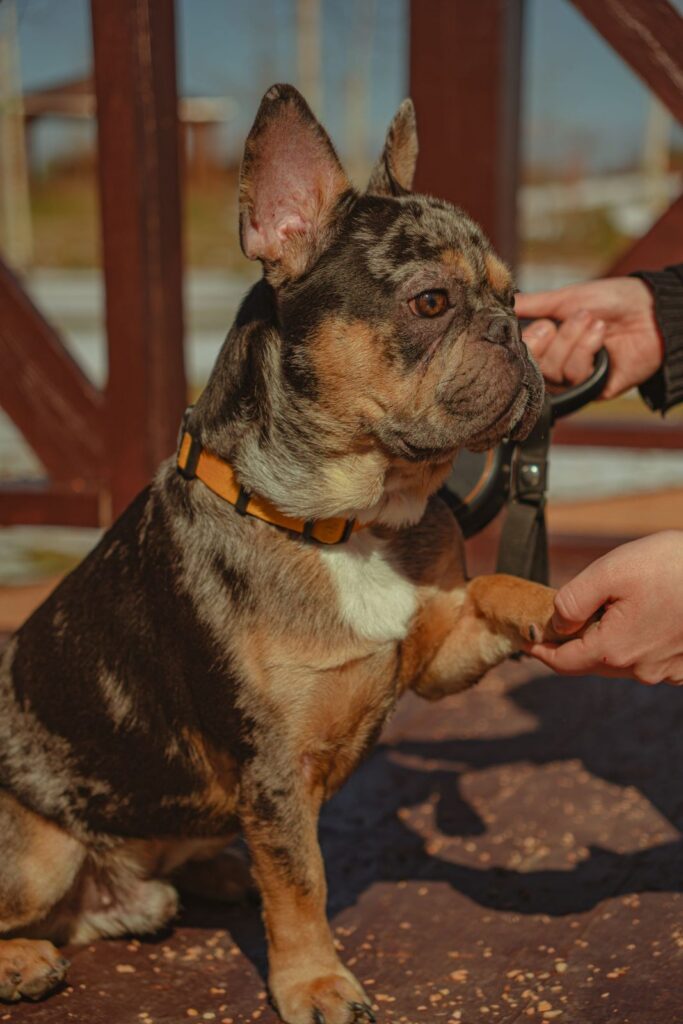
A training session can involve dozens of rewards, so training treats need the most thought. Good ones are:
- Tiny. A piece about the size of a pea is enough to reward your dog. Many treats can be broken into several pieces.
- Soft. Soft treats are eaten quickly, so the lesson keeps moving.
- Counted. Training rewards are part of the 10%, not on top of it. The AKC recommends low-calorie options when you reward often.
The simplest training treat of all is your dog’s own food. The AKC suggests small portions of your dog’s regular kibble, and the PDSA suggests setting aside part of the daily food as the treat allowance. Measure out the day’s food in the morning, put a portion in a treat pouch, and serve the rest as meals. Save higher-value rewards, like a small piece of plain cooked chicken, for harder tasks such as recall or house training a French Bulldog puppy, where a really good reward helps the lesson stick.
Healthy whole-food treats
Plain, simple foods can make excellent healthy treats for French Bulldogs. The PDSA suggests gently steamed chicken, cut-up dog-safe fruit and vegetables, and frozen broccoli. Low-calorie vegetables such as carrots and green beans are another option the AKC points to. Keep fruit to small amounts, since much of it is high in sugar. Serve everything plain, without butter, oil, salt, onion or garlic. Our guide to human foods French Bulldogs can eat covers the full list of safe, caution and never foods.
| Treat idea | Why it works | Caution |
|---|---|---|
| Kibble from the daily ration | Already counted in the diet; no extra calories | Measure it out first so meals shrink to match |
| Plain cooked chicken or turkey breast | High value for training; easy to cut small | Skinless, boneless, unseasoned; calorie-dense in large amounts |
| Carrots or green beans | Low-calorie, crunchy, good for dogs watching their weight | Cut carrots into thin sticks or small coins, or steam them |
| Blueberries | Small and easy to use as rewards | Halve for puppies and fast eaters; fruit contains sugar |
| Apple slices | Crunchy, many dogs like them | Remove core and seeds; small amounts only |
| Frozen broccoli pieces | Suggested by the PDSA; many dogs enjoy it | Small pieces; new foods may cause gas in some dogs |
| Cheese | Very high value for most dogs | High in fat and calories; skip for overweight or lactose-sensitive dogs |
Introduce any new food in a tiny amount and wait a day or two before offering more, especially if your Frenchie has a sensitive stomach.
Choking and swallow-whole risks
Many Frenchies eat fast, so size and shape matter as much as ingredients. Cut fruit and vegetables into bite-sized pieces, remove pits, stones and seeds, and never offer corn cobs, which can block the gut.
The ASPCA’s position statement on chews and treats warns that chews that are too small may be swallowed whole, causing choking or blockage, and that eating compressed or dental chews too quickly can lead to intestinal obstruction that needs urgent veterinary care. Practical habits help:
- Cut treats small, or offer chews large enough that they cannot be swallowed in one go.
- Avoid hard, round, sticky or slippery pieces that could lodge in the throat.
- Take away chews once they are worn down small enough to swallow.
Chews: rawhide, bones and hard chews
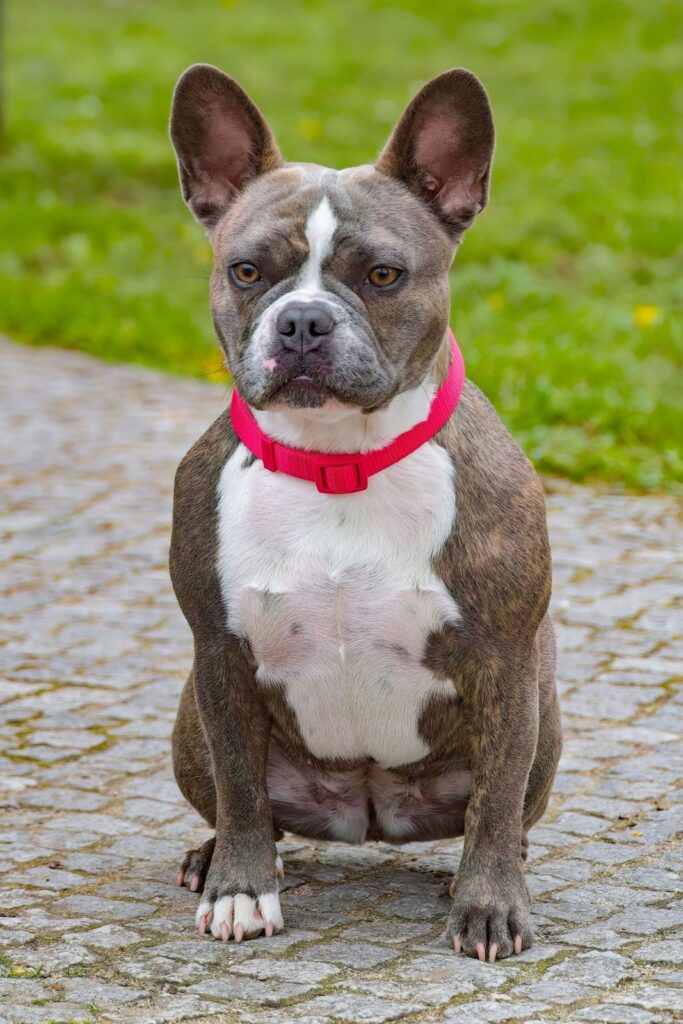
Chews satisfy a natural urge, but they carry some of the biggest risks of any treat.
- Hard chews and teeth. Cornell University’s College of Veterinary Medicine notes that fractured teeth are commonly caused by chewing very hard objects, and that most veterinary dentists use the “thumbnail test”: you should be able to make a dent in the item with your fingernail. Cornell advises avoiding antlers, hooves and bones, which may break a tooth or splinter and cause stomach problems.
- Rawhide. Cornell says some rawhides are safe for dogs but they always require supervision. The ASPCA warns that rawhide can be swallowed in large pieces, causing choking or obstruction, and that obstruction may be more likely in smaller dogs. Rawhide also has calories, which the AKC counts among the treats that add up quickly.
- Durable plastic chews. The ASPCA notes they can wear into thin sections that break off and are swallowed, so replace them before they become excessively worn.
Whatever chew you choose, pick a size suited to your dog, supervise every session, and contact your vet right away if your dog swallows a chunk.
Toxic foods to keep out of the treat jar
Never give xylitol (found in some sugar-free products and nut butters), grapes, raisins, chocolate, caffeine, onions, garlic, macadamia nuts, alcohol, raw yeast dough or cooked bones. The human foods guide has the details. If your dog eats something toxic, call your vet or an animal poison control line straight away.
Treats for Frenchies with food allergies
French Bulldogs are prone to allergic skin disease, and food allergy is one possible cause. If your vet suspects a food allergy, they will usually recommend an elimination diet trial using a novel protein or hydrolyzed diet. VCA Animal Hospitals describes trials lasting 8 to 12 weeks, during which no other foods, treats or supplements are fed, including flavored vitamins and certain parasite preventives. Our French Bulldog allergies guide explains why trials run at least eight weeks.
So “just one” biscuit can undo weeks of effort. Ask your vet which treats fit the trial; often the answer is pieces of the trial diet itself. Once a trigger is identified, check every treat and chew label for it.
Vet note: Ask your vet for your Frenchie’s daily calorie target so you can work out the 10% treat allowance accurately, especially for puppies, seniors and dogs that are overweight or have allergies. Contact a vet urgently if your dog swallows a large piece of chew, chokes, or shows vomiting, a painful belly, loss of appetite or straining after eating a treat. Treat any sudden noisy breathing or struggling for air as an emergency.
FAQ
How many treats can my French Bulldog have a day?
It depends on calories, not the number of pieces. Keep all treats, training rewards and scraps to no more than 10% of your dog’s daily calories, and reduce meals slightly to match. Your vet can give you a daily calorie target.
Are rawhide chews safe for my French Bulldog?
Some rawhides can be safe, but they always need supervision. Rawhide can be swallowed in large pieces and cause choking or a blockage, so take it away once it is small enough to swallow and call your vet if your dog eats a chunk.
Can I give my Frenchie treats during an elimination diet?
Only treats your vet approves, usually made from the trial diet itself. Anything else, including flavored medicines and chews, can spoil the results of the trial.
Sources
- How Many Treats Can Your Dog Have? — American Kennel Club
- How to treat your dog — PDSA
- Reading Labels — Association of American Feed Control Officials
- Risks from a fractured tooth — Cornell University College of Veterinary Medicine
- Position Statement on Dog Chews/Treats — ASPCA
- Food Allergies in Dogs — VCA Animal Hospitals