
If your French Bulldog plants its feet, ignores a cue it “knows” or wanders off mid-session, it’s easy to call your French Bulldog stubborn. Usually the dog is telling you something about motivation, clarity or comfort, and each of those can be fixed with better training, not a firmer hand.
Quick answer: French Bulldogs are not hard to train when training is short, clear and rewarding. What looks like stubbornness is usually low motivation, confusing cues, distraction, overlong sessions or discomfort such as heat or breathing strain. Veterinary behavior experts recommend reward-based methods only, since aversive methods are linked to more stress and no better results.
Key takeaways
- “Stubborn” usually means unmotivated, confused, distracted, tired, hot or sore.
- Research links aversive methods to more stress signs, with no evidence they work better than rewards.
- Keep sessions to a few minutes, in a cool, quiet room, and end while your dog is still keen.
- Use tiny high-value treats within the 10% calorie limit, plus life rewards like sniffing or play.
- Fade lures gradually so your Frenchie responds to the cue, not to the treat in your hand.
Is your French Bulldog stubborn, or is something else going on?
When a Frenchie doesn’t respond, ask “what’s in the way?” rather than “why won’t you listen?”
| What you see | Likely cause | What to try |
|---|---|---|
| Sits and won’t move on a walk | Heat, fatigue, breathing strain or soreness | Stop, cool down, shorten walks; see a vet if it keeps happening |
| Does it at home, ignores you outside | Distraction; the skill hasn’t been practiced in new places | Go back to an easier spot and build up slowly |
| Responds only when you hold a treat | The lure was never faded | Follow the lure-fading steps below |
| Loses interest after a few tries | Session too long, or reward not worth the effort | Train for a few minutes, use a better reward, stop on a win |
| Looks confused or offers random behaviors | Unclear cue or badly timed reward | Use one consistent cue word and a marker |
Discomfort is easy to miss
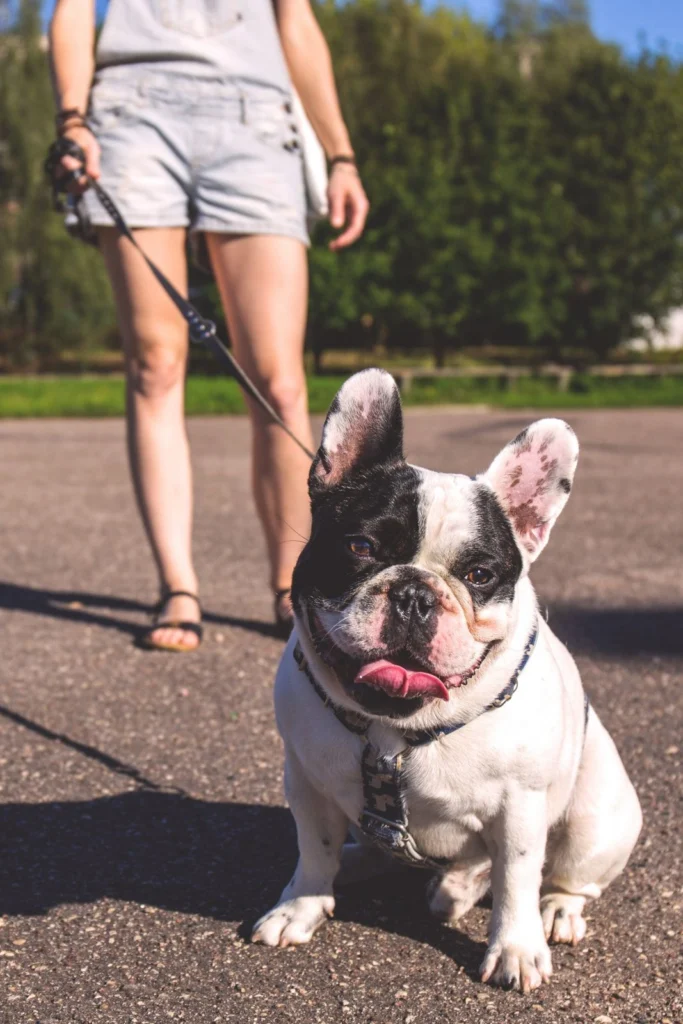
French Bulldogs are brachycephalic, and the University of Cambridge BOAS research group notes that affected dogs “cannot exchange heat as easily as healthy dogs,” and that breathing signs may not show at rest in some moderately affected dogs. A Frenchie that slows down, lies down or refuses to keep going during a training walk may simply be overheating or struggling to breathe. Stop if you see heavy panting, excessive drooling or loud breathing.
Pain matters too. A dog that suddenly stops sitting, jumping on the couch or climbing stairs may be sore rather than defiant. Our guide to the signs a French Bulldog is in pain covers what to look for. The American Veterinary Society of Animal Behavior (AVSAB) points out that the vet plays a key role in checking for medical factors behind behavior concerns, so a health check comes first whenever “stubbornness” is new or sudden.
Why reward-based training works better
The evidence on training methods points clearly in one direction. In its position statement on humane dog training, AVSAB states that “there is no evidence that aversive training is necessary for dog training or behavior modification” and recommends that only reward-based methods be used, including for behavior problems.
- A 2017 review by Gal Ziv in the Journal of Veterinary Behavior looked at 17 studies and found that aversive methods can jeopardize dogs’ physical and mental health, with no evidence that punishment works better than positive reinforcement, and some evidence of the opposite.
- A 2020 study in PLOS ONE by Vieira de Castro and colleagues followed 92 dogs from seven training schools in Portugal. Dogs at schools that relied heavily on aversive methods showed more stress behaviors such as lip licking and yawning during training, larger rises in cortisol, and a more “pessimistic” response in a later cognitive test than dogs at reward-based schools. The authors note the design limits firm conclusions about cause and effect.
AVSAB lists the tools and techniques a good trainer avoids: choke chains, prong collars, shock collars, squirt bottles, shaker cans, shouting, leash jerks and “alpha rolls.” For a Frenchie, anything that puts pressure on the neck is a particular concern because of the breed’s airway. Reward-based doesn’t mean “anything goes”: AVSAB stresses structure, routine and clear guidelines, taught without fear or pain.
Training tips that actually work for French Bulldogs
1. Pick rewards your dog truly wants
Find what your Frenchie loves most, often tiny pieces of plain cooked chicken or a favorite toy, and save it for the hardest tasks. Cut treats to pea size and use kibble from the daily ration for easy practice. Treats should stay at 10% or less of daily calories (see our guide to the best treats for French Bulldogs).
2. Keep sessions short
VCA Animal Hospitals advises that training sessions should be no more than a few minutes long at first, done a few times a day. Short bursts also help prevent overheating. End on a success.
3. Train somewhere cool and quiet
Start indoors, in a cool room with few distractions. VCA notes that when a puppy doesn’t respond to a marker, it’s usually because the training environment is too exciting or stimulating. Once a skill is solid at home, move to the yard, then a quiet street, then busier places, making it easier again each time the location changes. Skip outdoor training on warm or humid days.
4. Use a marker
A marker is a brief signal, such as a clicker, a short word like “yes,” or a thumbs-up, that tells your dog exactly which moment earned the reward. VCA says it should last just a fraction of a second. Mark the instant your Frenchie does the right thing, then deliver the treat.
5. Lure, capture and shape
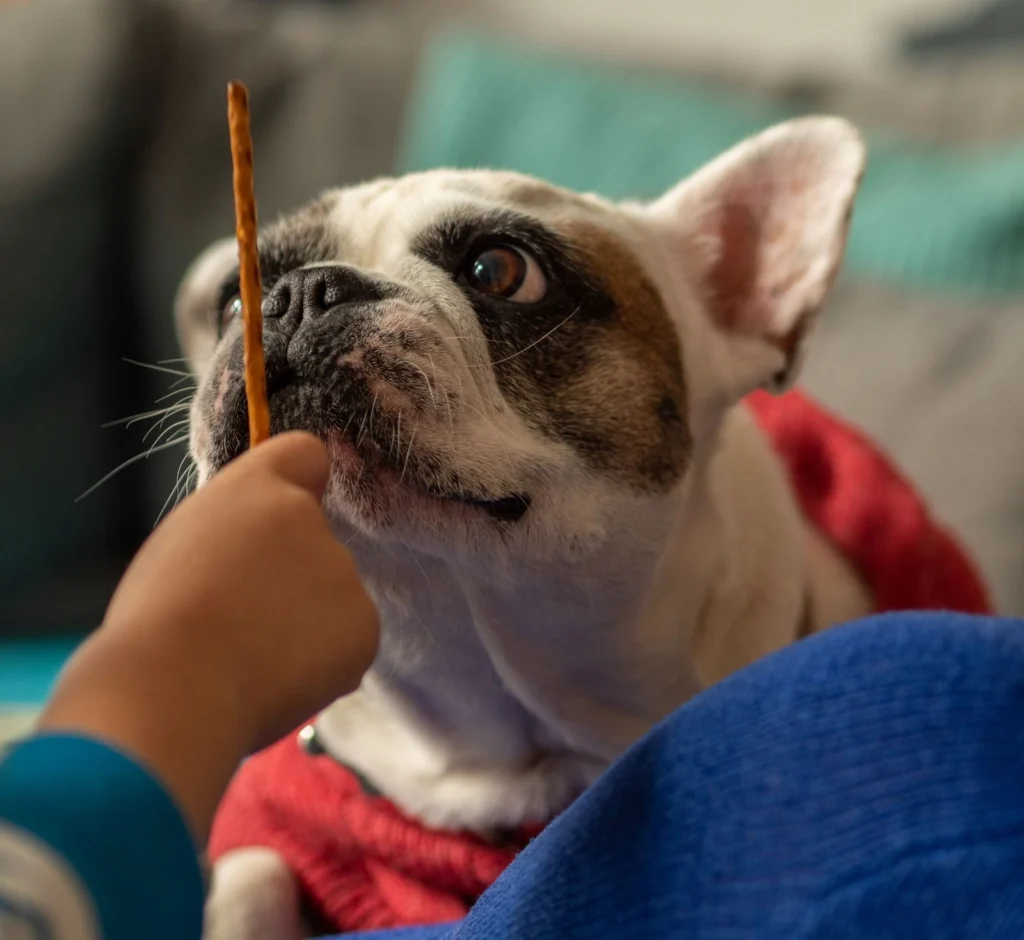
- Lure-reward: guide your dog into position with a treat held just above the nose, for example moving it up and back for a sit. Mark and reward.
- Capturing: mark and reward behaviors your dog offers on its own, like lying down calmly on a mat.
- Shaping: reward small steps toward a goal. VCA notes shaping takes time and can be frustrating at first, so keep criteria easy.
6. Fade the lure
The American Kennel Club (AKC) says lures shouldn’t be thought of as bribes, but they should be faded so your dog doesn’t depend on them. Its suggested steps:
- Give the verbal cue and wait a few seconds. Lure only if your dog doesn’t respond.
- Repeat the cue and the same hand movement, but with no treat in your hand. Praise and reward when your dog succeeds.
- Once your dog does it without a treat in your hand, gradually make the hand signal smaller while still saying the cue.
- Keep shrinking it until a small signal, or the word alone, works.
Keep rewarding after the behavior. Once it’s reliable, the AKC suggests asking for it a couple of times before rewarding and varying when rewards appear. VCA adds a useful mindset: plan to keep “paying” your dog for work throughout its life.
7. Use life rewards and set your dog up to succeed
VCA notes that a reward can be anything your dog finds pleasurable, and AVSAB lists toys, treats and other appropriate reinforcers. Many trainers also use everyday things a dog wants as rewards, such as going through a door, a good sniff or a short game with a toy: ask for an easy behavior, then let the good thing happen. AVSAB also stresses setting the dog up to make the right response, so make the right choice the easy one: put shoes away, use a gate, and practice cues before your dog is overexcited. The same approach underpins house training a French Bulldog puppy and leash training, where rewarding the right choice beats correcting the wrong one.
When to get professional help
Bring in a professional if progress stalls for several weeks, or if your Frenchie shows fear, growling, snapping or guarding. Ask your vet first to rule out pain or illness. AVSAB says trainers should be certified, humane and effective, and advises against hiring anyone who talks about “dominance,” “leader of the pack” or “alpha” ideas. For serious problems such as aggression or anxiety, your vet may refer you to a board-certified veterinary behaviorist or a certified applied animal behaviorist. AVSAB notes that a treatment plan for these issues can include environmental management, behavior modification and, in some cases, medication your vet may prescribe.
Vet note: If your French Bulldog suddenly stops doing things it used to do, resists being touched, or tires quickly with loud breathing, book a vet check before blaming stubbornness. Stop training right away and cool your dog if it pants heavily, drools excessively or its gums look blue or gray.
FAQ
Are French Bulldogs hard to train?
Not usually. They can be easily distracted and tire or overheat quickly, so they do best with short, cool, reward-based sessions. With clear cues and rewards they value, most Frenchies learn everyday skills well.
Why does my Frenchie only listen when I have treats?
The treat probably became part of the cue. Fade the lure step by step by using the same hand movement without a treat in your hand, keep rewarding success, and gradually vary when rewards appear, while still using praise and life rewards.
Should I use a firm correction when my Frenchie ignores me?
No. AVSAB advises against physical corrections, leash jerks and intimidation, and research links aversive methods to more stress. Make the task easier, improve the reward and try again.
How long should a French Bulldog training session be?
A few minutes at a time, a few times a day. Short sessions keep motivation high and lower the risk of overheating in a flat-faced breed.
Sources
- Position Statement on Humane Dog Training — American Veterinary Society of Animal Behavior
- Does training method matter? Evidence for the negative impact of aversive-based methods on companion dog welfare — PLOS ONE
- The Effects of Using Aversive Training Methods in Dogs – A Review (Ziv, 2017) — Purdue University Center for Animal Welfare Science
- Puppy Behavior and Training: Training Basics — VCA Animal Hospitals
- How to Successfully Fade the Lure in Dog Training — American Kennel Club
- BOAS Recognition & Diagnosis — University of Cambridge Department of Veterinary Medicine