
French Bulldog pancreatitis is inflammation of the pancreas, and it often shows up as vomiting, belly pain and a dog who suddenly won’t eat. It can be mild or life-threatening, so knowing the signs, the common triggers and when to call your vet really matters.
Quick answer: Pancreatitis in dogs usually causes vomiting, loss of appetite, belly pain, lethargy and sometimes diarrhea or fever. Some dogs stretch into a “prayer position,” front legs on the floor and rear end raised. Repeated vomiting, a painful belly, weakness or collapse need a vet the same day, since severe cases can cause shock.
Key takeaways
- Pancreatitis can affect any dog; French Bulldogs are not listed among the breeds known to be at higher risk.
- Main signs: vomiting, not eating, painful belly, lethargy, diarrhea and the hunched “prayer position.”
- Fatty table scraps, trash raids and holiday leftovers are common suspected triggers.
- Vets diagnose it with an exam, blood tests including a pancreatic lipase test, and often ultrasound.
- Most dogs recover with supportive care; a low-fat diet your vet chooses helps prevent repeat attacks.
What is pancreatitis in dogs?
The pancreas makes digestive enzymes that should switch on only once they reach the intestine. In pancreatitis, VCA Animal Hospitals explains, they activate too early, inside the pancreas itself, and start to damage it. The result is inflammation and pain that, in severe cases, can affect the whole body.
Vets talk about two forms:
- Acute pancreatitis comes on suddenly and ranges from mild to life-threatening.
- Chronic pancreatitis is ongoing, low-grade inflammation that causes lasting changes such as scarring. The Merck Veterinary Manual notes that chronic disease can eventually lead to exocrine pancreatic insufficiency (the pancreas no longer makes enough digestive enzymes) or diabetes.
French Bulldog pancreatitis: is the breed at higher risk?
Not as far as current veterinary sources show. The Merck Veterinary Manual lists breeds that are overrepresented, most notably Miniature Schnauzers, along with Yorkshire Terriers, Cocker Spaniels, Dachshunds, Poodles and sled dogs. A 2022 review in the Journal of Veterinary Internal Medicine gives a similar list, and PDSA notes the disease is very common in Miniature Schnauzers. VCA takes a different view and states that there is no age, sex or breed predisposition at all. Whichever view you follow, French Bulldogs are not named as a higher-risk breed in any of these sources.
So pancreatitis can affect any dog, Frenchies included; diet, body weight and other health conditions matter more than breed here. For the conditions the breed is known for, see our French Bulldog health guide.
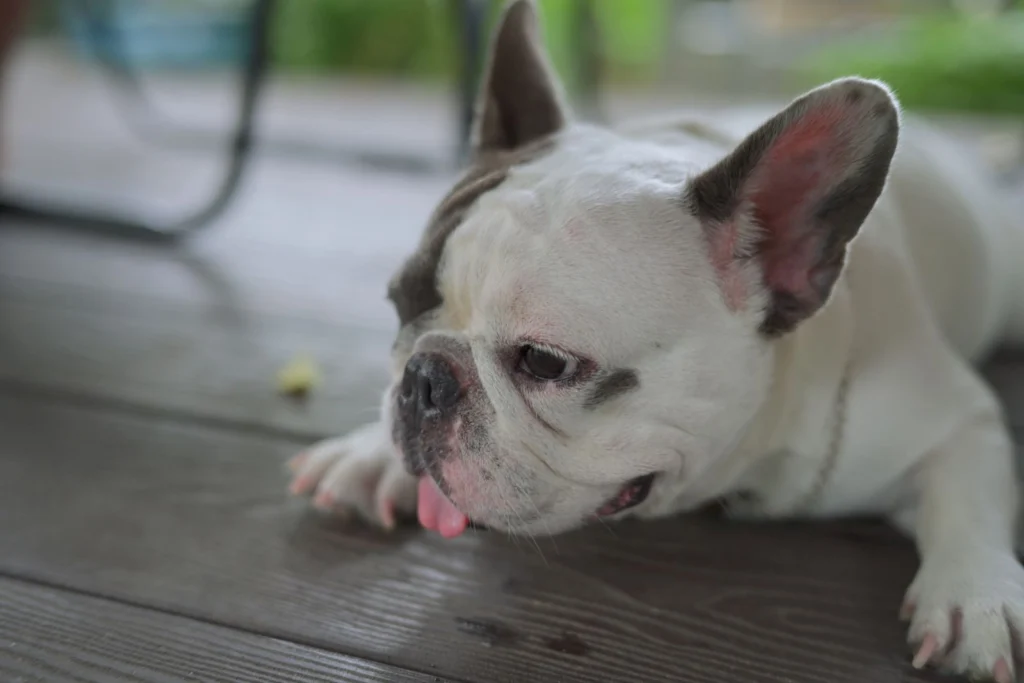
Pancreatitis in dogs: symptoms to watch for
According to Merck, VCA and PDSA, the most common signs include:
- Vomiting, often more than once
- Not eating or a sudden drop in appetite
- Belly pain: your dog may flinch when you touch the belly or seem uncomfortable
- The “prayer position”: front paws on the floor with the rear end raised, a stretch that can signal a painful belly
- Lethargy or weakness
- Diarrhea
- Dehydration and sometimes fever
Mild cases can be vague, and Merck suggests belly pain is often under-recognized in dogs. If you’re unsure what you’re seeing, our guide to French Bulldog vomiting vs. regurgitation can help you describe it to your vet.
When is it an emergency?
VCA warns that severe attacks can lead to shock, severe depression and death, and that untreated dogs may progress to a more dangerous form of the disease. PDSA advises seeing a vet as soon as possible if you notice signs. Call your vet right away, or go to an emergency clinic out of hours, if your Frenchie has:
- Vomiting several times in a day, or can’t keep water down
- A painful, tense belly or repeated “prayer position” stretching
- Weakness, collapse or unusual dullness
- Vomiting plus diarrhea and refusal to eat
- Any of these signs after getting into fatty food or the trash
Common triggers: pancreatitis after fatty food
Most cases in dogs have no cause that can be pinned down. The 2022 review by Cridge and colleagues describes pancreatitis in dogs as most often idiopathic (no identified cause), while noting that this may partly reflect how little the causes have been studied. Still, several suspected risk factors come up again and again:
| Risk factor | What the sources say |
|---|---|
| Dietary indiscretion (eating things they shouldn’t) | Merck calls it a common risk factor. In one study cited by the 2022 review, eating unusual food items, table scraps or trash was linked to higher risk, with trash access showing the strongest link. |
| High-fat meals | VCA notes a fatty meal may trigger an attack. PDSA lists recently eating high-fat foods as a risk. Animal studies link high-fat diets with pancreatitis, although the review says firm conclusions about dietary fat in pet dogs can’t yet be drawn. |
| Overweight or obesity | PDSA lists being overweight as a risk. A retrospective study cited by Cridge et al. (2022, Journal of Veterinary Internal Medicine) linked being overweight with about a 1.3-times higher risk. |
| Very high blood fats (hypertriglyceridemia) | Merck lists severe hypertriglyceridemia as a risk factor in dogs. |
| Hormonal diseases | Cushing’s disease (hyperadrenocorticism) is listed by Merck; the review also mentions hypothyroidism and diabetes. |
| Some medications | Several drugs are suspected, though few are confirmed in dogs. Never stop a prescribed medication without talking to your vet. |
These are associations, and the review calls the evidence for a direct cause weak in several cases. Some dogs develop pancreatitis with no obvious trigger at all.
Why Thanksgiving and Christmas matter
Holidays bring rich leftovers, generous guests and an overflowing trash can. The FDA specifically warns against giving pets high-fat table scraps such as the skin of roasted turkey or chicken, calling pancreatitis a potentially life-threatening and painful disease. It also advises wrapping up scraps and bones and putting them in a trash bin pets can’t get into. Our holiday foods guide for French Bulldogs covers which festive dishes are safe.
How vets diagnose pancreatitis
Merck says diagnosis combines the exam, imaging and blood work, with no single test relied on alone. PDSA notes tests may include blood tests, X-rays and an ultrasound scan. Your vet will usually:
- Examine your dog, checking the belly for pain and hydration. Mention anything your Frenchie may have eaten.
- Run blood tests, including a pancreatic lipase test. Merck describes pancreatic lipase immunoreactivity (PLI) as the most specific test for pancreatitis. A quick in-clinic version is available: a negative result makes pancreatitis very unlikely, while a positive result should be confirmed with a lab test that measures the actual level.
- Recommend imaging. An abdominal ultrasound can show changes in the pancreas, especially in severe cases, and X-rays help rule out other causes of the signs.
VCA notes that some dogs, especially those with chronic pancreatitis, test negative, so a vet may make a presumptive diagnosis based on the signs and history.

Treatment: what to expect
Treatment is mainly supportive care, which means helping the body while the pancreas settles. Merck describes it as centered on fluid therapy, pain control, anti-nausea medication and nutritional support, plus treating any underlying cause your vet finds. In practice that usually looks like:
- Fluids, often given through an IV, to correct dehydration
- Pain relief, because pancreatitis can be very painful
- Anti-nausea medication your vet chooses
- Early, careful feeding of a low-fat food once vomiting is controlled
PDSA explains that mild cases may be treated with medication, rest and small low-fat meals at home. According to VCA Animal Hospitals, most severely affected dogs stay in the hospital for two to four days while they receive fluids and medication and gradually start eating again; the most severe forms need intensive care.
You might expect food to be withheld for days, but Merck considers early feeding a key part of treatment, with food withheld only when vomiting can’t be controlled.
Can dogs recover from pancreatitis?
Yes, most do. VCA states that most dogs recover without any long-term consequences, PDSA says most make a full recovery after veterinary treatment, and Merck describes the outlook for mild cases as good. Severe cases carry a guarded prognosis, especially when a dog arrives in shock or other organs are affected.
Some dogs have repeat episodes or develop chronic pancreatitis, and severe or repeated attacks can lead to exocrine pancreatic insufficiency or diabetes, both of which need ongoing veterinary care.
Feeding after pancreatitis
Merck calls a low-fat diet, with less than 20 g of fat per 1,000 kcal, crucial for treatment success in dogs. Your vet will usually recommend a specific low-fat food, often a veterinary diet, and PDSA notes a low-fat food can help reduce the risk of another episode. Ask your vet how long your dog should stay on it. At home:
- Feed small, regular meals as your vet directs.
- Skip fatty treats, chews and table food completely unless your vet approves them.
- Call your vet if vomiting, belly pain or appetite loss comes back.
How to help prevent pancreatitis
Many cases have no known cause, but you can lower the risks you control:
- Keep your Frenchie lean. Extra weight is a suspected risk factor and causes other problems for this breed. Our weight loss guide for overweight French Bulldogs explains how to do it safely.
- Say no to fatty scraps like turkey skin, bacon, sausage, gravy and meat trimmings.
- Dog-proof the trash with a locking or lidded bin, especially after parties and holiday meals.
- Keep up with routine vet visits, where hormonal conditions linked to pancreatitis can be picked up.
Vet note: Vomiting, belly pain and appetite loss have many causes, from mild upset to blockages and poisoning, so only your vet can confirm pancreatitis. If your dog has had pancreatitis before, ask your vet for a written feeding plan and a clear list of the signs that mean you should call.
FAQ
Are French Bulldogs prone to pancreatitis?
The sources reviewed here don’t list French Bulldogs among the breeds at higher risk. VCA says there is no breed predisposition. Pancreatitis can still affect any Frenchie, especially after fatty food or in dogs that are overweight.
How soon after fatty food do signs of pancreatitis appear?
There’s no fixed timeline in the veterinary sources. Watch your dog closely for the next day or two after any fatty food or trash raid, and call your vet if vomiting, belly pain, lethargy or appetite loss appears.
Can pancreatitis in dogs go away on its own?
Mild cases can settle, but even these usually need pain relief, anti-nausea medication and a low-fat diet from your vet. Untreated cases can get worse, so don’t wait it out if your dog is vomiting repeatedly or seems painful.
Can my Frenchie ever have treats again after pancreatitis?
Often yes, but they need to be low in fat and approved by your vet. Ask whether a few pieces of your dog’s low-fat food can double as treats, and avoid fatty chews and table scraps.
How long does it take a dog to recover from pancreatitis?
It depends on how severe the attack is. PDSA says mild cases may be treated at home with medication, rest and small low-fat meals, while VCA says most severely affected dogs stay in the hospital for two to four days. Most dogs recover fully, but some have repeat episodes, so follow your vet’s feeding plan.
Sources
- Pancreatitis in Dogs and Cats — Merck Veterinary Manual
- Pancreatitis in Dogs — VCA Animal Hospitals
- New insights into the etiology, risk factors, and pathogenesis of pancreatitis in dogs: Potential impacts on clinical practice — Journal of Veterinary Internal Medicine (Cridge et al., 2022)
- Keep Your Dogs and Cats Safe From Holiday Hazards — U.S. Food and Drug Administration
- Pancreatitis in Dogs — PDSA