
Few breeds are as closely linked to city living as the Frenchie, so it is fair to ask whether a French Bulldog apartment life really works. For most dogs it can, as long as you plan around heat, stairs, potty trips and time alone.
Quick answer: Yes, French Bulldogs are generally good apartment dogs. The AKC says their small size and generally quiet demeanor make them good fits for apartments, and the PDSA suggests up to an hour of exercise a day. The caveats are real: they overheat quickly, should limit stairs and jumping, and dislike being left alone for long periods.
Key takeaways
- Small size, modest exercise needs and a fairly quiet nature make Frenchies a common apartment choice.
- Reliable cooling matters more than square footage: a hot apartment is a real risk for this breed.
- Limit stairs and jumping; use elevators or carry your dog safely when you can.
- Plan potty trips around elevators and stairs, especially during puppy house training.
- Check your lease for pet, weight and breed rules, and get any approval in writing.
Are French Bulldogs good apartment dogs?
On paper, the breed ticks most of the boxes. The AKC credits the Frenchie’s popularity in cities to the fact that “their small size and generally quiet demeanor make them good fits for apartments and smaller homes.” The AKC breed standard says weight should not exceed 28 pounds and describes them as “well behaved, adaptable, and comfortable companions,” and the French Bull Dog Club of America says Frenchies “generally do well in small living quarters” and “are not noisy.”
Exercise needs are moderate too. The PDSA suggests up to an hour of exercise a day, split into a few shorter walks, which fits around city schedules.
Heat: the biggest apartment risk
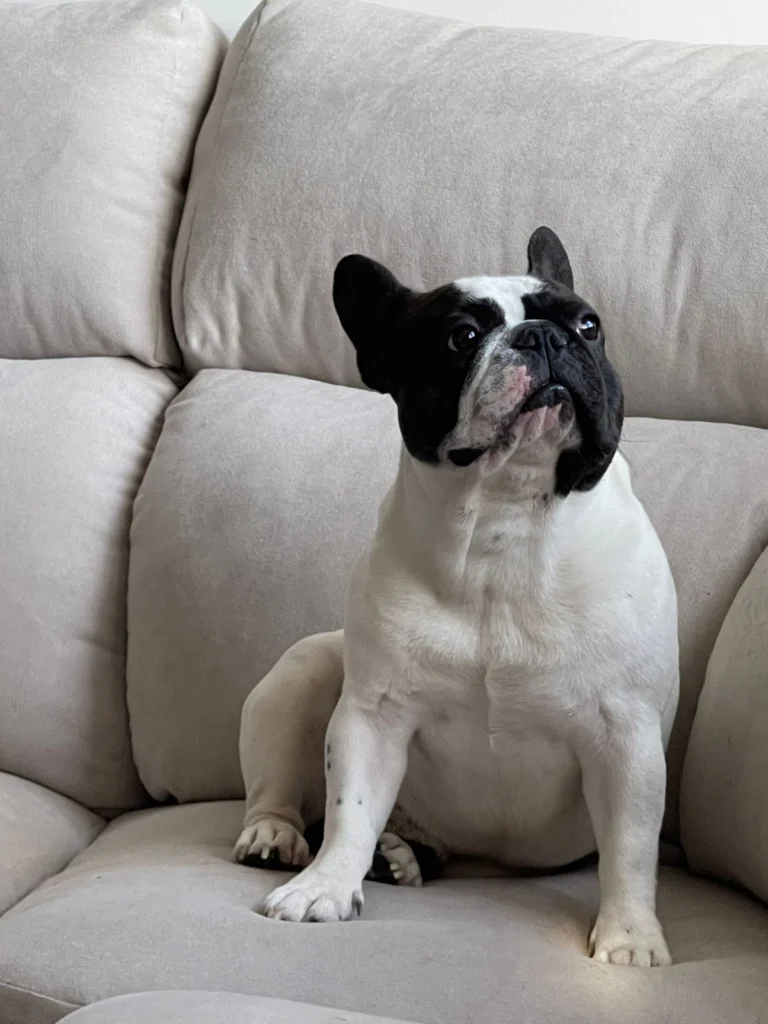
As a flat-faced breed, French Bulldogs “can overheat and struggle to breathe really quickly, especially in warmer weather,” according to the PDSA. The breed club notes that their short faces give them less tolerance of heat, exercise and stress. Upper floors, west-facing units and buildings without central cooling can get surprisingly warm, so think about the temperature your dog will actually be sitting in while you’re out.
- Treat air conditioning as essential in a warm climate, not a luxury. A fan alone may not be enough on hot, humid days.
- Close blinds on sunny windows and give your dog a cool floor to lie on.
- Skip balcony time in the heat. A balcony in direct sun can get hot, and it is safest not to leave any dog alone on one.
- Time walks for early morning or evening, and remember that hallways, stairwells and parking garages can be hot too.
Heavy panting, noisy breathing, drooling, weakness or collapse can signal overheating, which is an emergency. Start cooling your dog with water (cold water is fine) and contact a vet straight away.
Stairs, elevators and spine care
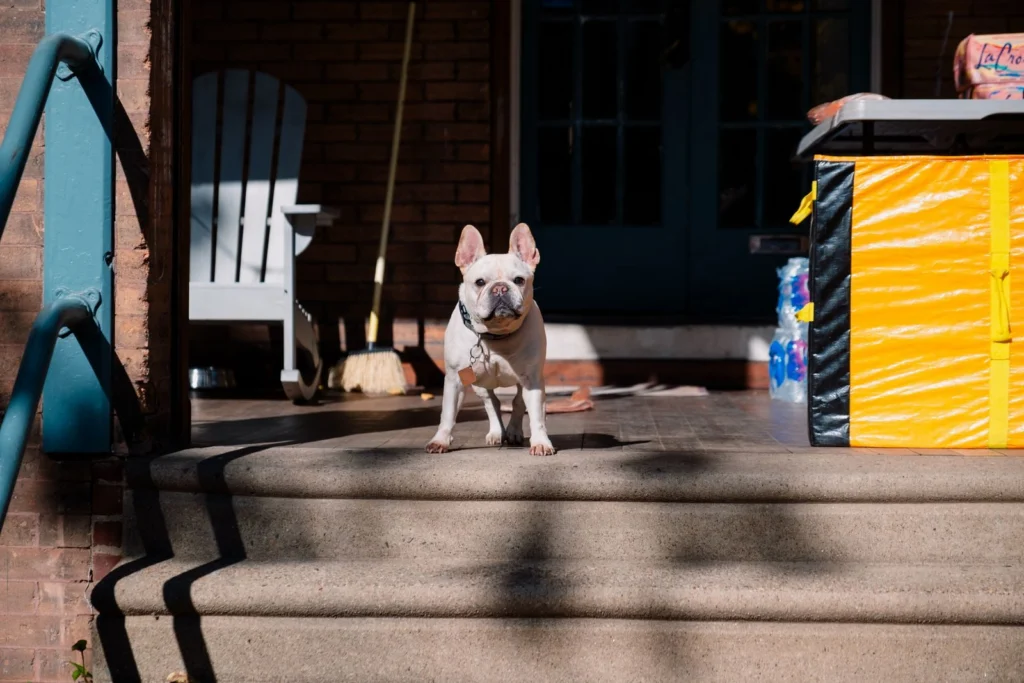
Frenchies are a chondrodystrophic (dwarf) breed, and the breed club advises “lifelong exercise precautions” such as “limited use of stairs and jumping” to protect the spine. That makes your building’s layout more important than its size.
- Use the elevator when there is one, and keep your dog close in a harness.
- In walk-ups, carry your dog when practical, supporting both the chest and the back end so the spine stays level.
- Add ramps or steps for the sofa and bed so your dog isn’t jumping down several times a day.
- Keep your Frenchie lean, which makes carrying easier and takes strain off the back.
If your dog suddenly cries when picked up, refuses stairs or wobbles on the back legs, see a vet promptly. Our guide to IVDD and back problems explains the warning signs.
Potty training in a high-rise
Humane World for Animals advises taking a puppy out at least every two hours, and especially after waking, play sessions, and eating or drinking. Many young puppies need to go even more often. In a tall building, that means planning the route before the moment arrives.
- Carry young puppies through hallways and elevators so accidents don’t happen on the way down.
- Keep a “go bag” by the door: leash, harness, treats, poop bags and paper towels.
- Pick one outdoor spot close to the entrance and reward your puppy the moment they finish.
- Consider indoor options carefully. Pee pads or a sod box can help in a high-rise, but Humane World notes that indoor potty training can make outdoor housebreaking take longer.
Never punish accidents. Our house-training guide walks through a full schedule.
Barking, noise and neighbors
The PDSA describes Frenchies as “not known for being big barkers unless they are bored or something is wrong,” but individual dogs vary, and some will still bark at a knock. In an apartment, door sounds, elevator chimes and footsteps in the hallway are frequent triggers.
- Reward quiet when a hallway noise happens, before your dog starts barking. Our guide to French Bulldog barking covers more reward-based fixes.
- Use a cozy resting spot away from the front door, with background sound if it helps your dog settle.
If neighbors mention barking while you’re out, it may be a sign of distress rather than boredom. Our separation anxiety guide explains how to tell and what to do.
Time alone and indoor enrichment
Frenchies are companion dogs, and the PDSA says they “dislike being left alone for even short periods,” adding that “ideally, you should never leave your dog for more than four hours.” Puppies need much shorter absences. If you work long days, plan for a dog walker, daycare suited to flat-faced breeds, or friends and family who can visit.
Apartments can also mean fewer chances to sniff and explore, so build mental exercise into each day:
- Food puzzles, snuffle mats and lick mats for part of each meal.
- Hide-and-seek with treats around the living room.
- Short, reward-based training sessions to learn new tricks.
Building rules, deposits and leases
Some rentals have pet bans, weight limits or breed restrictions, and a stocky dog can approach some weight caps. Check before you commit, and remember that rules vary widely by building and location. Humane World for Animals offers practical advice for renters:
- Get approval in writing. “The only words that matter are the ones written in the lease.”
- Ask about exceptions. Even with size or breed restrictions, some landlords will make exceptions.
- Clarify deposits and fees. Any pet deposit or monthly fee should be specified in the lease, and these can sometimes be negotiated before signing.
- Prepare a pet resume with a photo, training classes, a landlord reference and a letter from your vet, and offer a meet-and-greet.
French Bulldog apartment readiness checklist
| Question | Why it matters |
|---|---|
| Can I keep the apartment cool all summer? | Frenchies overheat quickly, even indoors. |
| Is there an elevator, or can I carry my dog? | Limiting stairs helps protect the spine. |
| Is there a potty spot close to the entrance? | Quick trips make house training easier. |
| Will my dog be alone more than four hours? | Long absences can cause distress and barking. |
| Does the lease allow a dog of this size and breed? | Approval in writing prevents problems later. |
Vet note: If your Frenchie struggles in warm rooms, breathes noisily at rest, or seems sore on stairs, ask your vet for an airway and spine check. They can advise on a safe exercise plan and whether home changes such as ramps would help.
FAQ
Can a French Bulldog live in a small studio apartment?
Often, yes. Space matters less than a cool home, daily walks, mental games and company. A studio with good air conditioning and a nearby green space can suit a Frenchie well.
Can my Frenchie use the stairs in a walk-up building?
Occasional stairs are part of life, but the breed club recommends limiting stairs and jumping. Carry your dog when practical, supporting the chest and back end, and keep them lean.
Should I use pee pads for my French Bulldog in an apartment?
Pads can help in a high-rise or for very young puppies, but indoor training can make outdoor housebreaking take longer. If you use them, treat pads as a short-term backup while focusing on outdoor trips.
How long can a French Bulldog be left alone in an apartment?
The PDSA says that ideally a dog should never be left for more than four hours, and Frenchies dislike being alone even for short periods. Puppies need much shorter absences, so plan for a dog walker or visits on long workdays.
Will my French Bulldog bother the neighbors?
Frenchies are not usually big barkers, but they may alert-bark at the door or bark when bored or distressed. Rewarding quiet and keeping absences short helps.
Sources
- Most Popular Dog Breeds of 2022 — American Kennel Club
- Official Standard of the French Bulldog — American Kennel Club
- Meet the French Bulldog! — French Bull Dog Club of America
- French Bulldog — PDSA
- How to housetrain your dog or puppy — Humane World for Animals
- Information for renters with pets — Humane World for Animals