
Few sounds are as familiar to French Bulldog owners as the nightly snore. It can be loud enough to hear from the next room, and it is easy to file it under “cute Frenchie quirks.” So why does my French Bulldog snore? The honest answer is that snoring in this breed is very common, but it is usually a sign that air is struggling to get through a narrowed airway. That does not mean every snoring Frenchie is in trouble. It does mean the snore is worth understanding, watching and, sometimes, getting checked.
Key takeaways
- Frenchie snoring is common, but it usually signals a narrowed airway rather than a harmless quirk.
- Snoring or snorting while awake is a bigger warning sign than snoring during sleep.
- Pauses in breathing during sleep, tiring fast on walks or frequent regurgitation need a vet check.
- Keeping your Frenchie lean, using a harness and avoiding heat all make breathing easier.
- Record a short video of your dog sleeping and breathing to show your vet.
Why does my French Bulldog snore?
French Bulldogs are a brachycephalic, or flat-faced, breed. Their skull and muzzle have been shortened, but the soft tissues inside the nose and throat have not shrunk to match. The result is extra tissue packed into a small space, which narrows the airway at several points. This group of problems is called Brachycephalic Obstructive Airway Syndrome, or BOAS, and our complete guide to BOAS in French Bulldogs covers it in depth.
When air is forced through a narrow, floppy passage, the tissues vibrate and make noise. In Frenchies, the main sources are:
- An elongated, thickened soft palate. The University of Cambridge BOAS Research Group explains that the soft palate can extend back into the larynx and vibrate as the dog breathes in, producing a low, rattling noise vets call stertor. This is the classic Frenchie snore.
- Narrow nostrils (stenotic nares). Pinched nostrils and extra tissue inside the nose cause soft tissue vibration and noise, often with visible flaring of the nostrils as the dog works to pull air in.
- Changes in the larynx. A higher-pitched, wheezy sound (stridor) can point to narrowing or collapse of the larynx, which is a more serious finding.
When a dog falls asleep, the muscles of the throat relax. In an airway that is already crowded, that relaxation makes the noise louder, which is why the snore often seems worst at night or during deep naps.
Is it normal for French Bulldogs to snore?
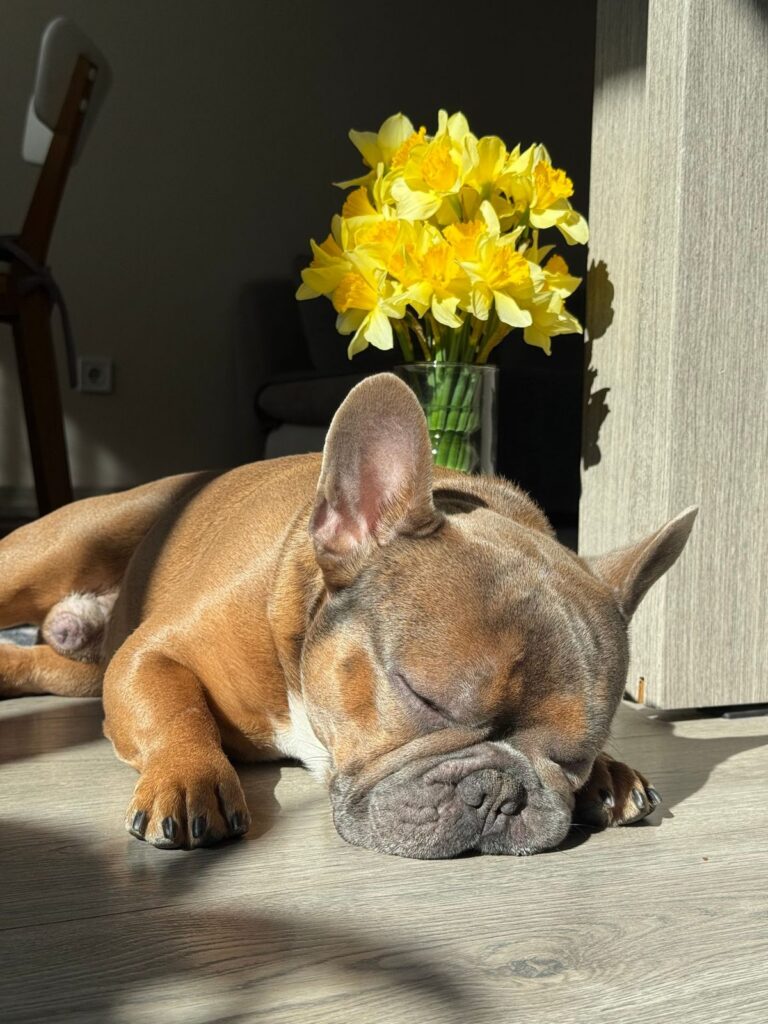
It is common, but “common” and “normal” are not the same thing. Researchers have noted that BOAS often goes unnoticed because owners see its signs as normal for their dog or for flat-faced breeds, since the signs start early, are widespread and last for years. A 2015 review in PLOS ONE by Packer and colleagues cites a study in which audible snoring was reported in 100% of BOAS-affected dogs, compared with 21% of unaffected dogs. That makes snoring a strong clue, though not proof, of an obstructed airway.
At the same time, a snoring Frenchie is not automatically a sick one. VCA Animal Hospitals describes mildly affected dogs as having noisy breathing, especially with exercise, with most snorting when excited and snoring when relaxed or asleep. The Royal Kennel Club and University of Cambridge Respiratory Function Grading Scheme also recognizes a grade for dogs that are clinically unaffected but have some respiratory noise. So the useful question is not “does my Frenchie snore?” but “what else is going on alongside the snoring?”
Normal snoring vs. worrying snoring
This table is a rough guide to help you decide how closely to watch your dog. It is not a diagnosis; if unsure, ask your vet.
| Lower concern | Worth a vet visit |
|---|---|
| Snores only when deeply asleep or very relaxed | Snores, snorts or breathes noisily while awake and resting |
| Sleeps soundly and wakes up bright | Restless sleep, frequent waking or pauses in breathing during sleep |
| Breathes quietly through the nose when calm | Breathes with an open mouth at rest or after light activity |
| Enjoys normal walks and recovers quickly | Tires quickly, lags behind or needs frequent breaks on walks |
| Snoring has stayed about the same over time | Snoring is getting louder, or a high-pitched wheeze has appeared |
| Eats normally | Gags, retches or regurgitates food or foam, especially after eating or excitement |
Snoring while awake
The Cambridge group describes BOAS-affected dogs as “awake snorers”: the soft palate vibrates even when they are alert. If your Frenchie sounds like they are snoring while sitting next to you on the couch, that suggests the airway is narrow enough to matter, not just relaxed by sleep.
Pauses in breathing during sleep
Some dogs with BOAS have sleep-disordered breathing, with labored breathing and periods where they stop breathing (apnea) while asleep. The Cambridge group describes this as life-threatening and harmful to quality of life. If you notice your Frenchie’s snoring stopping, followed by a gasp or snort as they restart breathing or wake up, mention it to your vet promptly.
Exercise intolerance and regurgitation
VCA notes that more severely affected dogs have more obvious airway noise, tire easily with exertion and may collapse or faint after exercise. Regurgitation is another often-missed sign: according to the Cambridge group, excess throat tissue and an elongated soft palate can interfere with swallowing, and the constant effort of breathing can contribute to reflux. MSPCA-Angell calls regurgitation and vomiting among the most concerning signs in brachycephalic dogs and advises consulting your vet if they occur.
What can make Frenchie snoring worse?
- Extra weight. Fat tissue builds up around the airway and narrows it further. VCA states that obesity worsens BOAS signs, and the Cambridge group links being overweight to BOAS. Packer and colleagues also found that thicker necks were associated with greater BOAS risk.
- Heat and humidity. VCA notes signs are often worse in hot or humid weather, because these dogs cannot pant and cool themselves efficiently.
- Excitement and exertion. Fast, hard breathing pulls more forcefully on soft tissues, which can increase noise and effort.
- Time. The strain of breathing through a narrow airway can cause tissues to swell and the larynx to weaken over time, so BOAS can progress. VCA notes most dogs are diagnosed between one and four years of age.
What you can do at home
You cannot change your Frenchie’s anatomy at home, but you can make breathing easier and give your vet better information.
- Keep them lean. This is one of the most helpful steps. Check our French Bulldog weight chart and ask your vet to body condition score your dog, since the scale alone does not tell the whole story.
- Use a harness, not a collar. VCA and MSPCA-Angell both advise a harness that does not press on the neck, because a collar can put pressure on an already narrow airway.
- Keep them cool. Air conditioning, shade and walks in the cooler parts of the day help. Our French Bulldog heat safety guide explains how to prevent and respond to overheating.
- Exercise sensibly. Regular, moderate activity keeps your dog fit without overloading the airway. See our guide to French Bulldog exercise needs.
- Film the snoring. Record a minute or two of your dog breathing while asleep, while resting awake and after a short walk. Noise and sleep pauses rarely happen on cue in the clinic, so a video can help your vet see what you see at home.
- Track changes. Note whether the snoring is getting louder, whether your dog is tiring sooner and how often they regurgitate. Changes over months matter more than one noisy night.
When to see a vet about snoring
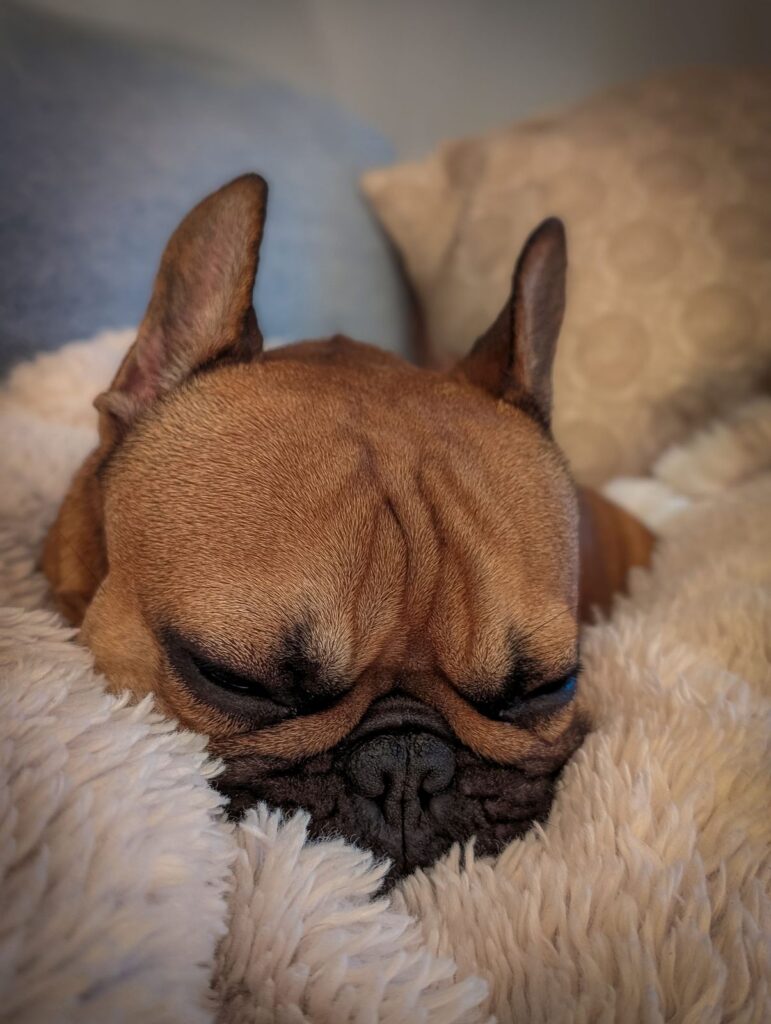
Book a routine appointment if your Frenchie snores or snorts while awake, has restless sleep or pauses in breathing, struggles on walks, regurgitates regularly, or if the snoring is getting worse. Your vet will listen to the breathing, look at the nostrils and may suggest further assessment. Examining the soft palate and larynx properly usually requires sedation or anesthesia.
In the UK, trained vets assess dogs under the Royal Kennel Club and University of Cambridge Respiratory Function Grading Scheme, which covers French Bulldogs. The vet listens to the dog’s breathing at rest, then after three minutes of encouraged exercise, and assigns a grade from 0 (clinically unaffected and free of respiratory signs) to 3 (clinically affected with severe signs). Dogs at grade 2 or 3 are considered clinically affected. Even outside this scheme, asking your vet how your dog’s breathing compares before and after gentle exercise is a useful conversation.
For dogs with moderate or severe BOAS, surgery to widen the nostrils, shorten the soft palate and address other tissues can improve quality of life. It is worth knowing, though, that MSPCA-Angell notes loud snoring often remains even after surgery. The goal is easier breathing and better comfort, not silence. Our BOAS guide explains treatment options in more detail.
Seek emergency care if your dog has blue, purple or very pale gums or tongue, collapses or faints, chokes or cannot seem to get air in, struggles to breathe in a way that does not settle with rest in a cool place, or shows signs of overheating such as heavy panting, drooling or confusion.
Vet note: This article is general information, not a substitute for an examination. Snoring alone is common in French Bulldogs, but noisy breathing while awake, pauses in breathing during sleep, poor exercise tolerance or regular regurgitation should be checked by your veterinarian. If your dog is struggling to breathe, collapses or has blue or pale gums, treat it as an emergency.
FAQ
Why does my French Bulldog snore so loud?
Loud snoring usually comes from an elongated, thickened soft palate vibrating in a narrowed airway, often combined with narrow nostrils. Extra weight, heat and deep sleep can all make it louder. Very loud or worsening snoring is a good reason for a vet check.
Is it normal for French Bulldogs to snore?
It is very common, but it is usually linked to some degree of airway narrowing, so it is better thought of as a sign to monitor than a harmless quirk. Snoring only during sleep, in a dog that is otherwise active and comfortable, is less concerning than noisy breathing while awake.
Can a French Bulldog puppy snore?
Yes. BOAS signs often start early in life. If your puppy snores loudly, breathes noisily while awake or tires very quickly during play, mention it at a vaccination visit so your vet can check the nostrils and breathing.
Will losing weight stop my Frenchie snoring?
It may not stop it completely, but fat around the airway narrows it further, so getting an overweight Frenchie to a lean body condition can make breathing easier. Ask your vet for a safe weight-loss plan.
Sources
- Recognition & Diagnosis — Cambridge BOAS Research Group, University of Cambridge Department of Veterinary Medicine
- Management & Treatment — Cambridge BOAS Research Group, University of Cambridge Department of Veterinary Medicine
- Brachycephalic Airway Syndrome in Dogs — VCA Animal Hospitals
- Respiratory Function Grading Scheme — The Royal Kennel Club
- Impact of Facial Conformation on Canine Health: Brachycephalic Obstructive Airway Syndrome — Packer et al., PLOS ONE (2015), via PubMed Central
- Caring for Brachycephalic Dogs — MSPCA-Angell