
French Bulldogs love a sunny patch on the floor, but real heat is another matter entirely. Thanks to their short muzzles and narrow airways, Frenchies are among the breeds most vulnerable to heatstroke, and a warm afternoon that feels pleasant to you can become dangerous for them surprisingly quickly. The good news is that heat-related emergencies are largely preventable. With a little planning, your Frenchie can enjoy summer safely.
Key takeaways
- Frenchies cool themselves mainly by panting, and their flat faces make panting inefficient.
- Humidity matters as much as temperature: muggy days are especially risky.
- Walk early or late, keep sessions short and never leave your dog in a parked car.
- Know the early signs of overheating and how to start cooling safely.
- Heatstroke is a medical emergency: cool your dog and head to a vet immediately.
Why French Bulldogs struggle in the heat
Dogs do not sweat the way people do. They have a few sweat glands in their paw pads, but their main cooling system is panting, which moves air over the moist surfaces of the nose, mouth and airway so that heat is lost through evaporation. A long nose gives a large surface area for that evaporation. A Frenchie’s compact face does not.
On top of that, many French Bulldogs have some degree of Brachycephalic Obstructive Airway Syndrome (BOAS). Narrow nostrils, a long soft palate and a tight airway mean they have to work harder to move air. Heavy panting can cause the throat tissues to swell, which narrows the airway further, which leads to more panting. That cycle can spiral into a crisis.
Other factors that increase risk include:
- Being overweight
- Very young or senior age
- Existing airway disease or other health problems
- Excitement, stress or vigorous play
Know the danger zones
There is no single “safe” temperature for every Frenchie, because humidity, sun, wind, activity and the individual dog’s airway all change the picture. Flat-faced breeds can get into trouble when temperature and humidity are only moderately elevated, so a sensible rule is to take extra care once it feels warm to you, and serious restriction of activity on hot or humid days. High humidity is particularly important because it reduces how well evaporation cools the airway.
Not sure about today? Our free “Is it too hot to walk my French Bulldog?” heat checker scores the conditions for your dog and, in the US, finds the safest walk times in your local forecast.
Some situations are dangerous on almost any warm day:
- Parked cars. The inside of a car heats up rapidly, even on days that do not feel especially hot. Never leave your Frenchie in a parked car.
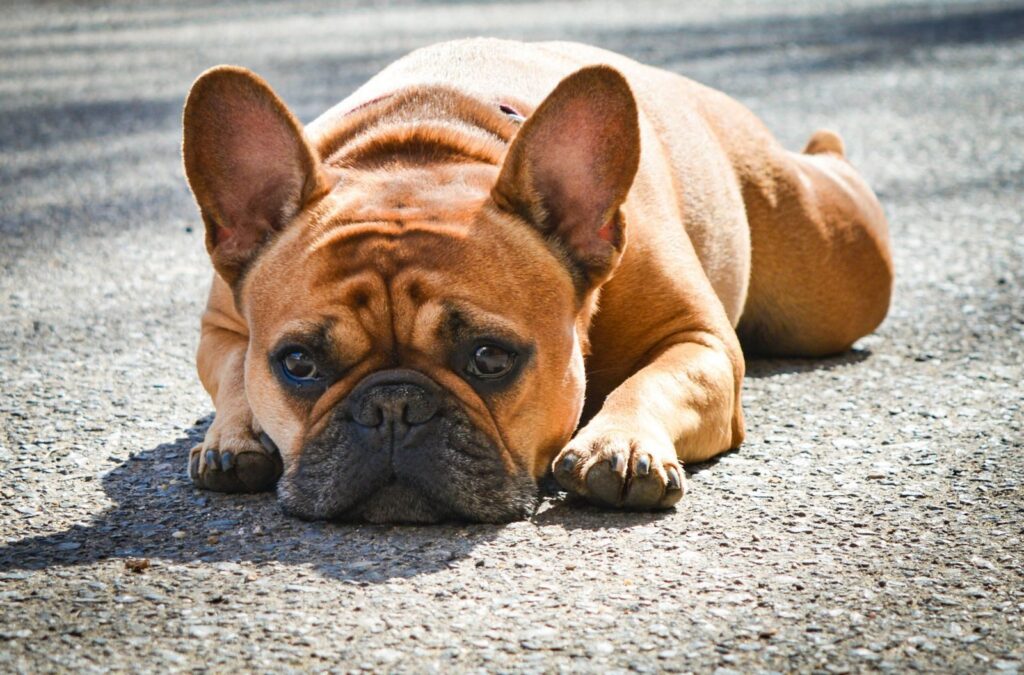
- Hot pavement. Asphalt and concrete can burn paw pads and radiate heat up toward your low-slung dog. Hold your hand on the ground for about five seconds: if it is too hot for you, it is too hot for paws.
- Exercise in the heat. Fetch, running or long walks on a warm day are a common trigger. A UK study of veterinary records found that exercise, not hot cars, was the most common trigger of heat-related illness in dogs, and that French Bulldogs had roughly three times the odds of exercise-related heat illness compared with Labrador Retrievers.
- Sunny rooms and conservatories. Indoor spaces with lots of glass can become very warm.
Everyday hot-weather habits
Plan walks around the weather
Walk in the early morning or late evening when it is coolest, and keep walks short and gentle. On genuinely hot days, it is perfectly fine to skip the walk and offer indoor enrichment instead, such as sniffing games, food puzzles or short training sessions. Our guide to French Bulldog exercise needs has more ideas for low-intensity activity.
Keep the home cool
Air conditioning is one of the most effective tools for keeping a Frenchie comfortable in hot climates, and fans help with air movement. Close curtains or blinds on sunny windows, and make sure your dog always has access to a cool, shaded spot and fresh water.
Use cooling aids wisely
- Cooling mats or a damp towel to lie on
- Shallow paddling pools in the shade (always supervised, since Frenchies are poor swimmers)
- Frozen treats such as ice cubes or a frozen food-stuffed toy, offered in moderation
- Water bowls placed in several locations, refreshed often
Use a harness and keep calm
A well-fitted harness avoids pressure on the throat. Try to limit overexcitement on hot days: boisterous play with other dogs, visitors arriving or long car journeys can all ramp up panting.
Manage weight year-round
A lean Frenchie copes with heat far better than an overweight one. Extra fat insulates the body and adds pressure around the airway. A balanced diet and portion control, covered in our feeding guide, are part of summer safety.
Signs your Frenchie is overheating
Frenchie overheating usually starts with signs that are easy to miss, so it pays to know what to look for. Early warning signs of heat stress include:
- Heavy, fast or noisy panting that does not settle with rest
- Drooling or thick saliva
- Seeking out cool surfaces, reluctance to keep walking
- A wide, “spatulate” tongue hanging further out than usual
- Bright red gums or tongue
Heatstroke emergency signs (stop, start cooling and call your vet immediately):
- Stumbling, weakness or confusion
- Vomiting or diarrhea
- Gums that turn dark red, pale, gray or bluish
- Collapse, seizures or unresponsiveness
What to do if your Frenchie overheats
Heatstroke can damage organs and can be fatal, so act quickly. These first-aid steps are widely recommended by veterinary organizations:
- Stop all activity and move your dog into shade or an air-conditioned space.
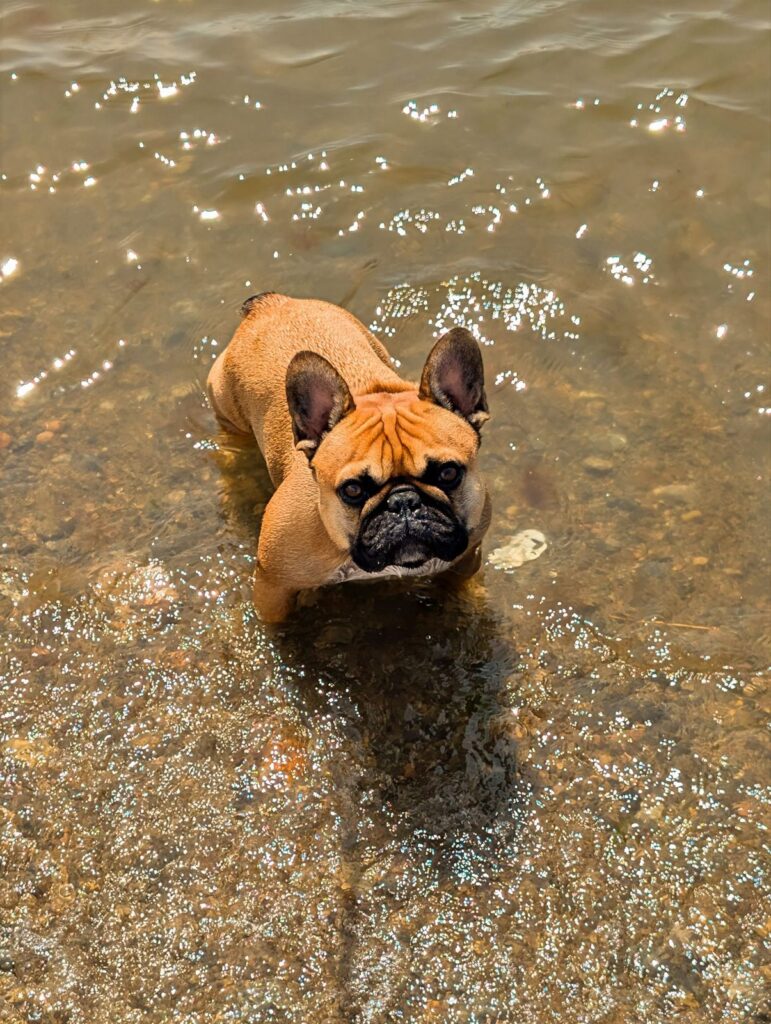
- Start cooling right away. Pour water that is cooler than your dog over the body, particularly the neck, belly and inner thighs, or let them stand or lie in cool water such as a shaded paddling pool if one is available. Cold water rarely causes harm in an overheated dog, and any cool water is better than none.
- Increase air flow with a fan or by opening windows, which helps the water evaporate.
- Offer small amounts of water to drink if your dog is alert, but do not force it.
- Do not cover your dog with wet towels, as they can trap heat. Keep the water flowing and the air moving instead.
- Call your vet or nearest emergency clinic and travel there once cooling is underway (“cool first, transport second”), keeping the car well ventilated or air-conditioned.
Even if your dog seems to recover, a veterinary check is important. Heatstroke can cause internal problems that are not obvious at first, and dogs that have overheated once are at greater risk of it happening again.
Travel and summer outings
If you are traveling with your Frenchie, plan around the heat. Use air conditioning in the car, bring water and a bowl, and schedule stops in shaded areas. Some airlines restrict brachycephalic breeds because of the risks of heat and stress, so check policies carefully and talk with your vet before considering air travel.
At barbecues, beaches and parks, set up a shaded, cool base for your dog, and be ready to leave early if they seem uncomfortable. Sometimes the kindest option is to leave your Frenchie at home in the air conditioning.
Vet note: Heatstroke is a true emergency. If you suspect your French Bulldog is overheating, start cooling immediately and contact a veterinarian right away. If your Frenchie has known breathing problems, ask your vet for a personalized plan for hot weather and exercise.
FAQ
What temperature is too hot for a French Bulldog?
There is no single cutoff, because humidity, sun, activity and the individual dog’s airway all matter. Many Frenchies start struggling at temperatures people find only pleasantly warm. Be cautious whenever it feels warm, and keep activity minimal on hot or humid days.
Can I shave my French Bulldog to keep them cool?
Shaving is generally unnecessary for a short-coated breed like the Frenchie. Focus on shade, air conditioning and limiting activity instead. Our grooming guide covers coat care through the seasons.
Should I use ice water to cool an overheated dog?
Current RSPCA guidance, based on veterinary research, is that cold water rarely causes problems in an overheated dog, and dousing or immersing them in cool or cold water is the priority. Avoid putting ice packs directly on the skin. The goal is fast cooling with good air flow, then getting to a vet, where your veterinary team will take over.
Is it safe for my Frenchie to swim in summer?
French Bulldogs are not strong swimmers, so it is best to keep them on a leash near ponds and lakes. If they are near water, use a properly fitted dog life jacket and supervise closely at all times. See Can French Bulldogs swim? for a full water safety guide.
Sources
- Heatstroke in Dogs — RSPCA
- Heat Stroke in Dogs — VCA Animal Hospitals
- Dogs Don’t Die Just in Hot Cars—Exertional Heat-Related Illness (Heatstroke) Is a Greater Threat to UK Dogs (Hall, Carter & O’Neill, Animals, 2020) — Animals (MDPI), via PubMed Central
- 8 steps to safely exercising your dog in hot weather — PDSA
- Pathophysiology — Cambridge BOAS Research Group, University of Cambridge Department of Veterinary Medicine
- French Bulldog breed information — PDSA