
French Bulldogs are not marathon runners, but they’re not couch cushions either. They need regular, moderate exercise to stay at a healthy weight, keep their muscles and joints strong, and stay mentally content. The challenge is getting the balance right: enough activity to keep them fit, without pushing a flat-faced breed into overheating or breathing trouble. Here’s how to find that balance for your own Frenchie.
Key takeaways
- Most adult Frenchies do well with moderate daily exercise split into short sessions, rather than one long outing.
- Heat and humidity are the biggest risk: walk early or late on warm days and skip strenuous exercise in the heat.
- Mental exercise (sniffing, training, puzzle toys) counts and is ideal on hot days.
- Avoid repeated jumping, stairs and rough high-impact play to protect the back and joints.
- Your individual dog’s breathing, age and fitness should guide you more than any fixed number.
Why exercise matters for Frenchies
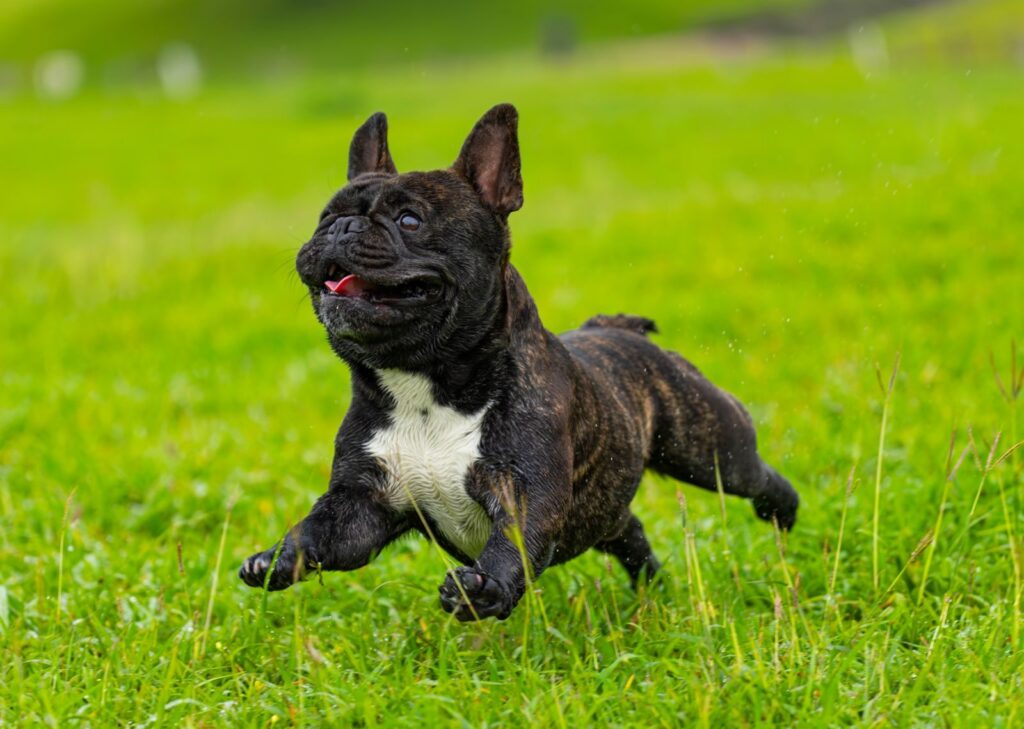
Regular activity helps keep your Frenchie lean, and weight control is one of the most valuable things you can do for this breed. Extra weight puts more strain on the airway, joints and spine. Exercise also burns off energy that might otherwise go into chewing, barking or attention-seeking, and it’s a great way to build your bond.
At the same time, French Bulldogs are brachycephalic. Their shortened airways make it harder to breathe hard and to cool down by panting, which is how dogs mainly shed heat. That’s why intense exercise, especially in warm weather, can quickly become dangerous. Learn more in our guide to BOAS and breathing problems.
How much exercise by life stage
There’s no single correct number, but these general patterns help:
- Puppies: short, gentle play sessions and brief exploratory walks once your vet says it’s safe. Avoid long, forced walks while they are growing. Let your puppy rest whenever they want.
- Adults: the PDSA and The Kennel Club suggest up to about an hour of exercise a day, split into shorter walks plus play and mental games. Some fit, well-breathing dogs enjoy a bit more; others with more airway restriction need less.
- Seniors: keep them moving, but slow down. Shorter, more frequent walks on soft, even ground suit older joints. Watch for stiffness after exercise.
Your vet can give personalized guidance, especially if your dog has a diagnosed airway, spine or joint problem.
Signs your Frenchie has had enough
Learn to read your dog. Stop, find shade and let them rest if you notice:
- Loud, raspy or noisy breathing that’s worse than their normal.
- Heavy panting with a wide, flattened tongue.
- Lagging behind, lying down or refusing to walk on.
- Gums or tongue that look very dark red, or bluish/purple.
- Stumbling, drooling heavily or seeming confused.
Bluish gums, collapse, vomiting or confusion are emergencies: start cooling your dog with water (cold water is fine) and get to a vet straight away. Our heat safety guide covers warning signs and first aid in detail.
Making walks safe
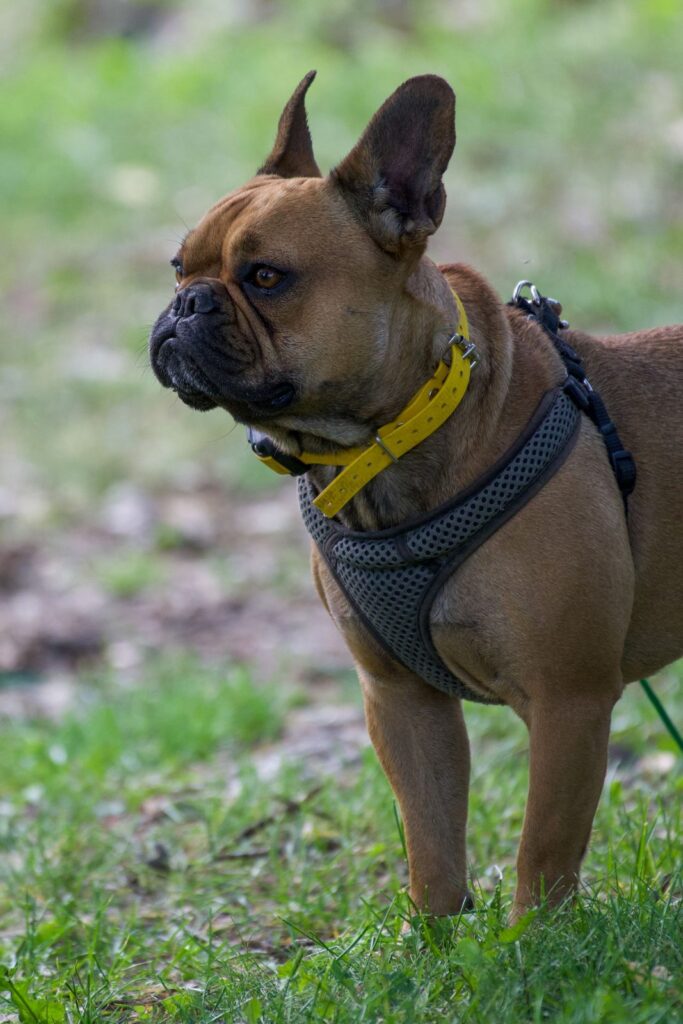
- Use a harness, not a collar. A well-fitted harness avoids pressure on the throat and windpipe.
- Time it right. In warm weather, walk early in the morning or later in the evening, and check pavement temperature by holding your hand on it for about five seconds.
- Keep it steady. Let your Frenchie set a relaxed pace, with time to sniff. Sniffing is mentally tiring in a good way.
- Bring water. Offer drinks during longer outings, especially in warmer weather.
- Know your limits on hot days. When it’s hot or humid, a quick potty break and indoor games may be safer than a walk at all.
Activities Frenchies enjoy
Sniff walks
A slow wander where your dog chooses the route and spends time sniffing. It’s low-impact and mentally satisfying.
Short play sessions
Gentle tug with a soft toy, rolling a ball along the floor, or chasing a flirt pole at a calm pace. Keep sessions short with breaks, and stop before your dog starts breathing heavily.
Training games
A few minutes of practicing sit, down, stay, recall or tricks provides real mental exercise. Positive-reinforcement training also builds confidence and focus.
Scent and puzzle games
Hide treats around a room, use snuffle mats or food puzzles, or scatter part of a meal on the lawn. Perfect for hot or rainy days.
Swimming: proceed with caution
French Bulldogs are not strong swimmers. If your dog is near water, use a properly fitted dog life jacket and stay within reach. Never assume a Frenchie can swim. Our French Bulldog water safety guide covers life jackets, pools, lakes and the beach.
What to avoid
- Jogging or cycling with your Frenchie, especially in warm weather.
- Repeated jumping on and off furniture or high surfaces, and frequent use of stairs. Frenchies are prone to back problems such as intervertebral disc disease; see our guide to IVDD.
- Rough, prolonged wrestling with bigger dogs.
- Exercise straight after a large meal.
- Any strenuous activity in the heat of the day.
Exercise and weight
Exercise helps, but diet plays the bigger role in weight control. If your Frenchie is getting rounder, look at portion sizes and treats first. You should be able to feel the ribs easily under a thin layer of fat and see a waist from above. Our feeding schedule guide explains how to use body condition to adjust portions.
Vet note: If your Frenchie tires very quickly, snores loudly while awake, has episodes of gagging or collapse, or seems reluctant to move, talk to your vet. These can be signs of airway disease, back pain or other conditions that need assessment before you change the exercise routine.
FAQ
Can French Bulldogs go on long hikes?
Some fit Frenchies with good airways can manage gentle, cool-weather hikes with plenty of rest stops. Build up slowly, consider bringing a carrier for breaks, and turn back at the first sign of struggling.
Is it OK to skip a walk on hot days?
Yes. On hot or humid days, swapping a walk for indoor scent games and training is often the safest choice. A few quieter days are far less risky than exercising in the heat.
How do I know if my Frenchie isn’t getting enough exercise?
Weight gain, restlessness, destructive chewing and attention-seeking can all hint at too little physical or mental activity. Try adding short sniff walks and training sessions.
Can my Frenchie play at the dog park?
Possibly, if they’re well socialized and the weather is cool. Choose calm play partners of similar size, keep sessions short, and step in if play becomes too rough or your dog starts breathing heavily.
Sources
- French Bulldog breed information — PDSA
- French Bulldog | Breeds A to Z — The Royal Kennel Club
- 8 steps to safely exercising your dog in hot weather — PDSA
- Dogs Don’t Die Just in Hot Cars—Exertional Heat-Related Illness (Heatstroke) Is a Greater Threat to UK Dogs (Hall, Carter & O’Neill, Animals, 2020) — Animals (MDPI), via PubMed Central
- Heatstroke in Dogs — RSPCA
- Brachycephalic Airway Syndrome in Dogs — VCA Animal Hospitals