
French Bulldog limping can be anything from a sore toe that settles in an hour to a spinal problem that needs a vet today. The leg involved, how the limp looks and what else you notice will tell you how fast to act.
Quick answer: Most limping comes from a paw injury, broken nail, strain, slipping kneecap or joint problem. Go to an emergency vet if your Frenchie can’t stand or walk unaided, drags or wobbles on the back legs, has an obvious fracture, or limped after major trauma. A limp lasting over an hour, or back pain, needs a vet soon.
Key takeaways
- Limping is a sign, not a diagnosis: the cause can be in the paw, a joint, a muscle, a bone or the spine.
- Can’t stand, dragging or wobbly back legs, or an obvious fracture means an emergency vet visit now.
- A back leg that skips for a few steps and then works normally often points to a slipping kneecap.
- Rest your dog on a leash and film the limp, because many dogs walk normally at the clinic.
- Never give human pain medicine; use only pain relief your vet prescribes.
Is it an emergency? Red flags first
VCA’s urgent care guidance sorts limping like this:
- Emergency vet now: your dog can’t stand or walk without help, there is an obvious fracture, or the limp followed major trauma such as being hit by a car or shaken by a bigger dog.
- Urgent vet visit: sudden pain or limping that doesn’t resolve within an hour, or pain when you touch the neck or back. This includes a dog that is limping but can stand and walk on its own, even on three legs.
- Watch at home: a mild episode of pain that resolves quickly may not need a visit. Book one if it comes back.
For Frenchies, add one more rule. A 2021 UK VetCompass study found French Bulldogs had about three times the odds of spinal cord disorders, a broad group that includes disc disease (IVDD), compared with other dogs. The American College of Veterinary Surgeons describes how it can progress from back or neck pain to a “drunken sailor” walk with the hind feet crossing, and then to loss of use of the back legs and bladder control. ACVS adds that disc rupture is generally thought to be “a true surgical emergency.” So wobbliness, dragging, crossing back feet, crying when lifted or trouble peeing is not a “wait and see” limp. See our IVDD and back problems guide.
Pattern, possible cause and how urgent
A starting point for your vet visit, not a diagnosis. Older dogs may have more than one problem.
| What you see | Possible cause | How urgent |
|---|---|---|
| Won’t put any weight on a leg, leg at an odd angle, or limp after a fall or accident | Fracture, dislocation, serious injury | Emergency |
| Wobbly or crossing back legs, dragging feet, can’t stand, crying when picked up | Spinal problem such as IVDD | Emergency |
| Sudden limp with licking or holding up one paw | Cut pad, broken nail, splinter or grass seed | Same day if bleeding, swollen or not better within an hour |
| Red, swollen bump between the toes | Interdigital “cyst” (furuncle) | Vet soon; urgent if swelling spreads or the dog seems unwell |
| Back leg skips or is held up for a few steps, then normal again | Luxating patella (slipping kneecap) | Routine vet visit; sooner if it happens often or won’t settle |
| Back leg limp, sometimes worse after rest, trouble rising from a sit or jumping into the car | Cruciate ligament disease | Vet within a day or two |
| Stiff getting up, less keen on walks or stairs | Hip dysplasia or arthritis | Routine vet visit; sooner if worsening |
| Limp shifts from leg to leg, or comes with swelling, fever or not eating | Joint, bone or body-wide problem | Vet the same day |
Front leg or back leg? How to tell
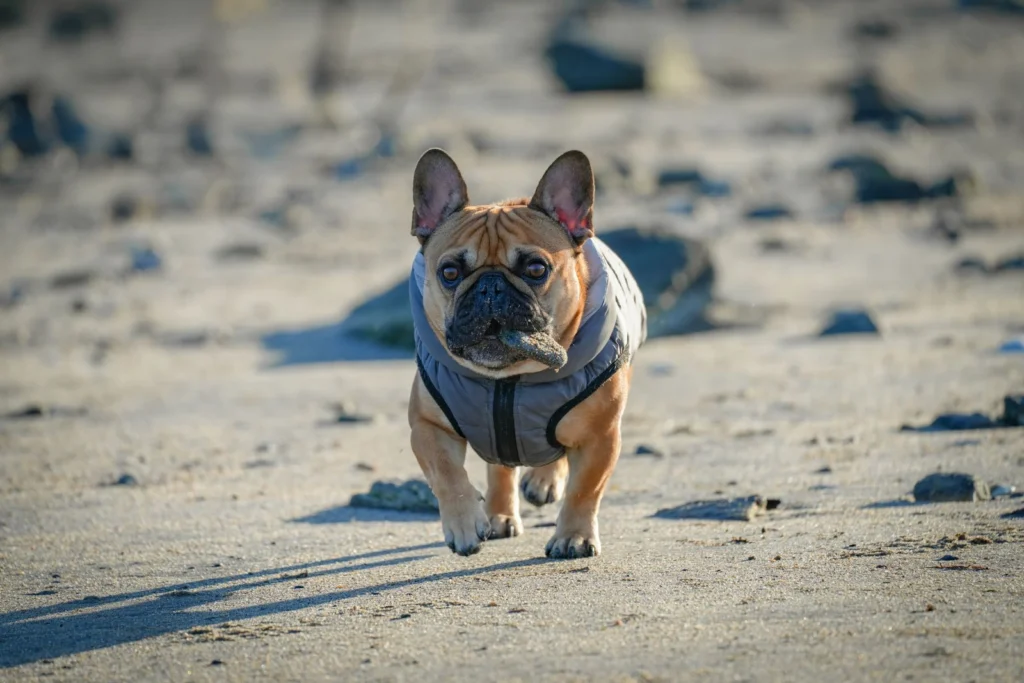
The Merck Veterinary Manual notes that a dog with a lame front leg generally raises its head when putting weight on that leg, while a dog with a lame back leg generally drops its head when that leg takes weight. Watch your Frenchie walk slowly away from you and back on a flat surface.
Cornell’s Riney Canine Health Center groups the common causes by age and limb:
- Young dogs, back leg: hip dysplasia (the most common, especially in larger breeds), luxating patella, growth-related bone inflammation, and tendon or muscle injuries.
- Young dogs, front leg: elbow problems, growth-related bone conditions and shoulder problems.
- Older dogs, back leg: most commonly a torn cranial cruciate ligament, plus hip arthritis, spinal disease, bone cancer, and foot injuries or infections.
- Older dogs, front leg: elbow arthritis, shoulder conditions, neck or spinal problems that cause nerve pain, and bone cancer.
A front leg limp with neck pain, or with wobbly back legs, may be a spinal problem rather than a sprain.
Common causes of French Bulldog limping
Paws and nails
Look for a cut pad, a nail that is cracked or bent back, a splinter, a burr or a grass seed. Painful red bumps between the toes are another cause. Most of these are deep infections rather than true cysts, and you should never squeeze them. See our interdigital cysts guide for what to do.
A skipping back leg: luxating patella
If your Frenchie hops on three legs for a few strides and then trots on as if nothing happened, the kneecap may be slipping out of its groove. French Bulldogs are more prone to this than the average dog: the same 2021 VetCompass study found 2.31 times the odds of patellar luxation in Frenchies compared with other dogs. Treatment depends on how severe it is. Read more in our luxating patella guide.
Cruciate ligament disease
The cranial cruciate ligament stabilizes the knee, like the ACL in people. ACVS explains that rupture usually follows slow degeneration over time rather than a sudden injury to a healthy ligament, and partial tears almost always progress to full tears. Signs include trouble rising from a sit, a limp that may show only after long rest, reluctance to jump into the car and muscle loss in the leg. Excess weight and poor fitness are risk factors you can influence. ACVS also notes that 40-60% of dogs with the disease in one knee will, at some point, develop a similar problem in the other knee.
Hips
Hip dysplasia is a loose, badly formed hip joint that wears over time. It tends to show as stiffness after rest and less interest in walks rather than a sudden limp. Our hip dysplasia guide explains screening and management.
The spine
Back problems can look like a back leg limp at first. A hunched back, yelping when touched, scuffing toes or crossing feet point to the spine: call your vet the same day or go to an emergency clinic.
Strains, sprains and puppy limps
Rough play, a slip on a smooth floor or a jump off the couch can strain a muscle or sprain a joint, and these limps often improve with rest. In puppies, Cornell also lists growth-related bone and developmental joint problems. A puppy limp that keeps returning, moves between legs or comes with fever or poor appetite needs a vet check.
What to check safely at home
Only do this if your dog is calm. Hurting dogs can snap, so stop if your Frenchie growls, stiffens or cries.
- Look at the paw first. Spread the toes gently and check the pads, nails and webbing for cuts, swelling, bleeding or anything stuck.
- Compare legs. Run your hands down both legs and feel for heat, swelling or a spot that makes your dog pull away.
- Watch the walk. Note which leg, whether it skips, and whether the back legs wobble or cross.
- Film it. Cornell calls home video extremely helpful, because excitement at the clinic can make a dog walk normally.
- Write it down. When it started, sudden or gradual, better or worse, and what happened just before.
Our guide to the signs a French Bulldog is in pain lists other changes to watch for.
How to rest a limping Frenchie
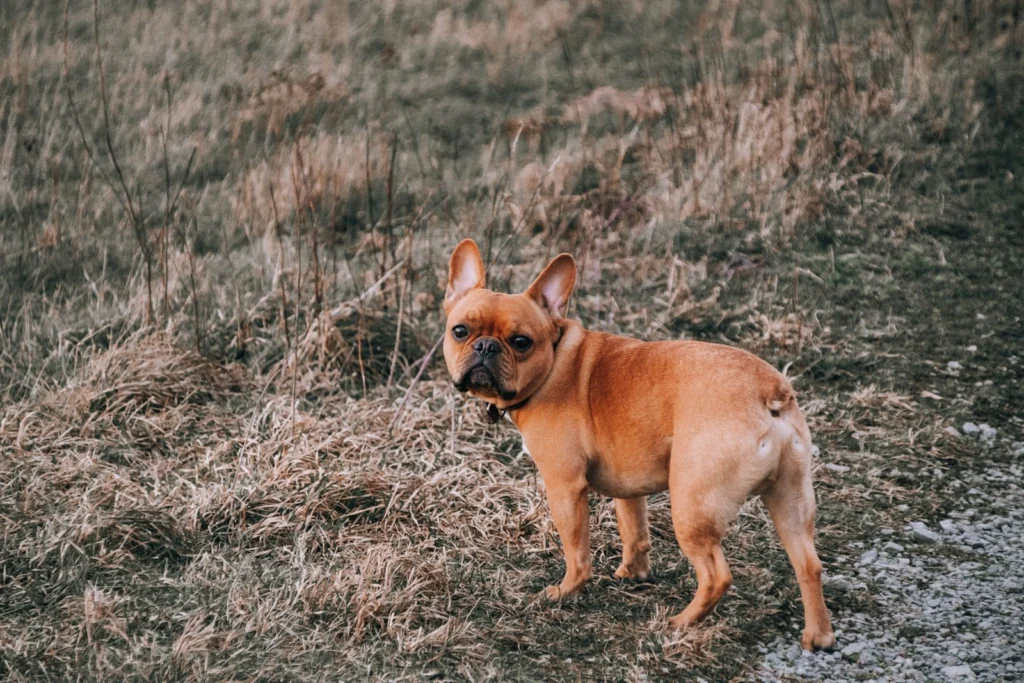
- Short, slow leash walks for potty breaks only. No off-leash running, fetch or rough play.
- No stairs, jumping on or off furniture, or car jumps. Lift your dog with support under the chest and back end.
- Use a crate or small pen for unsupervised time, with non-slip rugs on smooth floors.
- Do not give any human pain medicine or leftover medicine. If your Frenchie seems sore, call your vet instead.
Cornell advises not to wait if a limp lasts more than a day or two, or if the pain is severe, sudden or getting worse.
What the vet will do
Cornell describes a typical lameness workup:
- History: when the limp started, how it has changed and any recent injury.
- Gait check: watching your dog walk and trot in straight lines and circles, paying close attention to turns.
- Orthopedic and neurologic exam: feeling each leg from the toes up for pain, swelling and instability, checking the spine and nerve function.
- Tests if needed: X-rays, bloodwork, a joint fluid sample, or CT or MRI. Some dogs need calming medicine or sedation so the exam can be done safely.
Treatment depends on the cause and may include restricted exercise, vet-prescribed pain relief, weight management, rehab or surgery. The Merck Veterinary Manual notes that relieving pain is an important part of treatment and may allow faster recovery, so follow your vet’s directions exactly.
Vet note: Treat any limp with wobbly or dragging back legs, crossing feet, back or neck pain, or trouble urinating as a possible spinal emergency in a French Bulldog. Fast treatment can change the outcome. If you’re unsure how urgent it is, call your vet or an emergency clinic and describe what you see.
FAQ
Why is my French Bulldog limping but not crying?
Dogs often hide pain, so a quiet limp can still hurt. A limp that lasts over an hour, keeps returning or comes with other changes should be checked.
My Frenchie is limping on a back leg on and off. What could it be?
An on-and-off skip on a back leg is a classic sign of a slipping kneecap. Cruciate ligament disease and hip problems can also come and go at first. Film it and show your vet.
Should I wait before taking my limping dog to the vet?
Not if your dog can’t stand or walk alone, has wobbly or dragging legs, an obvious fracture, or was in an accident: those need emergency care. Otherwise, rest your dog and see the vet if the limp doesn’t settle.
Can I give my French Bulldog something for the pain?
Only medicine your vet prescribes for your dog. Never give human pain medicine or leftovers from another pet.
Why is my French Bulldog limping on a front leg?
Check the paw and nails first. Cornell lists elbow, shoulder and growth-related bone problems as common front leg causes in young dogs, and elbow arthritis, shoulder conditions and neck or spinal nerve pain in older dogs. A front leg limp with neck pain needs a vet soon.
Sources
- Pain or Limping — VCA Animal Hospitals (Urgent Care)
- What to expect when taking your limping dog to the veterinarian — Cornell University College of Veterinary Medicine, Riney Canine Health Center
- Lameness in Dogs — Merck Veterinary Manual
- Cranial Cruciate Ligament Disease — American College of Veterinary Surgeons
- Intervertebral Disc Disease — American College of Veterinary Surgeons
- French Bulldogs differ to other dogs in the UK in propensity for many common disorders: a VetCompass study — Canine Medicine and Genetics (O’Neill et al., 2021)