
If your new Frenchie seems to spend most of the day asleep, you are not imagining it. French Bulldog puppy sleep takes up a huge share of the day, and that is exactly how it should be. The American Kennel Club says puppies typically sleep 18 to 20 hours a day, often in short naps scattered between bursts of play. This guide explains what’s normal, why sleep matters so much, how to set up a good sleep spot and night routine, and how to tell ordinary flat-faced snoring from breathing problems that need a vet.
Key takeaways
- The AKC says puppies typically sleep 18 to 20 hours a day, often in naps of 30 minutes to two hours.
- An overtired puppy often gets bitey and frantic; a quiet nap usually helps more than more play.
- Put the crate near your bed at first, keep bedtime consistent and make night potty trips quick and boring.
- Some snoring is common in Frenchies, but pauses in breathing or struggling to breathe asleep need a vet check.
- Sleepiness plus other signs, such as poor appetite, vomiting or low interest in play, is a reason to call your vet.
How much do French Bulldog puppies sleep?
A lot. According to the AKC, puppies typically sleep from 18 to 20 hours a day. They don’t do it all in one stretch: young puppies may nap roughly every hour or so, sleeping anywhere from about 30 minutes to two hours at a time, then wake up, potty, eat or play, and crash again.
There is no separate sleep figure for French Bulldogs, so the general puppy guidance applies. Individual puppies vary. What matters more than an exact number is the pattern: a puppy who wakes up bright, plays with interest, eats well and then settles again is behaving normally, even if it feels like they sleep through most of the day.

Why sleep matters so much for puppies
Sleep isn’t wasted time for a growing puppy. The AKC notes that sleep supports the development of the central nervous system, brain, immune system and muscles, and helps puppies rest during growth spurts.
Overtired puppies and biting
Puppies don’t always know when to stop. Too much stimulation can tip them from happily playful into wild, mouthy and impossible to settle. In an AKC training column on puppy biting, the trainer names teething and becoming overtired as two of the main reasons puppies bite. If your Frenchie suddenly starts nipping hands, grabbing clothes and ignoring cues they normally know, try a calm break in their crate or pen with a chew rather than more play. For more on managing mouthing kindly, see our guide to French Bulldog biting and mouthing.
The AKC suggests planning the day so that active time is followed by quiet time for sleep. Puppies are usually ready for a nap after playtime or a walk, so build those rest periods in rather than waiting for a meltdown.
Setting up a French Bulldog puppy sleep spot
A good sleep spot is quiet, comfortable, safe and close enough to you that your puppy feels secure. For most families that means a crate or puppy pen.
- Keep it near you at first. The AKC notes that many owners put the crate in their bedroom so the puppy can feel the family close by. It also means you’ll hear when they need to go out. You can move it gradually later if you prefer.
- Make it dim and calm. The AKC recommends keeping the sleep area quiet and dim.
- Make the crate a happy place. Meals, treats and chews in the crate help your puppy see it as their den, not a punishment. Our crate training guide walks through the steps.
- Keep it cool and well ventilated. Flat-faced breeds struggle to cool themselves, so avoid putting the bed beside a radiator, in direct sun or in a stuffy corner. A crate with good airflow and a bed your puppy can move off if they get warm is a sensible choice. See French Bulldog heat safety for more.
A simple night routine
Consistency helps puppies settle. A predictable sequence each evening tells your puppy that the busy part of the day is over.
- Wind down. The AKC suggests play, cuddles and a potty trip before bed. Keep the last half hour calm rather than ending with a wild game.
- Think about timing of food and water. The AKC advises restricting food and water for several hours before bedtime to cut down on night accidents. Make sure your puppy has had plenty to drink earlier in the day, and ask your vet if you’re unsure, especially in warm weather.
- Last potty trip, then bed. Take your puppy out right before they go into the crate.
- Plan night potty trips. Young puppies usually can’t last the whole night. Setting an alarm for a quiet trip out is often easier than waiting for crying to build. Keep it boring: out, potty, brief praise, back to bed, with no play or bright lights.
- Same bedtime every night. A consistent bedtime and wake-up time help your puppy’s body clock settle.
Example daily routine for a young puppy
The table below is an example only, based on the AKC’s guidance that young puppies nap often for 30 minutes to two hours and are ready to sleep after activity. Your puppy’s timing will differ, and that’s fine.
| Time (example) | Activity | Notes |
|---|---|---|
| 7:00 am | Wake up, potty trip | Go out straight away |
| 7:15 am | Breakfast, then potty | Puppies often need to go soon after eating |
| 7:45 am | Short play or gentle training | A few minutes is plenty |
| 8:15 am | Nap in crate or pen | Often 30 minutes to 2 hours |
| Late morning | Potty, play, short exploring | Followed by another nap |
| Midday | Lunch, potty, quiet chew | Then nap |
| Afternoon | Repeat: potty, play, nap | Watch for overtired biting |
| Early evening | Dinner, potty, calm play | Avoid exciting games late on |
| Evening | Quiet time, final potty | Wind down before bed |
| Bedtime and night | Sleep in crate | Quick, boring potty trip(s) as needed |
Snoring and sleep noises in French Bulldog puppies
Frenchies are brachycephalic, meaning they have a shortened skull and face. That anatomy squeezes the soft tissues of the nose and throat into a smaller space. The University of Cambridge’s BOAS research team describes snoring as a low-pitched sound caused by the soft palate vibrating, and lists it among the signs linked to airway obstruction. Many Frenchies do snore, but loud snoring is not a sign of a healthy airway. It means air is moving through a narrowed space.
Warning signs of BOAS during sleep
Brachycephalic obstructive airway syndrome (BOAS) can affect sleep. Cambridge’s veterinary team notes that breathing difficulty and periods of no breathing (apnea) can be seen in affected dogs while they sleep. A 2024 study in the Journal of Veterinary Internal Medicine recorded breathing overnight at home in 63 pet dogs (adults, not puppies) and found that brachycephalic dogs had a much higher rate of obstructive breathing events during sleep than dogs with longer muzzles, as did dogs with moderate or severe BOAS signs. The owner-reported signs that best matched sleep-disordered breathing were restless sleep, snoring, sleeping sitting up, sleeping with a toy in the mouth and episodes of not breathing during sleep.
Talk to your vet if you notice:
- Pauses in breathing while your puppy sleeps
- Obvious effort to breathe, such as a heaving chest or straining, while asleep or at rest
- A high-pitched, wheezy noise (stridor) rather than a low snore
- Your puppy regularly sleeping sitting up instead of lying down
- Frequent waking, restless nights, or tiredness during the day despite plenty of sleep
- Blue or gray gums or tongue (cyanosis), or collapse. These are emergencies.
A short video of your puppy sleeping can help your vet, because signs often don’t show up in the exam room. The same study found that excess weight was also a risk factor for sleep-disordered breathing, so keeping your Frenchie lean as they grow is one of the most useful things you can do. Our BOAS guide covers grading, treatment and surgery in detail.
Sleeping positions and heat
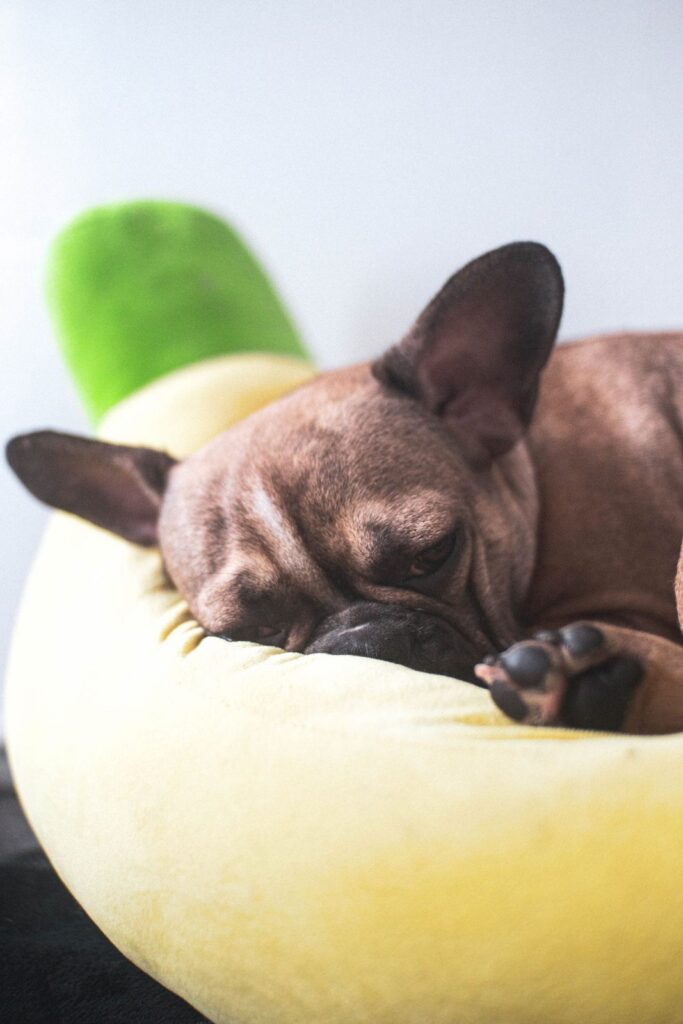
Puppies sleep curled up, flat on their side, on their tummy with back legs stretched out (“frog” style) or on their back. All of these are normal. A Frenchie who keeps sprawling on a cool floor may simply be warm, so move the bed somewhere cooler. Because flat-faced dogs cool themselves less efficiently, a hot, stuffy room can also make breathing noisier at night. Good airflow, shade and access to fresh water during the day all help.
When is sleepiness a concern?
Lots of sleep is normal for a puppy. Lethargy is different. The PDSA describes lethargic dogs as tending to sleep a lot, move slowly and often lose interest in play and walks, and advises contacting your vet if your dog seems low in energy or not quite themselves. In a puppy, look at the whole picture:
- Hard to wake, or flat and uninterested when awake
- Not interested in food, or vomiting or diarrhea
- Breathing that seems fast, noisy or labored at rest
- Weakness, wobbliness, pale gums or signs of pain
- A sudden change from their usual pattern
Young puppies, especially those not yet fully vaccinated, can go downhill quickly, so call your vet promptly rather than waiting to see.
Vet note: Mention your puppy’s sleep at early checkups, including any snoring, noisy breathing or pauses in breathing. A video recorded at night is very useful. Contact your vet straight away if your puppy struggles to breathe, has blue or gray gums, collapses, or is unusually sleepy alongside other signs such as not eating, vomiting or diarrhea.
FAQ
Is it normal for my French Bulldog puppy to sleep all day?
Usually, yes. Puppies typically sleep 18 to 20 hours a day. As long as your puppy wakes up alert, eats well and plays normally between naps, lots of sleep is expected.
Should I wake my puppy up to go potty at night?
Many owners set an alarm for a night potty trip with very young puppies rather than waiting for crying. Keep the trip calm and quick so your puppy goes straight back to sleep.
Is snoring normal in Frenchie puppies?
It is common, because of their short airway, but it isn’t a sign of healthy breathing. Gentle, occasional snoring is less worrying than loud noise, wheezing, gasping or pauses in breathing, which should be checked by a vet.
Why does my puppy get bitey in the evening?
Overtiredness is a common reason. If your puppy gets frantic and mouthy, a quiet nap in the crate or pen with a chew often works better than more play.
Sources
- How Much Do Puppies Sleep? — American Kennel Club
- How to Stop a Teething Puppy From Biting You — American Kennel Club
- BOAS: Recognition & Diagnosis — Department of Veterinary Medicine, University of Cambridge
- Evaluation of risk factors for sleep-disordered breathing in dogs — Journal of Veterinary Internal Medicine (Niinikoski et al., 2024)
- Lethargy (low energy) in dogs — PDSA