
Bringing home a French Bulldog puppy means a shopping trip, and the aisles are full of things you don’t need. This French Bulldog puppy checklist keeps you focused on what actually matters, grouped by area of the house and routine. A few choices change because of the breed’s flat face, sensitivity to heat, long back and skin folds. Where that’s the case, you’ll find a short explanation of why. For the day-by-day plan once your puppy is home, see our French Bulldog puppy first week guide; this article is about what to buy and prepare beforehand.
Key takeaways
- Choose a harness, not a collar, for walks: it keeps pressure off a flat-faced puppy’s throat and airway.
- Buy the same food the breeder or shelter is feeding, plus shallow, wide bowls that suit a short muzzle.
- Use only dog toothpaste. Human toothpaste may contain xylitol, which is extremely toxic to dogs.
- Gate off stairs, hide cables and remove toxic plants before your puppy arrives.
- Plan for heat from day one: shade, fresh water and a cool room matter more for Frenchies than most breeds.
Why a Frenchie puppy checklist looks a little different
A general puppy list covers the basics. A French Bulldog list adds four breed-specific concerns:
- Flat face and airway. French Bulldogs are brachycephalic, and many have narrowed airways. Anything that presses on the neck or makes breathing harder deserves extra thought. MSPCA-Angell advises using a harness instead of a collar for brachycephalic dogs and avoiding heat and stress.
- Heat. Because panting is less efficient through a short muzzle, cooling gear belongs on the list even for a young puppy.
- Back. Frenchies are prone to spinal problems, so limiting jumping and stair climbing is sensible from puppyhood. Our guide to IVDD and back problems explains why.
- Skin folds. Facial folds trap moisture and debris, so a gentle cleaning kit is a genuine essential, not an extra.

Sleeping and crate
- A crate or puppy pen. VCA Hospitals advises a crate large enough for your puppy to stand, lie down and turn around, but not so large that they use one end as a bathroom. A crate with a divider lets you adjust the space as your puppy grows.
- Washable beds and blankets. VCA suggests having several comfortable, affordable beds around the home, since puppies chew them, and blankets free of holes or loose strings that could entangle a puppy.
- A crate cover or light blanket to cover part of the crate for a cozy den, leaving plenty of airflow. Don’t cover the whole crate in warm weather.
- A secure car carrier or restraint. VCA notes that unrestrained puppies can distract drivers and injure themselves or others.
Feeding
- The food your puppy already eats. The AKC recommends asking the breeder about your puppy’s current diet. Keeping the same food for the first few weeks avoids sudden changes that can upset a young stomach. If you later switch, do it gradually over several days, with your vet’s input.
- Shallow, wide bowls. Deep, narrow bowls are awkward for a short muzzle and can push the face into the rim. A shallow, wide bowl lets your puppy reach food and water comfortably. VCA also recommends dishes that are washable and resist tipping.
- A food storage container with a secure lid, so your puppy can’t break in and overeat.
- Small, soft training treats that you can break into tiny pieces. Keep treats to a small share of the daily diet, around 10% of calories at most.
Walking and identification
- A well-fitting harness. This is the single most important Frenchie-specific swap. A harness spreads pressure across the chest and shoulders rather than the throat. Choose one that is adjustable, since puppies grow fast, and check the fit often.
- A standard leash. The AKC recommends teaching loose-leash walking on a standard six-foot leash.
- A light collar for the ID tag. VCA recommends an ID tag with your puppy’s name and your contact details. A lightweight collar (VCA suggests a breakaway style, fitted so two fingers slide underneath) can carry the tag, while the leash attaches to the harness.
- Poop bags and a holder that clips to the leash.
Cleaning and house training
- Enzymatic cleaner. VCA lists enzymatic sprays among the essentials because puppies will have accidents. Enzyme cleaners break down the odor that can draw a puppy back to the same spot.
- Potty pads, only if you plan to use them for crate lining or an indoor potty area.
Grooming and skin fold care
- Fold cleaning supplies. Soft cotton pads or a clean soft cloth, plus unscented, dog-specific wipes or a gentle cleanser your vet recommends. A dry towel is just as important, because folds must be dried after cleaning. Our skin fold care guide covers the routine.
- Dog toothbrush and dog toothpaste. VCA recommends a dog-friendly toothbrush and toothpaste. Starting early helps your puppy accept brushing. Never use human toothpaste: it may contain xylitol, which VCA describes as extremely toxic to dogs. Even small amounts can cause a dangerous drop in blood sugar, seizures, liver failure or even death.
- Nail trimmers or a grinder. VCA advises starting nail care early to prevent fear later.
- A soft brush or rubber grooming mitt for the short coat.
- Dog-specific shampoo. VCA advises against using human shampoo on puppies.
Toys and teething
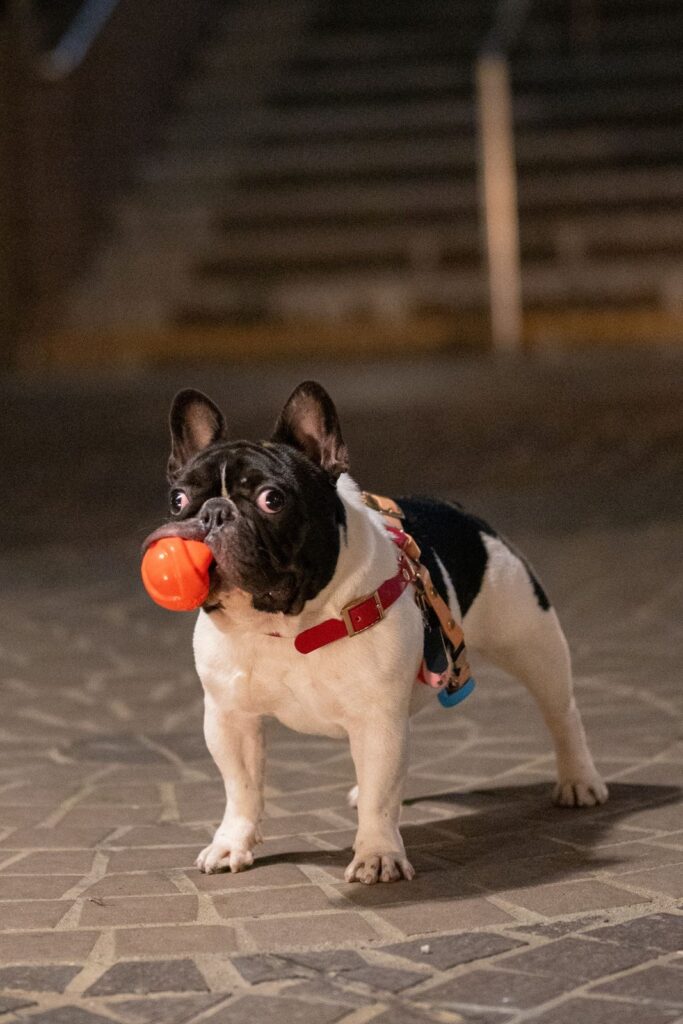
- Safe chew toys in a few textures. The AKC advises choosing chew toys sized appropriately to prevent choking.
- Food puzzle toys for quiet, low-effort enrichment, which suits a breed that shouldn’t overdo vigorous play.
- A blanket or toy that smells of the litter, if the breeder can provide one.
Health and paperwork
- A vet appointment, booked in advance. The AKC recommends finding a veterinarian before your puppy comes home, and locating your nearest emergency clinic too.
- Health records from the breeder or shelter: vaccinations, deworming and any vet checks, kept in one folder.
- Microchip registration. A microchip only helps if the registry has your current details. Ask whether your puppy is chipped, transfer the registration into your name and update it whenever you move or change phone numbers.
- Pet insurance to consider. Given the breed’s known risks with breathing, skin, eyes and backs, it is worth comparing policies before your puppy arrives, when there are no pre-existing conditions to exclude.
- Emergency numbers posted somewhere visible: your vet, the nearest emergency clinic and a pet poison helpline, as VCA suggests.
Home safety and puppy-proofing
The AKC suggests getting down on your hands and knees to see the house from your puppy’s level. Then work through these:
- Baby or pet gates across stairs and any rooms that are off limits. For a Frenchie, blocking stairs also protects a developing back.
- Ramps or steps if you’ll allow your puppy on a sofa or bed, so they aren’t jumping down.
- Cord protection. VCA warns that loose electrical cords are a chewing hazard that could cause an electric shock: unplug them or tuck them out of reach.
- Toxic plants removed or out of reach, indoors and in the yard. VCA notes that even mulch around hazardous plants can be a risk to a curious puppy.
- Latching trash cans and high storage for medications, cleaning products and pesticides. VCA points out that childproof lids don’t stop a dog from chewing.
- Toxic foods stored away, including chocolate, grapes, onions, macadamia nuts, alcohol and anything containing xylitol.
- A fence check for gaps and escape routes.
Cooling for warm weather
Even a small puppy can overheat, so prepare for warm days before they arrive. Practical items include:
- Extra water bowls in several rooms, refreshed often.
- A cooling mat or damp towel for your puppy to lie on.
- A shaded, cool resting spot indoors, with blinds or curtains on sunny windows. Air conditioning or a fan helps in hot climates.
- Frozen treats such as a frozen, food-stuffed chew toy, in moderation.
Our French Bulldog heat safety guide explains the warning signs of overheating and what to do in an emergency.
What you don’t need
- A retractable leash. VCA advises avoiding them for puppies. The AKC explains that they reward pulling and that a dog hitting the end of the line can suffer injuries such as a damaged trachea or spine, both serious concerns for a Frenchie.
- Choke, prong or tight collars for walking. Anything that tightens around the neck works against a flat-faced dog’s airway.
- Human toothpaste, shampoo or scented wipes. Stick to products made for dogs.
- An oversized crate. Too much space makes house training harder.
Printable French Bulldog puppy checklist
Copy or print this list and tick items off as you go. Our free French Bulldog Owner’s Handbook also includes a printable puppy checklist.
- Crate or pen with divider, correctly sized
- Washable bed and blankets (no loose strings)
- Car carrier or restraint
- Same food the breeder or shelter uses
- Shallow, wide food and water bowls
- Food storage container with lid
- Small training treats
- Adjustable harness
- Standard six-foot leash
- Light collar with ID tag
- Poop bags
- Enzymatic cleaner
- Soft cloths or cotton pads, unscented dog fold wipes, dry towel
- Dog toothbrush and dog toothpaste (no human toothpaste)
- Nail trimmer or grinder
- Soft brush or grooming mitt and dog shampoo
- Chew toys and a food puzzle
- Vet appointment booked, emergency clinic located
- Health records folder
- Microchip registered in your name
- Pet insurance quotes compared
- Gates for stairs and off-limit rooms
- Cables tucked away, toxic plants removed, trash secured
- Cooling mat, extra water bowls, shaded resting spot
Vet note: At your puppy’s first visit, ask your vet to check breathing, nostrils and skin folds, and to show you how to fit a harness and handle nails and teeth. If your puppy ever eats something containing xylitol, a toxic plant or a household chemical, contact your vet or a pet poison helpline right away rather than waiting for symptoms.
FAQ
Can my French Bulldog puppy wear a collar at all?
A light collar to carry an ID tag is usually fine, as long as it fits loosely enough to slide two fingers underneath. Attach the leash to a harness instead, so pulling never puts pressure on the throat.
Do I need special bowls for a Frenchie?
Not special, just sensible. Shallow, wide bowls are easier for a short muzzle than deep, narrow ones. Choose washable bowls that don’t tip easily.
When should I start brushing my puppy’s teeth?
Start early with short, positive sessions so your puppy gets used to it. Use only toothpaste made for dogs, because human toothpaste may contain xylitol.
Should I buy everything before my puppy comes home?
Aim to have the essentials ready: crate, bedding, food, bowls, harness, leash, ID tag, cleaner, gates and a vet appointment. Extra toys and grooming tools can follow once you know your puppy’s preferences.
Sources
- Are You Ready for Puppyhood? New Puppy Checklist — VCA Animal Hospitals
- How to Puppy-Proof Your House — VCA Animal Hospitals
- Xylitol Poisoning in Dogs — VCA Canada
- Time to Get a New Puppy? Here’s What You Need to Know — American Kennel Club
- Retractable Dog Leashes: How to Use Them Safely — American Kennel Club
- Caring for Brachycephalic Dogs — MSPCA-Angell