
If your new puppy suddenly wants to chew your fingers, the table legs and every shoelace in the house, teething is probably part of the story. French Bulldog puppy teething follows the same basic timeline as in other dogs: baby teeth arrive in the first weeks of life, then fall out and are replaced by adult teeth over the next few months. Knowing what is normal, which chews are safe and when a stubborn baby tooth needs a vet makes this stage much easier on both of you.
Key takeaways
- Puppies have 28 baby teeth; adult dogs have 42 permanent teeth.
- Adult teeth usually start coming in around 3.5 to 5 months and are all in by about 7 months.
- Pick chews you can dent with a fingernail. Skip bones, antlers, hooves and other very hard items.
- Baby teeth still in place next to the adult tooth need a vet check soon. Brachycephalic breeds are prone to this.
- Start gentle mouth handling and toothbrushing early, using dog toothpaste only.
French Bulldog puppy teething timeline
Puppies are born without visible teeth. According to VCA Animal Hospitals, the deciduous (baby, or milk) teeth start coming through the gums around three weeks of age and have normally finished erupting by six weeks. The Merck Veterinary Manual gives a similar window of 3 to 5 weeks. Most dogs have 28 baby teeth and go on to have 42 permanent teeth.
The phase most owners think of as “teething” comes later. As the adult teeth develop, they press against the roots of the baby teeth, which slowly dissolve until the crowns fall out. VCA notes that this usually starts at about 3.5 to 4 months, beginning with the incisors at the front. Merck says permanent teeth typically begin to appear at around 4 to 5 months, and that all permanent teeth are present by 7 months of age.
| Approximate age | What is happening |
|---|---|
| Birth | No visible teeth |
| About 3 to 6 weeks | The 28 baby teeth come through the gums |
| About 6 weeks to 3 months | Full set of sharp baby teeth; lots of exploratory mouthing |
| About 3.5 to 5 months | Baby incisors loosen and fall out; adult teeth start appearing |
| About 4 to 6 months | Canines and back teeth are replaced; chewing urge is often strongest |
| About 6 to 7 months | Most puppies have all 42 adult teeth; any baby tooth still present needs a vet check |
These ages are guides, not deadlines. Individual puppies vary. Your vet can confirm what is normal for your puppy at routine puppy checks.

Normal signs of teething
Teething is a normal process, and most puppies get through it with nothing more than extra chewing. VCA lists drooling, a reduced appetite, irritability and a distinctive “puppy breath” as normal during this period. The American Kennel Club (AKC) adds nipping at fingers and toes, and notes you may see little spots of blood on toys.
- More chewing and mouthing than usual, often on anything within reach
- Drooling and mild “puppy breath”
- Tiny teeth found on the floor or in bedding, though the AKC notes most are likely swallowed
- A small amount of blood on chew toys
- Slightly reduced appetite or grumpiness for a day or two
Mild signs that come and go are expected. A puppy who stops eating, seems unwell, or has a swollen face, heavy bleeding or a broken tooth should see a vet. Teething should not cause vomiting, diarrhea or fever, so don’t put those down to teeth.
Safe teething relief and chew choices
Chewing relieves gum discomfort, so the goal is to give your puppy plenty of safe things to chew and keep everything else out of reach. The AKC suggests rubber teething toys that can go in the freezer, edible puppy teething rings and flavored puppy chew toys.
Use the fingernail test
Cornell University’s College of Veterinary Medicine explains that chewing very hard objects is a common cause of fractured teeth. Its rule of thumb: you should be able to make a dent in a chew item with your fingernail. If you can’t, it is probably too hard. Baby teeth are small and still developing, so this matters even more for puppies.
Good options
- Sturdy rubber puppy toys sized so they can’t be swallowed, plain or chilled in the freezer
- Edible chews made for puppies, given under supervision
- Toys with ridges or textured surfaces that are firm but have some give
- Rotating two or three toys so they stay interesting
What to avoid
- Bones, especially cooked ones. VCA advises against giving puppies bones, cooked or otherwise, because they can damage teeth and injure the gut if swallowed. Cooked bones can also splinter. See our guide to human foods French Bulldogs can eat for more.
- Very hard chews. Cornell lists antlers, hooves and bones as risks for broken teeth. It also advises against crunching ice cubes, though licking them is fine.
- Anything that breaks into small pieces. The AKC warns against toys that shed chunks, fibers or stuffing, and against sticks. Throw away toys with rips, tears or deep punctures.
- Unsupervised chewing. Even a toy your puppy has used many times can be damaged. Supervise, and take chews away when you can’t watch.
- Human toothpaste or teething gels made for people, which may contain xylitol, a sweetener that is toxic to dogs.
French Bulldogs have short, broad muzzles, so pick a toy shape your puppy can actually grip, and avoid anything small enough to lodge at the back of the mouth. Keep chew sessions calm in hot weather, since long, hard chewing can leave a flat-faced puppy panting.
Retained baby teeth: when to see a vet
Sometimes a baby tooth doesn’t fall out, and the adult tooth grows in beside it. Vets call this a retained or persistent deciduous tooth. VCA notes that it is common in small breeds and in brachycephalic (flat-faced) breeds such as bulldogs, pugs and Boston terriers. The canine teeth (fangs) are most often affected, especially the upper ones, followed by the incisors.
A retained baby tooth is more than a cosmetic issue. VCA explains that it can push the adult tooth into the wrong position and crowd the mouth. Food and debris then get trapped between the teeth, which leads to tartar, gum inflammation and periodontal disease. It can also cause abnormal wear, interfere with jaw growth and damage the soft tissues of the mouth.
The key point is timing. VCA advises that a retained baby tooth should be extracted promptly once it is found, rather than waiting until spay or neuter surgery. Early removal usually lets the adult tooth move into its proper place, while waiting can mean the adult tooth needs orthodontic treatment or further extractions later. The AKC also says to check with your vet if baby teeth haven’t fallen out by about six months.
Look in your puppy’s mouth once a week during teething. If you see two teeth in the space where one should be, often a thin baby fang right next to a thicker adult one, book a vet visit rather than waiting for it to fall out.
Start tooth brushing early
The teething months are a good time to get your puppy used to having their mouth handled, which makes lifelong dental care much easier. French Bulldogs’ shortened jaws mean teeth are often crowded or rotated, and that makes plaque harder to clear.
- Gently lift the lips and touch the gums for a few seconds, then reward with praise or a small treat.
- Introduce dog toothpaste by letting your puppy lick it off your finger.
- Progress to a soft puppy toothbrush or finger brush on the outer surfaces of the teeth.
- Be extra gentle over sore gums while teeth are changing, and keep sessions very short.
Our French Bulldog grooming guide covers brushing technique, how often to brush and which dental chews have been assessed by the Veterinary Oral Health Council (VOHC).
Managing chewing and mouthing
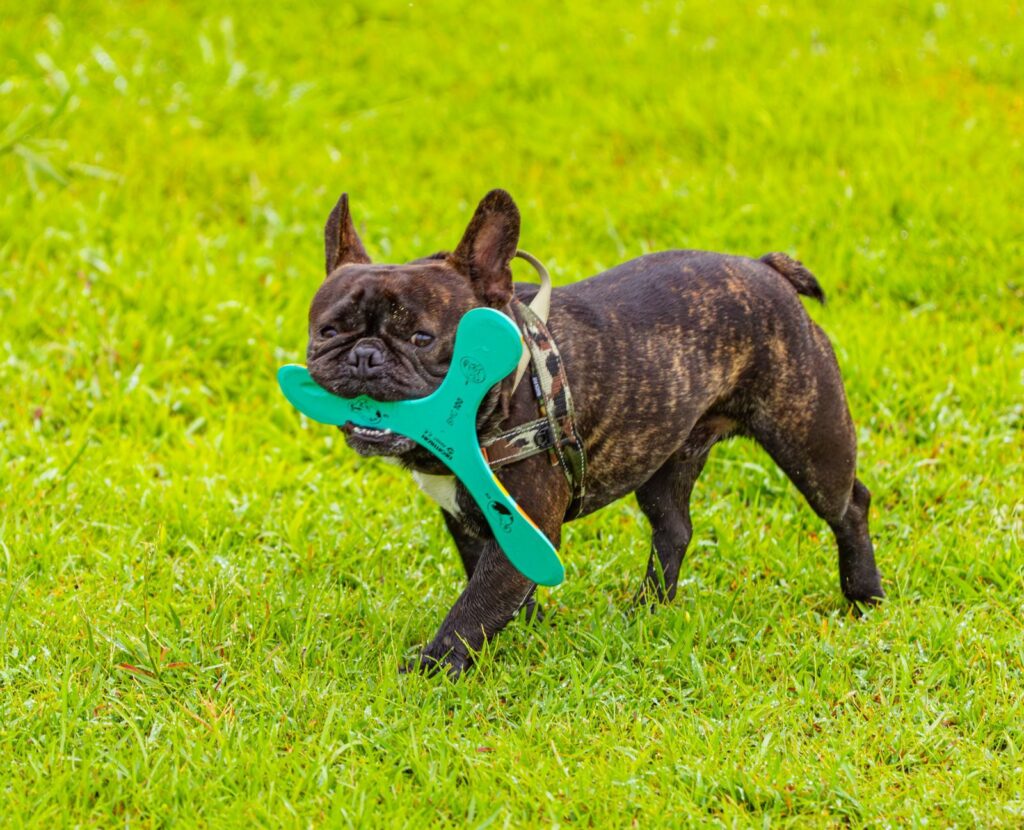
Teething makes puppies want to chew everything, but mouthing hands is also how young dogs learn to play. A few habits help a lot:
- Redirect, don’t punish. When teeth land on skin, calmly offer a toy instead, and praise your puppy when they chew it.
- Puppy-proof the house. Lift shoes, cables, socks and children’s toys out of reach, and use a pen or gate when you can’t supervise.
- Keep a chew handy in each room where your puppy spends time, so the right choice is always easy.
- Watch for overtiredness. Mouthing often ramps up when a puppy needs a nap. A quiet rest in a comfortable, familiar spot often helps more than more play.
For a step-by-step plan, including how to teach gentle mouths with positive reinforcement, read our guide to French Bulldog biting and mouthing.
Vet note: Teething discomfort is usually mild. See your vet if a baby tooth is still in place once the adult tooth has come through, if a tooth looks broken or discolored, if your puppy’s face swells, or if they stop eating or seem unwell. Don’t give human pain relievers or teething gels. Your vet may prescribe something suitable if it is truly needed.
FAQ
When do French Bulldog puppies stop teething?
Most puppies have their full set of adult teeth by about 6 to 7 months of age. Chewing often continues after that, so keep offering safe chew toys.
Is it normal for my Frenchie puppy to swallow baby teeth?
Yes. The AKC notes that you may find a few puppy teeth on the floor, but most are likely swallowed. That is expected as long as the adult teeth are coming in normally.
Can I give my teething puppy ice cubes?
Cornell advises against letting dogs crunch ice cubes because hard items can break teeth, though licking them is fine. A rubber teething toy chilled in the freezer is a safer way to soothe sore gums.
My puppy has two teeth in the same spot. What should I do?
That is likely a retained baby tooth. Book a vet appointment soon. Early removal usually lets the adult tooth settle into the right position.
Are hard nylon bones safe for teething puppies?
Be cautious. A chew you can’t dent with your fingernail is probably too hard for developing teeth, and any chew that comes apart in pieces is a choking or blockage risk. Supervise, and ask your vet which chews suit your puppy.
Sources
- Persistent Deciduous Teeth (Baby Teeth) in Dogs — VCA Animal Hospitals
- Dental Development of Dogs — Merck Veterinary Manual
- Puppy Teething and Nipping: A Survival Guide — American Kennel Club (AKC)
- Risks from a fractured tooth — Cornell University College of Veterinary Medicine
- Which Dog Toys Are Right for Your Puppy? — American Kennel Club (AKC)