
Some paw licking is just normal grooming. But if your Frenchie keeps going back to the same feet, chews between the toes, or has fur stained a rusty brown, it usually means something is bothering them. French Bulldog paw licking is most often linked to itchy skin from allergies, but infections, small injuries, stuck debris and even boredom can all play a part. Here is what causes it, how to care for your dog’s feet, and when to see your vet.
Key takeaways
- Allergies are a leading cause of paw licking, often with red skin and brown saliva staining on the fur.
- Constant licking keeps feet damp, which helps yeast and bacteria take hold between the toes.
- A quick weekly paw check catches cuts, swelling, stuck debris and long nails early.
- Always dry between the toes after walks, baths and wet grass.
- See your vet for limping, swelling, bleeding, a bad smell or licking that won’t stop.
Why does my French Bulldog lick their paws?
The American Kennel Club notes that when licking becomes excessive or persistent, it often signals an underlying problem. Vets use the word pododermatitis for inflammation of the paws, and VCA Animal Hospitals lists many possible causes: infections, allergies, immune-mediated disease, hormonal problems, tumors and irritants such as splinters or hard surfaces.
Allergies: the most common culprit
Allergic skin disease is very common in Frenchies, and the feet are one of its favorite targets. Cornell University’s College of Veterinary Medicine describes dogs with atopic dermatitis (environmental allergy) “licking and chewing their feet,” along with rubbing the face and scooting, and notes that signs typically start between six months and three years of age. Food allergy and flea allergy can look very similar on the skin.
If your dog licks all four feet, especially alongside itchy ears, face rubbing or a red belly, allergies are high on the list. Sorting out which type of allergy is involved takes a step-by-step plan with your vet, which we cover in detail in our French Bulldog allergies guide.
Yeast and bacterial infections between the toes
Licking keeps the skin between the toes warm and damp, and that is exactly where yeast (Malassezia) and bacteria like to grow. Infections often develop on top of allergies, and they make the itch worse, so the dog licks more. VCA describes inflamed feet as often red and swollen, sometimes with hair loss, bumps or pus. A yeasty foot often has a musty smell, and long-standing cases can leave the skin darker and thicker. If you notice a smell, our guide to why a French Bulldog smells covers other common sources too.
Painful bumps between the toes
Some dogs develop red, raised, painful lumps in the webbing between the toes. These are often called “interdigital cysts,” but the Merck Veterinary Manual describes them as interdigital furuncles: painful, pus-filled boils, most commonly from a deep bacterial infection that starts when short, bristly hairs are forced backward into the hair follicles. True cysts are a separate problem. Merck lists English Bulldogs among the breeds at higher risk. These lumps can swell, burst and make a dog limp, and they need veterinary treatment rather than home care.
Foreign bodies and injuries
If your Frenchie suddenly starts licking one paw, think about something stuck or a small injury: a splinter, burr, grass seed, thorn, a torn nail or a cut pad. Merck notes that an embedded foreign object can sometimes be the starting point of a deep infection between the toes. One-paw licking with limping is always worth a close look.
Boredom, stress and habit
Some dogs lick to soothe themselves when they’re under-stimulated or anxious, for example when left alone. Behavior is usually the last explanation to consider, after medical causes have been ruled out, because itchy or sore feet are far more common. If your vet finds nothing physical, more daily enrichment, short sniff walks and puzzle feeders can help. If the licking happens mostly when your dog is left alone, mention that to your vet, as it can point to separation-related stress.
What red or brown paw staining means
On a cream, fawn or white Frenchie, licked fur often turns pinkish-red or rusty brown. VCA explains that this staining comes from either salivary pigments or yeast overgrowth. The color isn’t harmful, but it shows licking has been going on for a while, so new or spreading staining is worth a vet check.
| What you notice | Possible causes | What to do |
|---|---|---|
| Licking all four paws, plus itchy ears or face | Allergies, often with secondary infection | Vet visit to plan allergy workup |
| Musty smell, greasy or dark skin between toes | Yeast or bacterial infection | Vet visit for skin samples |
| Red, raised lump between toes | Furuncle (“interdigital cyst”) | Vet visit; don’t squeeze it |
| Sudden licking of one paw, limping | Foreign body, cut, torn nail | Check the paw; see vet if you can’t find or fix it |
| Licking only when alone or bored | Stress or habit (after medical causes ruled out) | Enrichment, routine, talk to your vet |
French Bulldog paw care: a weekly paw check
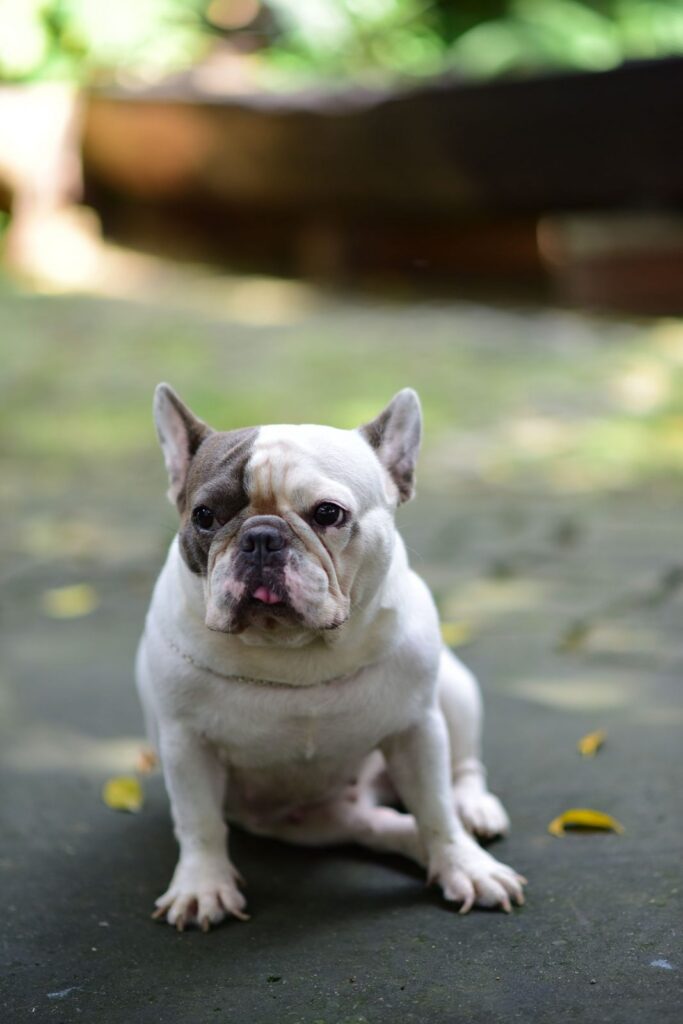
A few minutes once a week is enough. Keep it calm and short, and reward with praise or a small treat so paw handling becomes a good thing.
- Look at the tops of the feet for redness, hair loss, staining or scabs.
- Gently spread the toes and check the webbing for redness, bumps, moisture, a bad smell or anything stuck.
- Check each pad for cuts, cracks, blisters or very dry, rough patches.
- Look at the nails and nail beds for splits, swelling, or nails that are long enough to click on the floor.
- Feel for heat or swelling, and notice if your dog pulls away from one particular foot.
The AKC points out that cleaning your dog’s paws is a good opportunity to check for cuts, scrapes, or dry and cracking pads. You can fold this check into the rest of your routine; our French Bulldog grooming guide covers brushing, ears and teeth as well.
Keep between the toes clean and dry
Moisture is the enemy of healthy feet, especially in an allergy-prone breed. After walks on wet grass, muddy days or a bath:
- Wipe the feet with a damp cloth or rinse with plain lukewarm water if they’re dirty.
- Dry thoroughly, including between each toe and pad, with a soft towel. The AKC stresses drying the paws thoroughly before letting your dog back outside.
- Use only a mild, dog-specific product if you need more than water, and only if your vet hasn’t prescribed something specific.
- Don’t use essential oils on your dog’s feet. Pet Poison Helpline warns that even a few drops of concentrated tea tree oil, applied to the skin or swallowed, can cause severe poisoning in pets. Dogs will also lick off whatever you apply.
The same “clean, then dry” approach works for wrinkles and the tail pocket, which need the same gentle daily attention.
Nail trims
Long nails can split or snag, leading to sore toes and more licking. Most Frenchies need a trim roughly every three to four weeks, taking a little off at a time. The grooming guide linked above has the full step-by-step.
Cracked pads, hot pavement and winter salt
Dry or cracked pads
Pads can become dry and rough from rough surfaces, cold, dry air or de-icing salts. The AKC suggests a soothing paw balm or protective paw wax to help. Choose a product made for dogs, since anything on the feet will be licked. Deep cracks, bleeding or pads that seem sore need a vet’s look.
Summer: hot pavement
Asphalt and concrete can burn paw pads, and Frenchies are already at high risk of overheating. Walk early in the morning or in the evening, stick to grass and shade, and test the ground with the back of your hand for about five seconds: if it’s too hot for you, it’s too hot for paws. If your dog limps, licks their feet or has red or blistered pads after a hot walk, call your vet. Keep summer walks short and slow, and never walk a Frenchie in the heat of the day.
Winter: snow, ice and salt
Road salt and ice melt can irritate pads, and dogs may lick the residue off their feet. The AKC recommends washing salt off after walks, using a pet-safe ice melt at home, and considering dog booties if your Frenchie will tolerate them. Rinse and dry the feet as soon as you get in. Our cold weather guide covers coats, walks and keeping your dog warm.
When to see a vet about paw licking
The AKC advises contacting your vet if your dog suddenly begins licking or chewing their paws excessively, or if you see redness, swelling, limping, bleeding or signs of pain. Book a visit if you notice:
- Limping or not wanting to put weight on a foot
- Swelling, a lump, or a sore that bursts or drains between the toes
- Bleeding, a deep cut, or a torn nail
- A strong or bad smell, discharge or greasy skin
- Licking that won’t stop, or keeps coming back after it settles
- Burned, blistered or badly cracked pads
Your vet may check skin samples under a microscope and look for parasites. VCA notes that most dogs respond well to treatment, although allergic dogs often need long-term management to keep flare-ups down.
Vet note: Persistent paw licking is a symptom, not a condition in itself. Ask your vet whether an underlying cause such as allergies needs its own plan, and never use human medicines or essential oils on your dog’s feet without veterinary advice.
FAQ
Is it normal for my Frenchie to lick their paws?
A little licking after a walk or during grooming is normal. Licking that is frequent, focused on certain feet, or leaves the fur stained or the skin red is not, and it’s worth a vet check.
Why are my French Bulldog’s paws turning red or brown?
Red or brown fur on the feet usually comes from saliva pigments or yeast overgrowth after repeated licking. It is a clue that your dog has been licking for a while, often because of allergies.
Can I put a home remedy on my dog’s itchy paws?
Plain water and thorough drying are safe. Avoid essential oils such as tea tree oil, which can poison dogs, and don’t use human creams. Your vet can recommend safe, dog-specific products for your dog’s specific problem.
What is the bump between my dog’s toes?
A red, raised, painful lump in the webbing is often a furuncle, a deep infection sometimes called an “interdigital cyst.” Merck lists English Bulldogs among the breeds at higher risk. Don’t squeeze it; book a vet visit.
Sources
- Pododermatitis in Dogs — VCA Animal Hospitals
- Abscesses Between the Toes (Interdigital Furunculosis) in Dogs — Merck Veterinary Manual
- Atopic dermatitis (atopy) — Cornell University College of Veterinary Medicine
- Pododermatitis in Dogs: What to Know — American Kennel Club
- How to Clean and Care for Your Dog’s Paws — American Kennel Club
- Tea Tree Oil Is Toxic To Dogs — Pet Poison Helpline