
French Bulldogs are often described as low-maintenance when it comes to grooming, and their short coat really is easy to look after. But their flat faces, upright ears, wrinkles and compact build mean a few areas need regular, careful attention. A good grooming routine is less about looking smart and more about catching small problems before they become uncomfortable ones. Here is a complete, practical routine you can manage at home.
Key takeaways
- Brush the coat weekly; bathe about once a month or when your dog is genuinely dirty.
- Trim or grind nails roughly every three to four weeks, little and often.
- Check ears weekly and clean only when needed, with a dog-specific ear cleaner.
- Daily toothbrushing with dog toothpaste is the gold standard for dental health.
- Keep sessions short and cool: Frenchies can overheat or get stressed quickly.
Before you start: grooming a brachycephalic breed
Because French Bulldogs are a brachycephalic (flat-faced) breed, many have some degree of airway restriction. Stress, struggling and warm rooms can make breathing harder. Keep grooming sessions short, calm and in a cool place, and stop if your dog starts breathing noisily or heavily. Our guide to BOAS and breathing problems explains what to watch for.
Frenchies are also prone to back problems, so support their body well when lifting them onto a table or into a bath, and avoid twisting or hanging their back end. See IVDD and back problems for more on protecting the spine.
Coat care and brushing
French Bulldogs have a short, fine, single coat. They do shed, often a little more during seasonal changes, but they do not need clipping or trimming.
- Brush once a week with a rubber curry brush, grooming mitt or soft bristle brush. This lifts loose hair and spreads natural skin oils.
- Brush more often during shedding periods, a few times a week if needed.
- Use brushing as a health check. Feel for lumps, scabs, flaky patches, fleas or areas of hair loss, and notice any redness on the belly, paws or armpits, which can be a sign of allergies.
Bathing
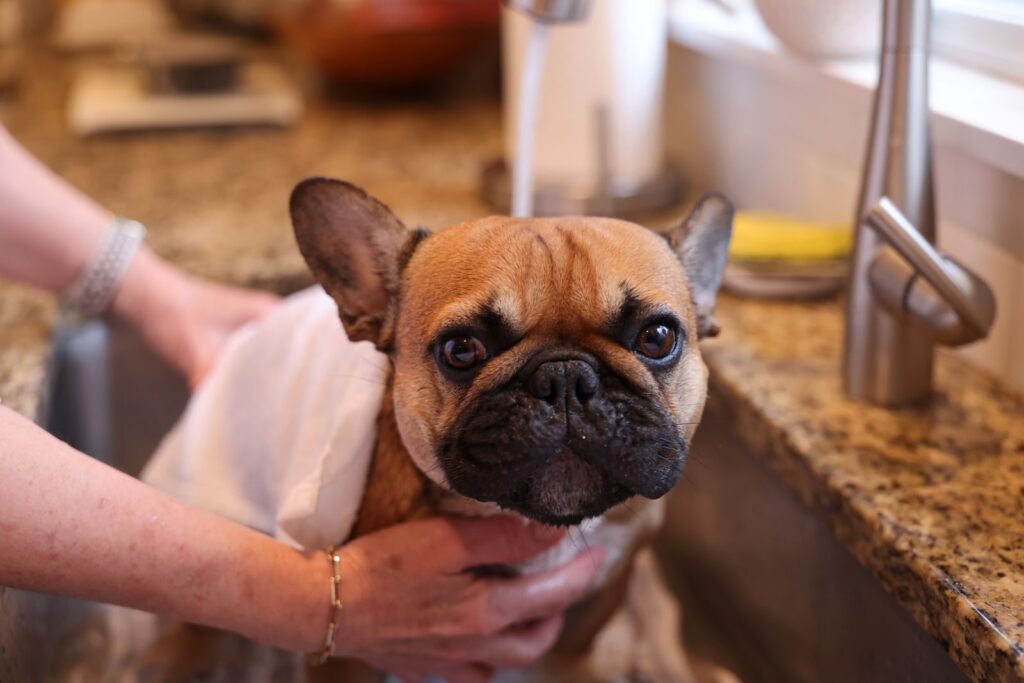
Most Frenchies only need a bath about once a month, depending on the season, or when they are dirty, smelly or have rolled in something. Over-bathing can strip the skin’s natural oils and lead to dryness or irritation.
- Use lukewarm water and a mild, dog-specific shampoo. Human shampoos aren’t made for dogs’ skin and can be irritating.
- Keep water out of the eyes and ears; a damp cloth works well for the face.
- Rinse very thoroughly. Leftover shampoo is a common cause of itching.
- Towel dry well, paying particular attention to skin folds and the tail pocket.
- If using a hairdryer, keep it on a cool or low setting and well away from the skin.
If your vet has prescribed a medicated shampoo for a skin condition, follow their instructions on frequency and contact time, as these often differ from routine bathing.
Nails
Frenchies are not always very active walkers on hard surfaces, so their nails often do not wear down naturally. Overgrown nails can change how a dog stands and walks and may split or curl.
- How often: roughly every three to four weeks for most dogs, depending on activity level and how quickly the nails grow. Nails clicking on a hard floor are a common sign that a trim is due.
- Tools: sharp guillotine or scissor-style clippers, or a nail grinder. Many owners find grinding easier for gradual shortening.
- The quick: each nail contains a blood vessel and nerve called the quick. Frenchies often have dark nails, which makes the quick hard to see, so take off a small amount at a time and check the cut surface. In dark nails, a chalky white ring shows you are getting close to the quick, so stop there.
- Dewclaws: do not forget them if your dog has them; they do not touch the ground and can grow into a curl.
- Be prepared: keep styptic powder nearby. If you nick the quick, apply gentle pressure and powder. If the bleeding doesn’t stop, contact your vet.
Ears
Those famous bat ears are open and upright, which helps airflow, but their wide openings also catch dust and debris, and Frenchies with allergies are prone to ear inflammation.
- Check weekly. Healthy ears look pale pink with little wax and no strong smell.
- Clean only when needed. Apply a dog-specific ear cleaner as directed on the label, gently massage the base of the ear, let your dog shake, then wipe the visible parts of the ear with cotton pads.
- Never push cotton buds into the ear canal. This can pack debris deeper or injure the canal.
- Avoid home remedies unless your vet recommends them; stick to a dog-specific cleaner, and don’t over-clean, as this can irritate the ear canal.
Head shaking, scratching at the ears, redness, dark discharge, a yeasty smell or pain when touched all suggest an ear infection. These need a vet examination, partly because the eardrum should be checked before certain medications are used.
Teeth
Dental disease is very common in dogs, and the shortened jaw of a brachycephalic breed means teeth can be crowded or rotated, which makes plaque harder to clear. Good home care can make a real difference.
- Brush daily if you can. Daily brushing is the most effective home measure. If your dog won’t accept daily brushing, any regular brushing is still better than none.
- Use dog toothpaste only. Human toothpaste is not meant to be swallowed, and some products contain xylitol, which is toxic to dogs.
- Use a soft toothbrush or finger brush, focusing on the outer surfaces of the teeth along the gumline.
- Introduce it gradually: let your dog lick the paste first, then touch the teeth, then build up to brushing over several days.
- Dental chews and additives can help as extras. Products accepted by the Veterinary Oral Health Council (VOHC) have been assessed for effectiveness. Choose chews that suit your dog’s size and supervise chewing.
Bad breath, red gums, brown build-up, dropping food or chewing on one side are signs to book a dental check. Professional cleaning under anesthesia is sometimes needed; your vet will assess the risks and plan anesthesia carefully for a brachycephalic dog.
Eyes and face
Frenchies have prominent eyes that are more exposed to injury. Each day, wipe away any discharge from the inner corners with a separate damp cotton pad for each eye. Keep the facial folds clean and dry; our skin fold care routine covers this step by step.
Squinting, a cloudy area on the eye, sudden redness, rubbing at the eye or a lot of watery discharge can indicate a corneal injury or ulcer. These can worsen quickly, so contact your vet the same day.
Paws
Check between the toes and pads after walks for grass seeds, cuts or redness. Frequent paw licking or reddish-brown staining of the fur on the feet is a common sign of allergic itch. In hot weather, test pavements with the back of your hand; if it is too hot for you, it is too hot for paws.
A simple grooming schedule
| Task | How often |
|---|---|
| Eye and face wipe | Daily |
| Toothbrushing | Daily (or as often as possible) |
| Skin fold check | Every few days; full clean weekly |
| Coat brushing | Weekly; more during shedding |
| Ear check | Weekly; clean as needed |
| Nail trim | Every 3–4 weeks, or as needed |
| Bath | About monthly, or as needed |
Making grooming a positive experience
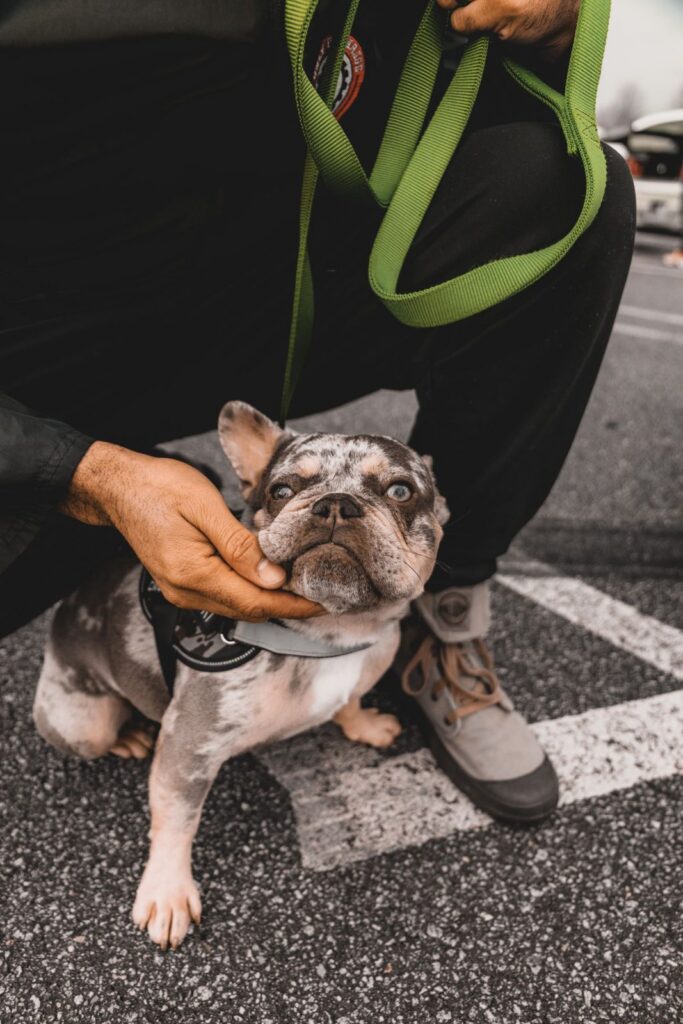
Start early, keep it short and pair every step with treats and praise. Puppies benefit enormously from gentle handling of their paws, ears and mouth in their first weeks at home (see your puppy’s first week). Grooming after a short walk, when your dog is calm but not overtired or overheated, often works well (see exercise needs).
Vet note: Grooming is a great chance to spot changes early. New lumps, persistent itching, ear discharge, eye changes or dental pain should be checked by your vet rather than managed at home. If your dog becomes distressed or struggles to breathe during grooming, stop and let them settle somewhere cool.
FAQ
Do French Bulldogs need professional grooming?
Not usually. Their short coat needs no clipping, and most care can be done at home. Some owners use a groomer or vet nurse for nail trims if their dog is anxious; if you do, choose someone experienced with brachycephalic breeds who will keep the dog cool and calm.
How often should I bathe my French Bulldog?
About once a month is typical, depending on the season, or whenever your dog is dirty or smelly. Bathing too often can dry the skin. Dogs on medicated shampoo should follow their vet’s schedule.
Do French Bulldogs shed?
Yes. They have a short coat but do shed, often more noticeably at seasonal changes. Weekly brushing keeps loose hair under control.
Can I use human toothpaste on my Frenchie?
No. Use toothpaste made for dogs. Human toothpaste is not designed to be swallowed, and some contain xylitol, which is toxic to dogs.
Sources
- Routine Health Care of Dogs — Merck Veterinary Manual
- How to Trim Your Dog’s Nails Safely — American Kennel Club (AKC)
- Ear Cleaning in Dogs — VCA Animal Hospitals
- Brushing — Veterinary Oral Health Council (VOHC)
- How To Choose A Toothbrush & Toothpaste For Your Dog — VCA Animal Hospitals
- Eye ulcers (corneal ulcers) in dogs — PDSA