
If you are thinking about bringing a French Bulldog home, or you are already finding short, fine hairs on your sofa, you have probably wondered: do French Bulldogs shed? The short answer is yes. Frenchies have a short, smooth coat that sheds lightly to moderately rather than heavily, so they are easier to keep tidy than many fluffier breeds, but they are not hair-free. This guide explains what normal French Bulldog shedding looks like, a simple routine to keep loose hair under control, and the signs that hair loss is a health problem rather than ordinary shedding.
Key takeaways
- French Bulldogs shed, but their short, smooth coat makes shedding light to moderate.
- A weekly brush with a rubber curry brush, bristle brush or grooming mitt removes most loose hair.
- Bathe about once a month or when dirty; over-bathing can dry the skin.
- Bald patches, itching, redness or scabs are not normal shedding and need a vet check.
- Low shedding does not make a Frenchie allergy-free.
Do French Bulldogs shed?
Yes. All dogs with hair shed, because shedding is how the coat renews itself. The American Kennel Club (AKC) describes shedding as a natural process that lets dogs get rid of old or damaged hair and keep a healthy coat.
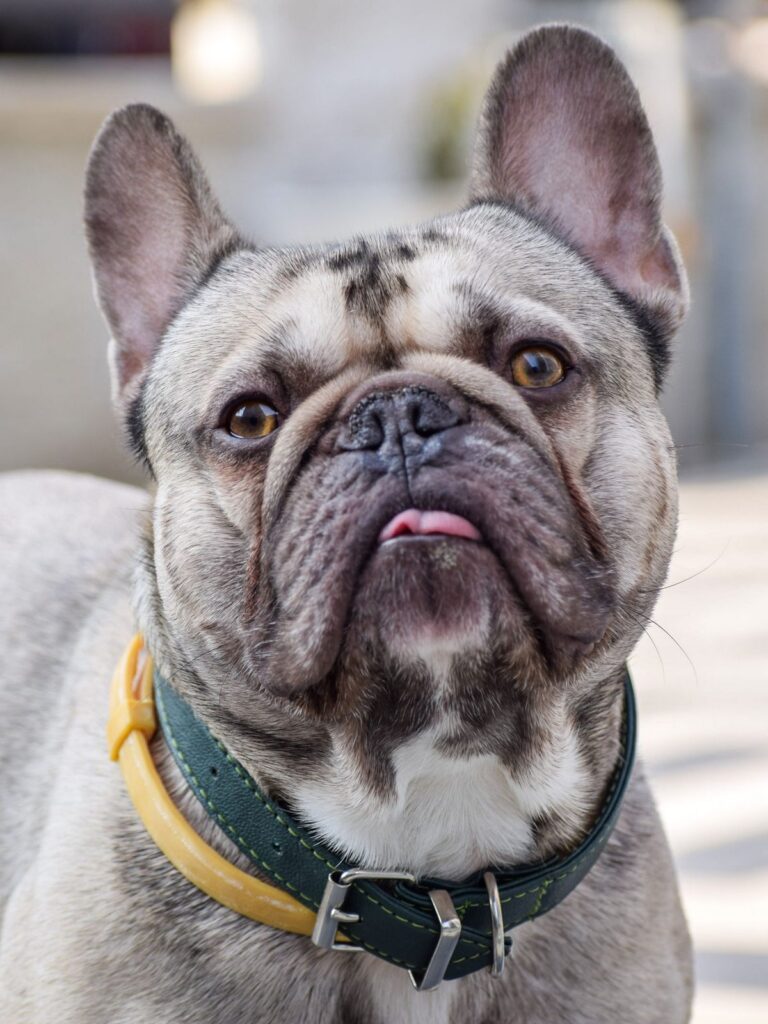
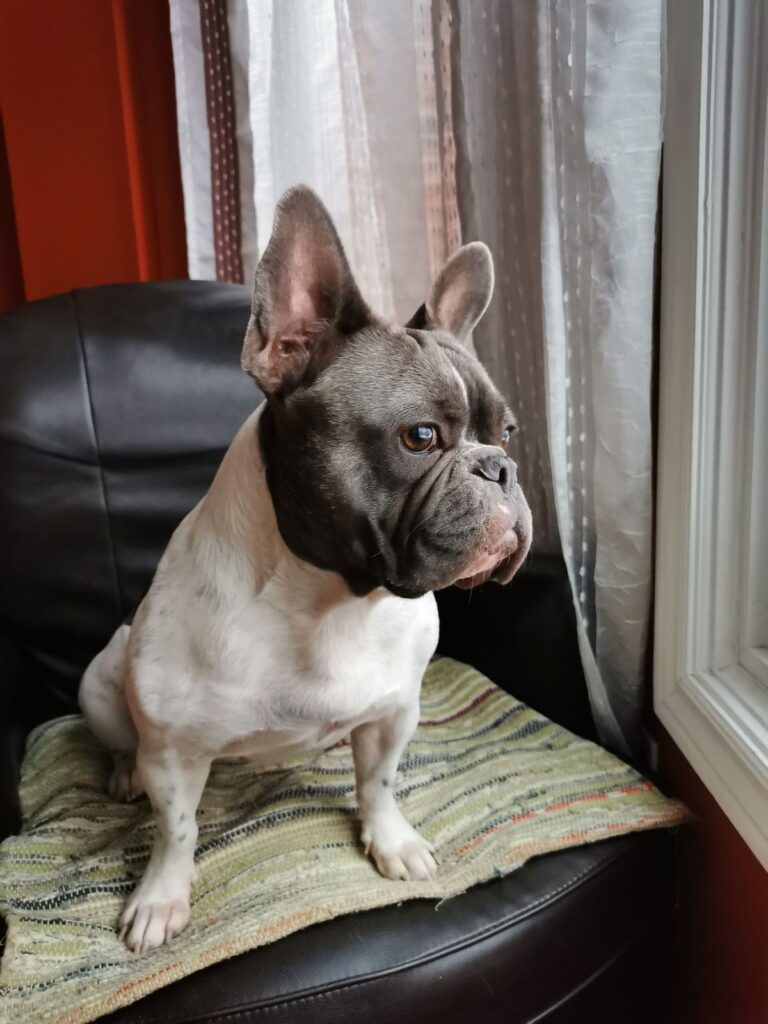
What makes French Bulldogs relatively easy is their coat type. The AKC breed standard describes the Frenchie coat as “brilliant, short and smooth,” and any coat other than short and smooth is a disqualification in the show ring. There is no long, thick undercoat to blow out in clumps. PDSA, the UK veterinary charity, notes that French Bulldogs “aren’t known for shedding lots” and that a weekly brush, plus keeping on top of the vacuuming, should be enough for most homes.
How much do French Bulldogs shed?
Expect a light, steady trickle of short hairs rather than tumbleweeds. Because the hairs are short and fine, they tend to weave into fabric, so you may notice them more on upholstery, bedding and dark clothing than on hard floors.
The amount varies from dog to dog and over the year. The AKC notes that, for dogs in general, the heaviest shedding usually happens in spring and fall, and that dogs with thick double coats are more likely to shed year-round. A Frenchie’s coat is much lighter than that, but many owners still see a noticeable increase around seasonal changes. Our complete grooming guide recommends brushing a few times a week during those periods.
| What you see | Likely normal? |
|---|---|
| Loose hairs on furniture, clothes and the brush | Yes, normal shedding |
| A bit more hair around spring and fall | Usually normal |
| Coat looks even, glossy and full | Yes, a healthy sign |
| Thinning patches or bald spots | No, see your vet |
| Hair loss with itching, redness, scabs or odor | No, see your vet |
A weekly brushing routine for shedding control
Brushing is the single most useful thing you can do about French Bulldog shedding. It lifts loose hair before it lands on your furniture and gives you a regular chance to check the skin.
- Choose a tool for short coats. The AKC suggests natural-bristle brushes and grooming gloves for short-coated dogs. A rubber curry brush or rubber grooming mitt also works well on a smooth coat. Pin brushes and de-shedding blades designed for thick undercoats are not needed on this coat and can be harsh on thinly covered skin.
- Brush once a week in the direction the hair grows, using gentle, short strokes. Increase to a few times a week when shedding picks up.
- Finish with a damp cloth or grooming mitt to pick up any remaining loose hair.
- Use it as a health check. Feel for lumps, scabs, flaky skin or fleas, and look for redness on the belly, armpits and paws.
- Keep sessions short, calm and cool. Frenchies are a flat-faced breed and can overheat or get stressed quickly. A few minutes with treats and praise is plenty.
Shaving or clipping a French Bulldog will not stop shedding and is not part of normal care for this breed. The coat helps protect the skin.
Bathing: how often, and why less is more
A bath removes loose hair and dirt, but more baths do not mean less shedding. The Merck Veterinary Manual advises bathing a dog with pet shampoo about once a month, depending on the season, or whenever the coat gets very dirty or smells bad. That fits most Frenchies well.
- Use lukewarm water and a mild, dog-specific shampoo. Human shampoos are not made for dogs’ skin.
- Rinse thoroughly. Leftover shampoo can leave skin itchy, which leads to scratching and extra hair loss.
- Avoid over-bathing. Washing too often can strip natural skin oils and leave the skin dry and irritated, which can make the coat look worse, not better.
- Dry the folds. Towel dry the whole body, then pay extra attention to the facial wrinkles and tail pocket. PDSA stresses keeping Frenchie skin folds clean and dry, and drying them thoroughly after cleaning. Our skin fold care guide walks through this step by step.
If your vet has prescribed a medicated shampoo for a skin condition, follow their schedule instead of the routine above.
Diet and coat health
A shiny, healthy coat starts on the inside. When a dog has hair loss, the AKC notes that your vet will check that they are getting a complete and balanced diet for their age and activity level, and it lists vitamin deficiency among the possible causes of hair loss.
In practice, most Frenchies on a good-quality commercial food labeled complete and balanced for their life stage do not need anything extra for their coat. Supplements will not stop normal shedding, and adding them without advice can unbalance a diet. If your dog’s coat looks dull or patchy, it is better to have your vet check for an underlying cause than to keep changing foods. Food allergies can also show up as itchy skin, which is covered in our allergies guide.
When French Bulldog hair loss is not normal
Normal shedding leaves the coat looking even and full. The AKC warns that bald patches, inflamed skin or a sudden increase in hair loss can point to an underlying health issue. Its guide to true hair loss (alopecia) lists skin changes to watch for where fur is missing, including redness, inflammation, dark pigmentation, pustules, bleeding, a foul odor, and dry or scaly skin. Some conditions cause a lot of scratching, while others cause hair loss with little or no itching, so a dog that isn’t scratching can still have a problem.
Common causes your vet will consider include:
- Allergies. Environmental and food allergies cause itching. Scratching, licking and chewing then wear the hair away, often on the paws, belly, armpits, face and ears. Allergic skin disease is a common problem in Frenchies.
- Parasites. Fleas, ticks and mites can cause hair loss. Mites cause mange, which can be very itchy depending on the type, and some forms spread to other animals.
- Infections. Bacterial skin infections and fungal infections such as ringworm can damage hair and cause patchy loss, sometimes with scabs, pustules or odor. Ringworm can spread to people.
- Hormonal conditions. Endocrine diseases such as hypothyroidism (an underactive thyroid) and Cushing’s disease can cause thinning or hair loss, often without much itching.
- Other causes. The AKC also lists genetic factors, vitamin deficiency, pressure sores, trauma and aging.
Many of these look alike at home, so diagnosis usually involves an exam and tests such as skin scrapings, skin cytology or blood work, depending on what the vet suspects. Don’t guess with over-the-counter products, which can delay the right treatment.
A note on blue and other dilute colors
Color dilution alopecia is an inherited condition seen in dogs with dilute (for example, blue) coats. According to the Merck Veterinary Manual, affected dogs are born with normal coats but, before they are a year old, start to develop thinning hair and inflamed hair follicles in the dilute-colored areas, often with scaling. It is considered cosmetic and does not affect overall health, but the skin needs ongoing care to control dryness, scaling and superficial skin infections. Not every dilute dog is affected. Blue is outside the French Bulldog breed standard; see French Bulldog colors explained for more on so-called rare colors.
Shedding and allergies in people
Because French Bulldogs shed relatively little, some people assume they are a good choice for allergy sufferers. Lower shedding does mean less hair around the house, but no dog is guaranteed to be allergy-free, and less hair is not the same as fewer allergens. If someone in your home has dog allergies, spend time around French Bulldogs before committing and talk to a doctor about managing symptoms. Our guide to whether French Bulldogs are hypoallergenic covers this in detail.
Vet note: Book a vet visit if your Frenchie develops bald patches, thinning hair, constant scratching or licking, red or broken skin, scabs, a bad smell, or hair loss together with changes in thirst, appetite, weight or energy. Skin problems are easier to manage when caught early, and some causes, like mange or ringworm, can spread to other pets or people.
FAQ
Do French Bulldogs shed a lot?
No. They shed lightly to moderately thanks to their short, smooth coat. You will still find short hairs on furniture and clothes, especially around seasonal changes, but weekly brushing keeps it manageable.
Why is my French Bulldog suddenly shedding so much?
A mild increase around spring and fall can be normal. Sudden heavy hair loss, thinning patches, bald spots or itchy, red skin are not, and could point to allergies, parasites, infection or a hormonal problem. Ask your vet to check.
Can I stop my Frenchie from shedding?
No. Shedding is a natural part of coat renewal. You can reduce loose hair around the home with weekly brushing, sensible bathing and a complete and balanced diet. Shaving does not stop shedding and is not recommended.
What is the best brush for a French Bulldog?
A tool designed for short coats: a rubber curry brush, a natural-bristle brush or a grooming mitt. These lift loose hair gently without scratching the skin.
Sources
- Official Standard of the French Bulldog — American Kennel Club
- Dog Shedding: What to Expect and How to Manage It — American Kennel Club
- Hair Loss in Dogs: Signs, Symptoms, and Treatments — American Kennel Club
- Routine Health Care of Dogs — Merck Veterinary Manual
- Hereditary Alopecia and Hypotrichosis in Animals — Merck Veterinary Manual
- French Bulldog — PDSA