
A fluffy French Bulldog is a Frenchie with a soft, medium-length coat instead of the breed’s usual short, sleek one. The look is real, it is genetic, and it is surprisingly simple to explain once you know which gene is involved.
Quick answer: A fluffy French Bulldog has a long-hair variant of the FGF5 gene, usually the one labs call L4. It is recessive, so a puppy needs two copies, one from each parent. Long-haired Frenchies fall outside the AKC and Royal Kennel Club standards, and they are still brachycephalic dogs with the breed’s usual health risks.
Key takeaways
- Fluffy Frenchies carry two long-hair variants of the FGF5 gene; in French Bulldogs this is usually the variant called L4.
- Long hair is recessive: two short-haired carriers can produce fluffy puppies (about 25%, per UC Davis).
- The AKC standard calls for a short, smooth coat and lists other coats as a disqualification.
- A longer coat does not change the flat face: fluffy Frenchies face the same breathing and spine risks.
- Pay for health testing and good care, not for a “rare” coat.
What is a fluffy French Bulldog?
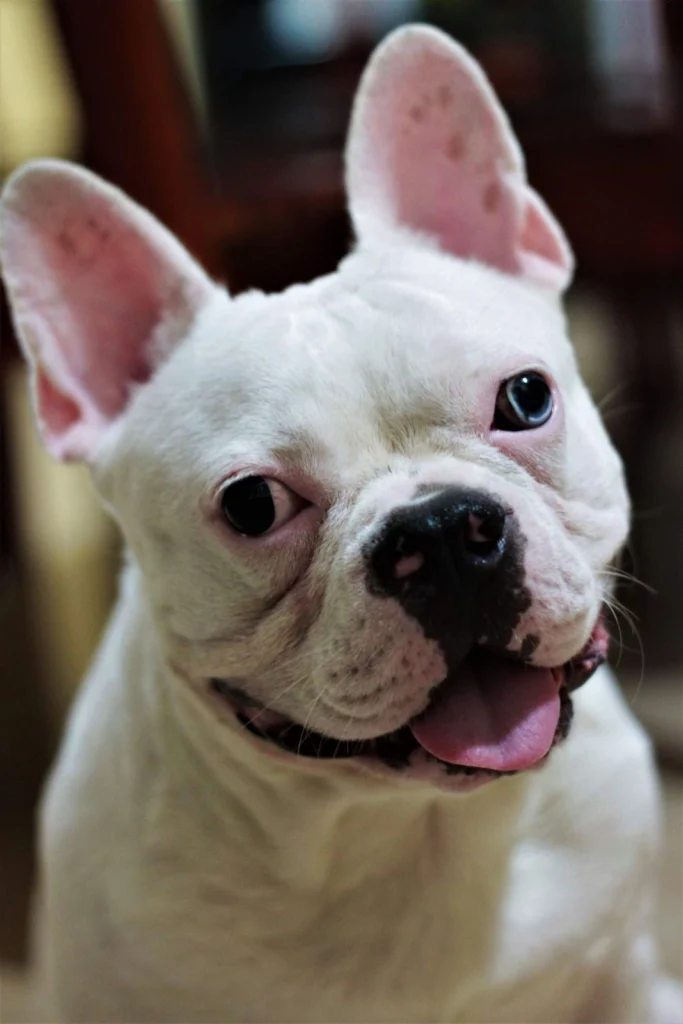
“Fluffy” is the nickname for a long-haired French Bulldog. These dogs have the same compact body, bat ears and short muzzle as any other Frenchie, but their coat is noticeably longer and softer, often with feathering on the ears, chest, legs and tail. They can be any color, and are often sold as “long haired French Bulldogs” alongside other so-called rare traits.
The UC Davis Veterinary Genetics Laboratory (VGL), a university genetics lab that offers a coat length test, notes on its coat length test page that long hair “is also known as Fluffy in the French Bulldog.” It is a coat-length trait that a lab can test for, not a separate breed.
The long-hair gene explained: FGF5 and the L4 variant
Coat length in dogs is controlled mainly by a gene called fibroblast growth factor 5 (FGF5), a link discovered in 2006. A 2026 open-access study in Animals sums it up: the normal version of FGF5 produces short hair, and any combination of two known long-hair variants produces a long-haired dog.
UC Davis VGL lists five recessive long-hair variants in FGF5. The most common across breeds is simply called L. The one that matters most for Frenchies is a small DNA duplication (written c.559-560dupGG) that VGL calls L4, which it reports in Afghan Hounds, Eurasiers and French Bulldogs.
One practical warning: labs do not all use the same names. VGL uses L, L2, L3, L4 and L5, while the 2026 Animals paper calls the same five variants Lh1 to Lh5, so the Frenchie variant appears there as Lh4 (and one figure caption in that paper even labels it Lh3). If you compare DNA reports from two different companies, check the actual variant, not just the label. Researchers are still finding new FGF5 variants, so a test can occasionally miss a rare one.
How fluffy Frenchies are inherited
Long hair is autosomal recessive. Every dog has two copies of FGF5, one from each parent, and a dog only grows a long coat if both copies are long-hair variants. A dog with one copy looks completely normal and short-coated, but it is a carrier and can pass the variant on. UC Davis VGL explains the results like this:
| DNA result | Coat | What it passes on |
|---|---|---|
| S/S (no long-hair variant) | Short | Cannot pass on a long-hair variant |
| S/L (carrier) | Short | Passes the long-hair variant to about 50% of puppies |
| L/L (two long-hair variants) | Long (“fluffy”) | Passes a long-hair variant to all puppies |
That is why fluffy puppies can appear in a litter from two short-coated parents. If both parents are carriers, about 25% of their puppies are expected to be long-haired, according to VGL. If two fluffy dogs are bred together, all of their puppies are expected to be fluffy.
Where did the long-hair gene come from?
Honestly, nobody knows for certain. We could not find a peer-reviewed study that traces when or how the L4 variant entered French Bulldogs. There are two broad possibilities:
- It has been in the breed for a long time at low levels. Because carriers look short-haired, a recessive variant can pass quietly through many generations before two carriers happen to be bred together.
- It came in through crossbreeding with a long-haired dog at some point and was then bred back toward the Frenchie type.
Claims online that a specific breed was “mixed in” are not backed by any published genetic evidence we could find. What is clear is that, with fluffy Frenchies in demand, some breeders now deliberately pair carriers or long-haired dogs to produce them.
Are long haired French Bulldogs accepted by the breed standard?
No. The AKC standard, which the French Bull Dog Club of America works under, says the coat “is brilliant, short and smooth” and that “coats other than short and smooth are a disqualification.” The Royal Kennel Club standard in the UK describes the coat texture as “fine, smooth, lustrous, short and close.”
A disqualification matters for showing and for breeders who follow the standard; it does not make a fluffy Frenchie a worse pet. But “rare” in a sales listing usually means “outside the standard,” not “better.” The same applies to non-standard colors, which we cover in French Bulldog colors explained.
Grooming and shedding a fluffy French Bulldog
A standard Frenchie needs little more than a weekly brush (see our French Bulldog grooming guide). A longer coat takes a bit more work:
- Brush more often. The AKC notes that long-coated dogs often do best with daily brushing, while most dogs need only a few sessions a week. A pin brush suits many longer coats, and a slicker brush can help with dead hair and small tangles.
- Check tangle-prone spots. The AKC says mats commonly form behind the ears and under the legs. On a fluffy Frenchie, also check the feathering on the chest and tail.
- Don’t shave the coat to “cool” your dog. Heat safety for a fluffy Frenchie is the same as for any Frenchie: shade, cool rest, short walks in the cooler hours.
As for shedding, all Frenchies shed. We found no study measuring whether long-haired Frenchies shed more or less than short-haired ones, but longer hairs are usually easier to spot on floors and furniture. A long coat also does not make a dog hypoallergenic. Our French Bulldog shedding guide has a simple routine for keeping loose hair under control.
Health: a fluffy coat does not change the flat face
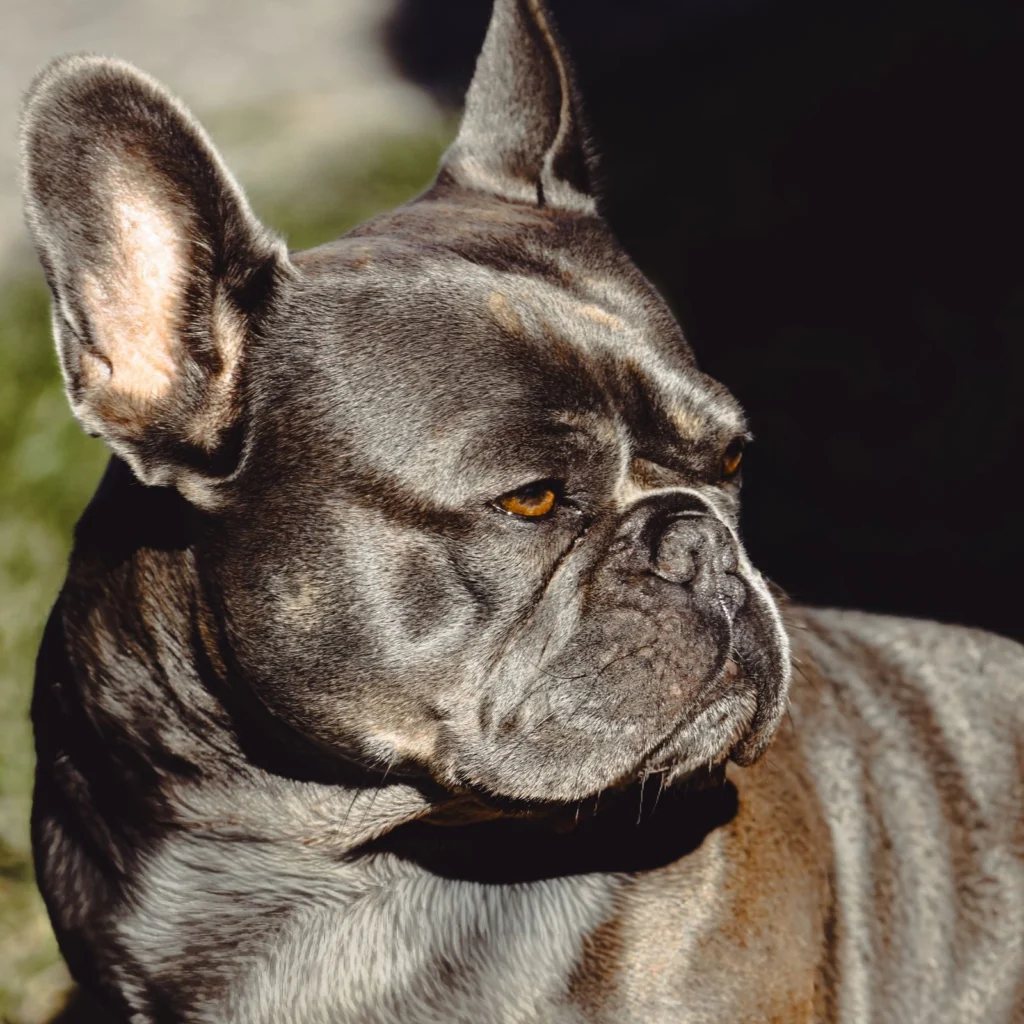
The FGF5 gene affects hair growth. There is no evidence that a long coat changes a French Bulldog’s skull shape, airway or spine, and no study we could find has compared the health of long-haired and short-haired Frenchies. A fluffy French Bulldog is still a brachycephalic (flat-faced) dog.
That matters because the breed’s health problems come mostly from its body shape. A 2021 VetCompass study (O’Neill et al.) of 2,781 French Bulldogs found much higher odds than other dogs for stenotic (narrow) nostrils, brachycephalic obstructive airway syndrome (BOAS), ear discharge and skin fold dermatitis. The same study found about three times the odds of spinal cord disorders. The authors linked many of these problems to the breed’s extreme conformation.
Buying a fluffy French Bulldog: price and health testing
Fluffy Frenchies are often advertised at higher prices than standard Frenchies, especially when paired with non-standard colors. A long coat is cosmetic; it does not make a dog healthier or a better companion. When a breeder’s main selling point is a rare look, ask harder questions.
- Ask about health checks that matter for the breed, such as breathing assessments, and see the results for both parents.
- Meet the mother and watch how she breathes. Noisy breathing is not “normal for the breed.”
- If the breeder claims coat genetics, ask to see the DNA report from the lab and check which variant was tested.
- Be wary of breeders who price puppies by coat or color or push for quick deposits.
Our guide to choosing a French Bulldog breeder walks through the questions to ask and the red flags to watch for.
Vet note: Treat a fluffy Frenchie like any other French Bulldog. Ask your vet to check breathing, nostrils, skin folds and ears at the first visit, and get help quickly for noisy or labored breathing, blue or gray gums, collapse, or signs of back pain or wobbliness. A longer coat can also hide skin problems, so part the hair during brushing to look at the skin.
FAQ
Is a fluffy French Bulldog purebred?
It can be. Two purebred, short-haired carrier parents can produce a long-haired puppy, because the trait is recessive. A long coat on its own doesn’t prove crossbreeding, but it also doesn’t prove purity. Pedigree records and parentage DNA are better evidence.
Can two short-haired Frenchies have a fluffy puppy?
Yes, if both parents carry a long-hair FGF5 variant. UC Davis VGL says that, on average, about 25% of puppies from two carriers are expected to be long-haired.
When can you tell if a Frenchie puppy will be fluffy?
A DNA test is the most reliable way to know early. UC Davis VGL recommends waiting until puppies are at least three weeks old before testing. Coat length becomes easier to see as the puppy grows.
Are fluffy Frenchies healthier than regular Frenchies?
There is no evidence that they are. Coat length doesn’t change the short muzzle or compact build behind the breed’s main health problems, so choose a puppy based on the parents’ health, not the coat.
Sources
- Coat Length — UC Davis Veterinary Genetics Laboratory
- Discovery of Four New FGF5 Variants Causing Long Hair in the Dog — Animals (MDPI), via PubMed Central
- Official Standard of the French Bulldog — American Kennel Club
- French Bulldog Breed Standard — The Royal Kennel Club
- French Bulldogs differ to other dogs in the UK in propensity for many common disorders: a VetCompass study — Canine Medicine and Genetics, via PubMed Central
- How to Groom Your Dog at Home — American Kennel Club