
Browse French Bulldog listings online and you will see an astonishing range of colors: classic brindles and fawns alongside blue, lilac, chocolate, merle and “fluffy” Frenchies, often with price tags to match. It can be confusing to work out which colors are part of the breed standard, which are not, and whether color has anything to do with health. This guide explains the difference between standard and so-called rare colors, so you can make an informed choice.
Key takeaways
- The AKC standard accepts white, cream and fawn (light to red), or combinations of these, with brindle, pied, black mask, black shading and white markings.
- Under the AKC standard, colors outside the standard, such as blue, lilac, chocolate, merle and black and tan, are disqualifications in the show ring.
- “Rare” usually means non-standard, not better or healthier. Price does not equal quality.
- Some non-standard colors carry known health links, especially merle and dilute coats.
- Choose a breeder based on health testing, temperament and care, not on coat color.
What the breed standard says
Breed standards are written descriptions of the ideal dog for each breed, maintained by kennel clubs. In the United States, the American Kennel Club (AKC) standard for the French Bulldog lists acceptable colors as white, cream, or fawn (ranging from light fawn to red fawn), or any combination of these. Acceptable markings and patterns include brindle, piebald, black masks, black shadings and white markings. Ticking is acceptable but not desired. Any color not described in the standard is a disqualification in conformation shows.
Other kennel clubs around the world, such as The Royal Kennel Club in the UK and FCI member clubs, have similar approaches, though wording and details vary. The Royal Kennel Club standard, for example, lists only brindle, fawn and pied as the correct French Bulldog colors (or colours, as UK breed clubs write it). If you plan to show your dog, check the specific standard of the club you will be showing under.
Standard French Bulldog colors and patterns
Brindle
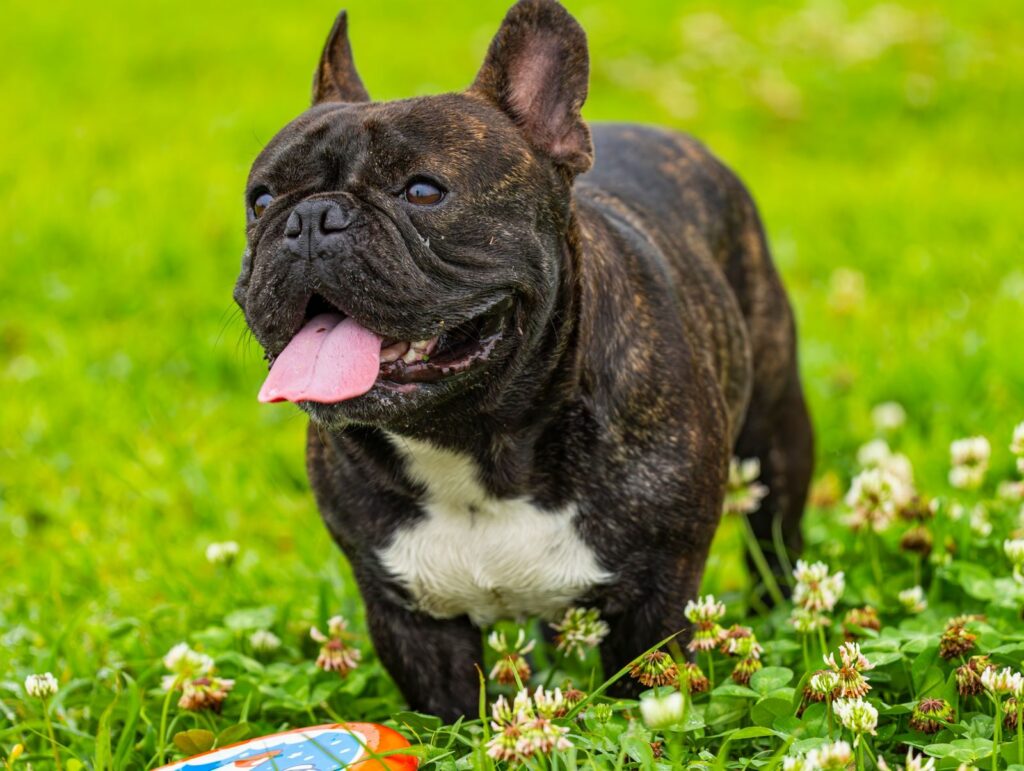
Brindle is a striped pattern of dark hairs over a lighter base. It ranges from heavily dark “seal” or “black” brindles, where the lighter stripes are subtle, to tiger brindles with more visible striping. Brindle is one of the most traditional French Bulldog looks.
Fawn
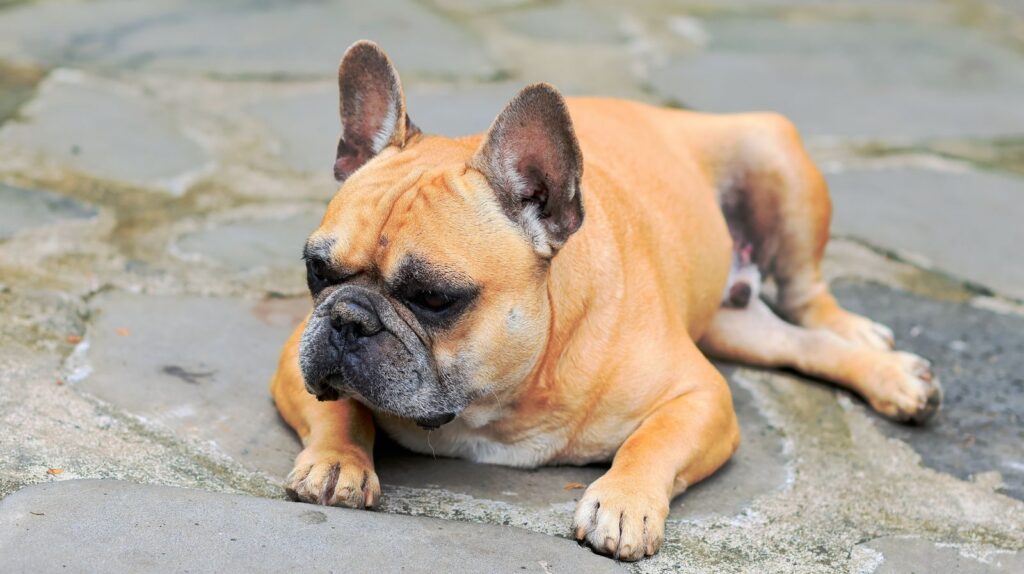
Fawn covers a range of shades from pale cream-tan to deep red. Many fawn Frenchies have a black mask over the muzzle and eyes, and some have black shading through the coat.
Cream
Cream is a pale, even color, lighter than fawn, often with dark eye rims and nose for contrast. It is accepted in the AKC standard but is not among the colors listed in The Royal Kennel Club standard.
White and pied
White Frenchies are mostly or entirely white. Pied French Bulldogs have a predominantly white coat with patches of brindle or fawn, frequently on the head and around the eyes.
Combinations
Many Frenchies combine these, such as fawn and white, brindle and white, or fawn brindle. All of these fit within the standard.
Non-standard (“rare”) colors
“Rare” is a marketing term more than a scientific one. In practice it refers to colors outside the breed standard. These colors are produced by specific genes that were not traditionally part of the breed’s accepted look. Common examples include:
| Color | What it looks like | Notes |
|---|---|---|
| Blue | Gray-blue coat, often with lighter eyes and a gray nose | A dilute of black, caused by the dilution gene |
| Chocolate (liver) | Brown coat, brown nose, often lighter eyes | Caused by brown/chocolate genes |
| Lilac (isabella) | Pale, silvery brown-gray | Combination of chocolate and dilution genes |
| Black and tan | Black body with tan points on face, legs and chest | Also seen as blue and tan or chocolate and tan |
| Solid black | Black without brindling | Distinct from very dark brindle |
| Merle | Mottled patches of color on a lighter background, sometimes blue eyes | Caused by the merle gene; associated with health concerns |
| “Fluffy” | Longer, softer coat | A coat-length gene rather than a color; not part of the standard |
Dogs of these colors are still French Bulldogs and can be wonderful pets. However, they are disqualified from conformation shows under the AKC standard, and you should be aware of the potential health and breeding issues linked to some of them.
Does color affect health?
For most coat colors, color itself does not determine health. A brindle Frenchie is not automatically healthier than a cream one. However, there are a few well-known exceptions:
- Merle: the merle gene is associated with an increased risk of hearing and eye problems. The risk is much greater in “double merle” dogs, produced when two merle dogs are bred together, which can result in deafness and eye abnormalities. Responsible breeders of any breed avoid merle-to-merle pairings. Merle is a disqualification under the AKC standard, and The Royal Kennel Club does not accept merle French Bulldogs for registration.
- Dilute colors (blue, lilac): dilute coats are associated with a skin condition called color dilution alopecia in some dogs, which can cause hair loss and recurrent skin inflammation. Not every dilute dog is affected.
- White and pied with little pigment: the piebald gene, which produces white coat areas, has been linked to congenital deafness in several other breeds, such as the Dalmatian and English Setter. Ask about hearing in any very white puppy.
Beyond genetics, there is a broader concern. When breeding decisions are driven by color, health, temperament and structure can take a back seat. A puppy bred mainly for an eye-catching coat may come from parents that were not health screened for problems like BOAS or spinal issues. That is a much bigger risk than the color itself.
Why are rare colors so expensive?
Non-standard colors often command higher prices simply because of demand and perceived novelty. A higher price does not mean better health, better temperament or better breeding. In fact, some of the most important investments a responsible breeder makes, such as health testing, proper veterinary care and raising puppies in a home environment, are invisible in a listing photo.
How to choose based on what matters
Whatever color you are drawn to, use these questions to evaluate a breeder:
- What health screening have the parents had, for example airway assessment, spine, eyes, hearing and any relevant DNA tests?
- Can you meet the mother, and ideally see how she breathes and moves?
- How are the puppies raised and socialized?
- Will the breeder take the dog back at any point in its life if needed?
- Does the breeder talk openly about the breed’s health challenges, or focus mainly on color?
A breeder who prioritizes open airways, sound structure and stable temperament is doing far more for your future dog than any coat color can. Once your puppy comes home, our first week guide will help you settle them in.
Caring for different coat colors
Day-to-day coat care is similar for all French Bulldogs: weekly brushing, regular fold cleaning and checks for skin irritation. Light-colored and pied dogs may be more prone to sunburn on thinly haired areas and can show tear staining more visibly. Dilute-colored dogs may need extra attention to skin health. Our grooming guide and allergies guide have more tips. If you notice hair loss, flaking or recurring skin infections, ask your vet to take a look.
FAQ
Is a blue French Bulldog a purebred?
A blue French Bulldog can be purebred, since coat color alone does not determine ancestry, but blue is not an accepted color in the AKC standard and is a disqualification in the show ring.
What’s the difference between lilac and blue French Bulldogs?
Blue and lilac French Bulldogs both carry two copies of the recessive dilution gene (d/d); the difference is the base color being diluted. A blue Frenchie is a black-pigmented dog with dilution, while a lilac is a brown-pigmented dog with dilution. The UC Davis Veterinary Genetics Laboratory explains that dilution lightens black to a gray-blue and chocolate brown to a pale, silvery shade that some breeds call lilac (the lab notes that in French Bulldogs it is often called “isabella”). In French Bulldogs, the brown behind a lilac coat can come from the classic brown (B locus) gene or from “cocoa,” a recessive brown variant in the HPS3 gene that researchers identified in the breed in 2020. Neither color is in the standard: both fall outside the colors the AKC accepts, so both are disqualifications in the AKC show ring, and The Royal Kennel Club standard lists brindle, fawn and pied as the only correct colors. Because both are dilute colors, the skin caveat about color dilution alopecia above applies to both.
What is the most common French Bulldog color?
Brindle and fawn, in their various shades and with or without white markings, are among the most traditional and commonly seen colors in the breed.
Are brindle French Bulldogs rare?
No, brindle French Bulldogs are not rare: brindle is a standard French Bulldog color and one of the most common. It is accepted by both the AKC and The Royal Kennel Club, and in a UK study of 2,228 French Bulldogs seen by primary-care vets in 2013, brindle was the most frequently recorded main color (about 32% of dogs with a recorded color), just ahead of fawn (about 30%). If a listing calls a brindle puppy “rare” to justify a higher price, treat that as a sales pitch. Note that brindle on a non-standard base color, such as a “blue brindle,” is a different case, because the dilute base color is outside the AKC standard.
Are merle French Bulldogs unhealthy?
Not every merle dog will have health problems, but the merle gene is linked to increased risks of hearing and eye issues, especially in double merles. Ask any breeder detailed questions and request health testing information.
What is the rarest French Bulldog color?
There is no official “rarest” French Bulldog color, because “rare” is largely a marketing label for colors outside the breed standard, such as blue, lilac, chocolate, merle and black and tan. The French Bull Dog Club of America notes that these disqualified “fad” colors are often called rare so they can be sold at inflated prices. Good data on how common each color is are limited, but in the 2013 UK veterinary study above, about 4% of French Bulldogs with a recorded color were blue and 3% were liver or chocolate, compared with about 32% brindle. Some of these colors also come with health caveats: dilute coats such as blue and lilac are associated with color dilution alopecia in some dogs, and merle carries a higher risk of deafness and eye abnormalities, especially in double merles. The Royal Kennel Club does not register merle French Bulldogs. A hard-to-find color is not a reason to pay more, and it says nothing about a puppy’s health.
Should I pay more for a rare color?
Color should not be the main reason for paying more. Focus your budget on a breeder who health tests, raises puppies well and offers ongoing support.
Sources
- Official Standard of the French Bulldog — American Kennel Club
- French Bulldog Breed Standard — The Royal Kennel Club
- French Bulldog Fad Colors Explained — French Bull Dog Club of America
- Merle Pugs Not Eligible for Registration — The Royal Kennel Club
- The Genetics of Deafness in Domestic Animals — Frontiers in Veterinary Science (George M. Strain), via PMC
- Polymorphisms within the canine MLPH gene are associated with dilute coat color in dogs — BMC Genetics, via PMC
- Dilute (D Locus/Blue) — UC Davis Veterinary Genetics Laboratory
- Novel Brown Coat Color (Cocoa) in French Bulldogs Results from a Nonsense Variant in HPS3 — Genes (Kiener et al., 2020), via PMC
- Demography and disorders of the French Bulldog population under primary veterinary care in the UK in 2013 — Canine Genetics and Epidemiology (O’Neill et al., 2018), via PMC