
Socializing a French Bulldog is one of the most valuable things you can do in the first weeks after your puppy comes home. A Frenchie who learns early that people, handling, noises and new places are safe is far more likely to grow into a relaxed, confident adult. The window for this learning is short, though, and it overlaps with the puppy vaccine series. Here is a week-by-week plan, a checklist, and advice for adult and rescue Frenchies.
Key takeaways
- The first three months are the most important time to socialize a puppy, according to AVSAB.
- Puppy classes can start at 7-8 weeks, a week or more after first vaccines, plus a first deworming.
- Good socialization is gentle and puppy-paced. Never force a frightened puppy to face a fear.
- Learn stress signals like lip licking, yawning and turning away, and let your puppy retreat.
- Fearful adult Frenchies need slow counterconditioning, ideally guided by a qualified professional.
What socialization is (and what it isn’t)
Socialization means giving your puppy calm, positive experiences with the people, animals, places, sounds and handling they will meet in later life. The American Veterinary Society of Animal Behavior (AVSAB) says puppies should meet as many new people, animals, stimuli and environments as can be achieved safely, without causing overstimulation that shows up as excessive fear, withdrawal or avoidance.
Socialization is not about toughening a puppy up. VCA Animal Hospitals is clear: never force a puppy to “face his fears,” and repeatedly coaxing a frightened puppy can make the fear worse. A good exposure is one where your puppy stays curious, keeps taking treats and can move away whenever they want.
The French Bulldog puppy socialization window
AVSAB calls the first three months of life the primary and most important time for puppy socialization, because it is the period when sociability outweighs fear. Other sources describe slightly different edges: VCA puts the sensitive period at roughly 3 to 16 weeks, while PDSA describes about 4 to 12 weeks.
Most puppies go home around 8 weeks, so a good breeder will already have done part of this work. AVSAB recommends that puppies be handled from birth so they learn to accept having every part of the body touched. For how this window fits with your puppy’s other changes, see our French Bulldog puppy growth milestones guide.
AVSAB is blunt about the stakes: incomplete or improper socialization can raise the risk of fear, avoidance and aggression later in life, and it notes that behavior problems are the leading reason dogs are given up to shelters.
Socializing before vaccinations are finished
Waiting until the vaccine course is complete would mean missing much of the socialization window. AVSAB’s position is that socialization before full vaccination should be the standard of care. It explains that maternal immunity, a first round of vaccines and appropriate care together make the risk of infection relatively small compared with the chance of death from a behavior problem.
According to AVSAB, puppies can generally start socialization classes as early as 7 to 8 weeks of age, provided they have had at least one set of vaccines at least 7 days before the first class and a first deworming, and stay up to date on vaccines throughout. Sensible risk management still applies:
- Choose clean classes. AVSAB prefers surfaces that are easy to clean and disinfect, such as indoor floors. VCA suggests looking for classes that require up-to-date vaccines, no intestinal parasites, and that sick puppies stay home.
- Skip dog parks for now. AVSAB advises avoiding dog parks and other areas that are not sanitized or are busy with dogs of unknown vaccination status.
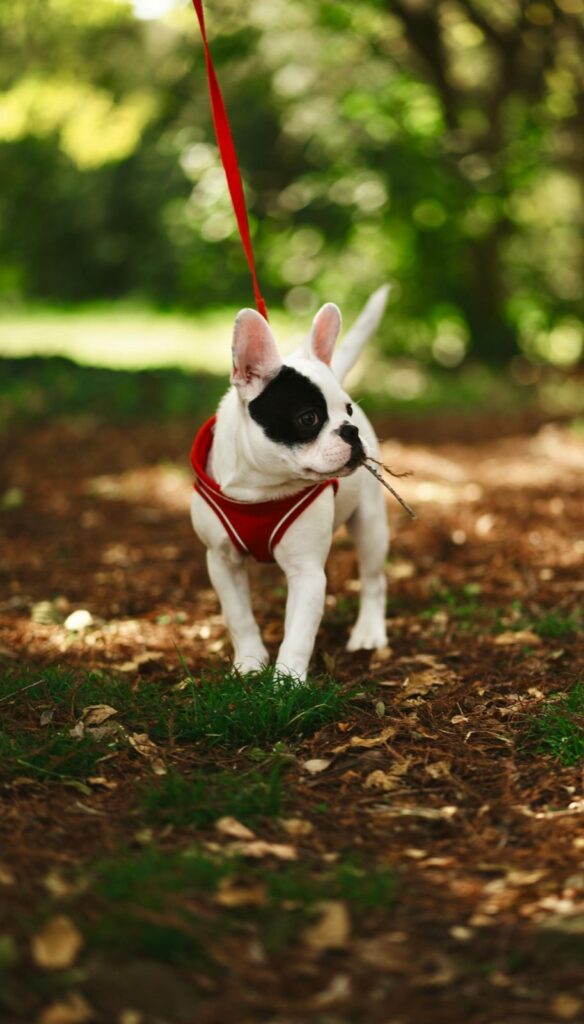
- Carry your puppy. PDSA suggests carrying a partly vaccinated puppy so they can see new places and meet people without walking where unvaccinated dogs go.
- Meet safe dogs. PDSA says puppies can meet fully vaccinated, older dogs.
Our French Bulldog puppy vaccination schedule explains the full course. Ask your vet what is sensible where you live.
How to socialize a French Bulldog puppy: a week-by-week plan
This is an example plan for a puppy who comes home at 8 weeks, not a fixed protocol. Move at your own puppy’s speed. VCA suggests visiting new places at least twice a week, and PDSA recommends short, repeatable sessions, building up gradually, such as a quiet road before a busy one.
| Age | Focus | Ideas |
|---|---|---|
| Week 8 | Settling in, home life | Household sounds at low volume, short gentle handling sessions, a few minutes alone in a pen with a chew, meeting family calmly |
| Week 9 | New people, first vet visit | Calm visitors of different ages and looks; treats in the vet waiting room while held in your arms or a carrier |
| Week 10 | Out in your arms | Carry your puppy to watch traffic, bikes and people from a distance; short, calm car rides |
| Week 11 | Puppy class begins | Join a reward-based class once vaccine and deworming rules are met; play with puppies of similar size |
| Week 12 | Grooming and handling | Practice ear checks, wiping skin folds, touching paws and nails, brushing, opening the mouth |
| Weeks 13-14 | Surfaces and objects | Grass, tile, rubber mats, a low step, umbrellas, strollers, hats, a vacuum cleaner from another room |
| Weeks 15-16 | Building on success | Revisit anything that worried your puppy at an easier level; add new places once your vet says it’s safe |
Socialization doesn’t stop at 16 weeks. AVSAB says new experiences should continue into adulthood to maintain an outgoing, sociable dog, and owners of older puppies are strongly encouraged to keep going.
Socialization checklist for Frenchies
Use this as a menu, not a test. Pair each new thing with treats or praise.
| Category | Examples |
|---|---|
| People | Men, women, gentle children, older adults, people wearing hats, glasses or carrying canes, delivery workers |
| Handling | Ears, paws, nails, mouth, tail, cleaning skin folds, gentle restraint like at the vet, being lifted |
| Surfaces | Grass, gravel, tile, wood, wet ground, rubber mats, a vet exam table |
| Sounds | Doorbell, vacuum, hair dryer, traffic, thunder or fireworks recordings at very low volume |
| Travel | Crate or carrier, short car trips, sitting in a parked car |
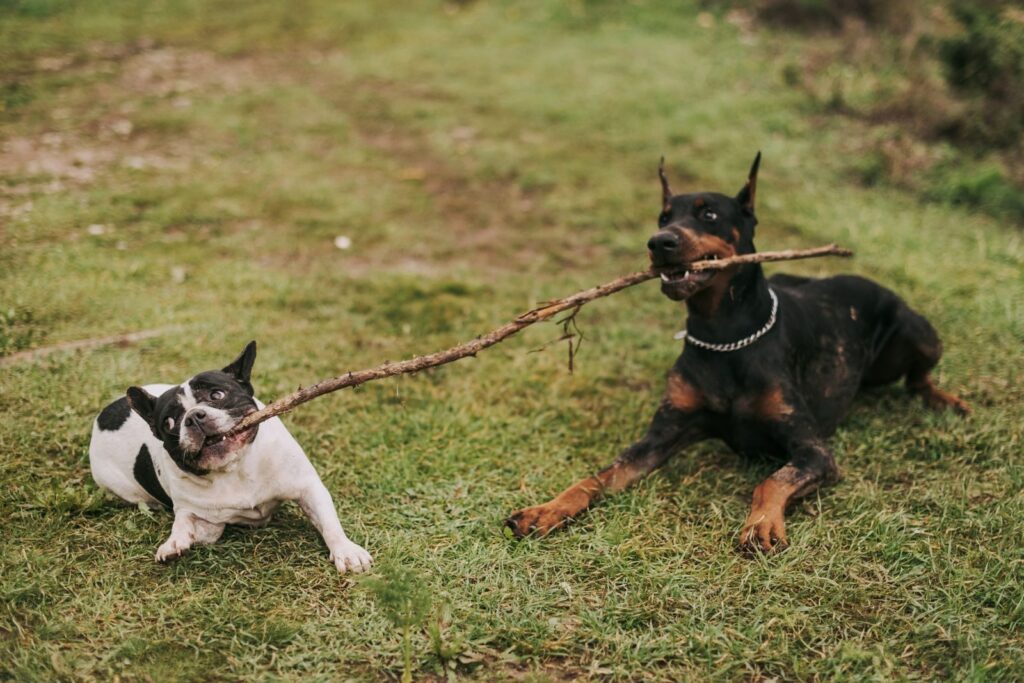
| Animals | Healthy, vaccinated, gentle adult dogs; calm puppies in class; a dog-friendly cat |
| Equipment | Harness, collar with ID tag, leash, brush, nail clippers |
| Being alone | A few minutes in a pen or crate with a stuffed food toy, built up gradually |
Time alone matters as much as company. AVSAB recommends scheduling time for puppies to play alone with favorite toys or nap in a crate or pen, which may help prevent over-attachment. PDSA suggests starting with a few minutes while you make a drink. For more, read our guide to French Bulldog separation anxiety. If play with other puppies gets too mouthy, our article on French Bulldog biting and mouthing can help.
Reading your puppy’s body language
The skill that makes socialization work is noticing when your puppy has had enough. Dogs Trust lists early signs of worry including:
- Lip licking when there is no food around, and yawning when not tired
- Turning the head away, narrowed eyes or blinking
- Visible whites of the eyes, ears pulled back, leaning away
- A raised paw, a lowered or tucked tail, freezing or cowering
- A hesitant approach with a quick wag, then retreating
VCA adds trembling, refusing play or treats, trying to escape, and taking a treat and then backing away.
When you see stress signals, calmly create distance. Dogs Trust explains that moving your dog away at the first signs of stress teaches them that you will keep them safe. PDSA suggests taking an anxious puppy somewhere calm, then trying again later from further away. Let strangers wait for your puppy to approach rather than reaching in, and never punish a growl or a retreat.
Frenchie-specific tips
- Harness, not collar. Purdue University’s canine welfare scientists advise that because a regular collar adds strain to the windpipe, flat-faced dogs should be walked with a harness. Introduce it slowly with treats. Your puppy can still wear a light collar for ID tags.
- Watch the heat and the effort. Purdue also notes that exercise, especially on hot or humid days, should be carefully monitored to prevent overheating. Keep outings short, go in cool parts of the day, and offer shade and water.
- Make handling routine. Frenchies need regular ear checks and skin fold cleaning, so teaching your puppy to enjoy these early makes life easier for both of you and your vet.
Socializing an adult or rescue French Bulldog
Adult Frenchies can still learn, but the process is slower and the goal shifts from “meet everything” to “feel safe.” Start with a vet visit: VCA notes that pain and other medical problems can contribute to fear, so rule these out first.
The main tools are desensitization and counterconditioning. VCA describes desensitization as introducing a scary trigger very gradually, and counterconditioning as pairing that trigger with something good, like a treat. In practice:
- Find the distance at which your dog can notice the trigger and still eat. Work there.
- Give a treat each time the trigger appears, and stop when it leaves.
- Keep sessions short with breaks, and stop at any sign of fear.
- Never hold your dog in place to force a greeting. Always let them decline.
- Avoid punishment and choke, pinch or shock collars. VCA warns that punishment can make fear worse and may contribute to aggression.
For a dog who is very frightened, growls, lunges or won’t take food, get help early. VCA recommends asking your vet for a behavior plan or a referral to a board-certified veterinary behaviorist or certified applied animal behaviorist. A certified positive-reinforcement trainer can help with daily practice.
Vet note: Talk to your vet before starting puppy classes or outings, especially about local disease risks and when your puppy’s vaccines take effect. If your puppy seems persistently fearful, or an adult dog’s behavior changes suddenly, ask your vet to check for pain or illness and for a referral to a behavior professional.
FAQ
Is it too late to socialize my French Bulldog after 16 weeks?
No. The early weeks have the biggest effect, but AVSAB strongly encourages owners of older puppies to keep socializing them. Progress is usually slower, so keep exposures gentle and reward calm behavior.
Can my Frenchie puppy go outside before the last vaccine?
Yes, with care. Carry your puppy in public, visit clean, reward-based puppy classes that check vaccines, and avoid dog parks and unknown dogs. Your vet can advise on local risk.
My Frenchie puppy is scared of everything. What should I do?
Slow down. Lower the intensity, add distance and pair small exposures with treats. If fear doesn’t improve, ask your vet early. AVSAB advises that owners of fearful puppies seek veterinary guidance.
Sources
- AVSAB Position Statement on Puppy Socialization — American Veterinary Society of Animal Behavior
- Puppy Behavior and Training: Socialization and Fear Prevention — VCA Animal Hospitals
- Puppy Socialisation — PDSA
- How to Understand Your Dog’s Body Language — Dogs Trust
- Fears and Phobias in Dogs – Animals and People — VCA Animal Hospitals
- Respiratory Function in Brachycephalic Dogs — Purdue University Canine Welfare Science (Croney Research Group)