
They share a name, a flat face and a famous snore, so it is easy to assume the two breeds are just bigger and smaller versions of each other. In reality, the French Bulldog vs. English Bulldog question comes down to some clear differences in size, ears, build and day-to-day needs, along with a set of health concerns the two breeds largely share. This guide puts them side by side using the official breed standards and large UK veterinary studies, without promoting either breed.
Key takeaways
- The AKC caps French Bulldogs at 28 pounds; English Bulldogs are about 50 pounds (males) and 40 pounds (females).
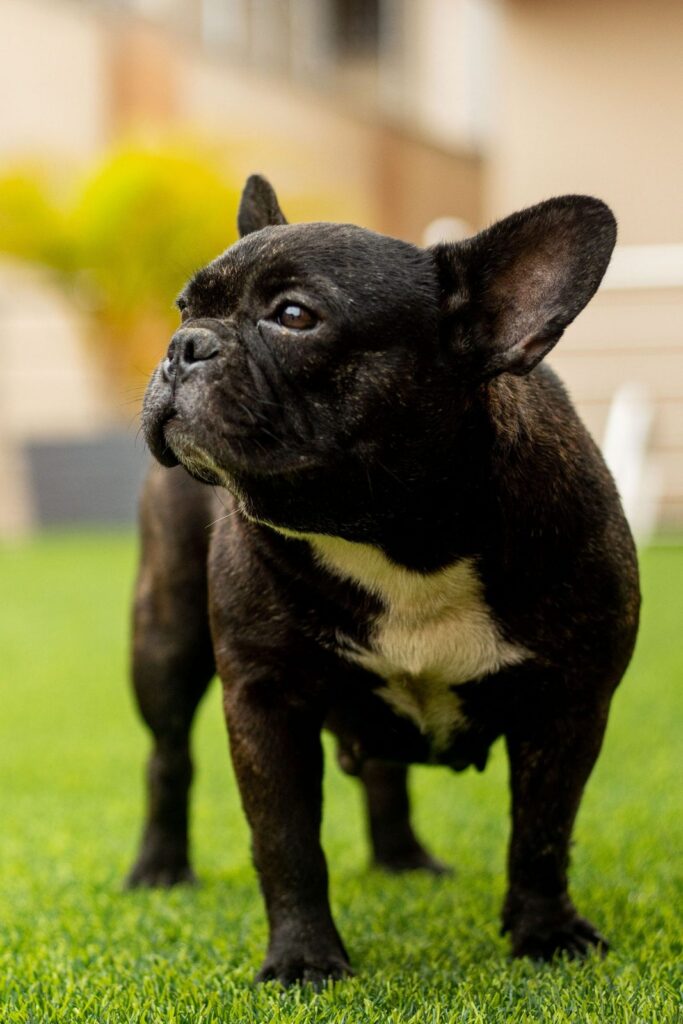
- French Bulldogs have upright bat ears; English Bulldogs have small, folded rose ears.
- Both are brachycephalic breeds with high risk of breathing problems, overheating and skin fold infections.
- In one UK study, Bulldogs had about 14 times and French Bulldogs 6.5 times Labradors’ heat-related illness odds.
- Choose on lifestyle and health commitment, not looks: neither breed suits hot homes or strenuous exercise.
French Bulldog vs. English Bulldog at a glance
The table below summarizes the main differences. Size, ears and temperament wording come from the American Kennel Club (AKC) breed standards; size, exercise, grooming and lifespan categories come from The Royal Kennel Club in the UK; health points come from VetCompass studies at the Royal Veterinary College. Note that the AKC and The Royal Kennel Club simply call the larger breed the “Bulldog.”
| Feature | French Bulldog | English Bulldog (Bulldog) |
|---|---|---|
| Origin | Developed in France from small bulldogs taken there by Nottingham lace makers during the Industrial Revolution | England; descended from mastiff-type dogs used in bull baiting, which was outlawed in 1835 |
| Size category (Royal Kennel Club) | Small | Medium |
| Weight (AKC standard) | Must not exceed 28 lb (about 13 kg) | About 50 lb for males, about 40 lb for females |
| Ears | “Bat ears”: broad at the base, rounded at the top, carried erect | “Rose ears”: small, thin and folded; never erect |
| Build | Compact, muscular and heavy-boned, with a square head | Heavy, thick-set and low-slung, with a massive head, wide shoulders and a rolling gait |
| Temperament (AKC standard) | Affectionate, even-tempered, adaptable; active, alert and playful but “not unduly boisterous” | Equable and kind, resolute and courageous; “pacific and dignified” |
| Exercise (Royal Kennel Club) | Up to 1 hour per day | Up to 1 hour per day |
| Grooming (Royal Kennel Club) | Once a week; keep facial folds clean and dry | Once a week; heavier facial wrinkles and a dewlap need regular fold care |
| Heat tolerance | Poor; about 6.5 times Labradors’ odds of heat-related illness in one UK study | Poor; about 14 times Labradors’ odds in the same study |
| Lifespan | Royal Kennel Club: over 10 years | Royal Kennel Club: under 10 years; a 2022 VetCompass study cites a median of 7.2 years |
Origins: closely related breeds
The two breeds share a family tree. The Royal Kennel Club describes the Bulldog as descending from mastiff-type dogs used for bull baiting. After the sport was outlawed in 1835, dog showing revived the breed, and The Kennel Club recognized it in 1873. The 2022 VetCompass study notes that show-ring fashion in the 1890s pushed the breed toward a shorter face, protruding underjaw and heavier build.
The French Bulldog grew out of small bulldogs that Nottingham lace makers took to northern France during the Industrial Revolution. According to The Royal Kennel Club, some crosses with other short-faced breeds probably followed, and a separate breed with large bat ears emerged and became fashionable in Paris. Our French Bulldog breed overview covers that history in more detail.
Size, build and ears
Size is the most obvious difference. The AKC French Bulldog standard says weight must not exceed 28 pounds, and a dog over that is disqualified in the show ring. The AKC Bulldog standard gives about 50 pounds for mature males and about 40 pounds for mature females. Real-world data tell a similar story: in the VetCompass studies, the median weight of French Bulldogs was about 12.5 kg (roughly 27 pounds), and of English Bulldogs about 25.5 kg (roughly 56 pounds). Neither standard sets a height for these breeds.
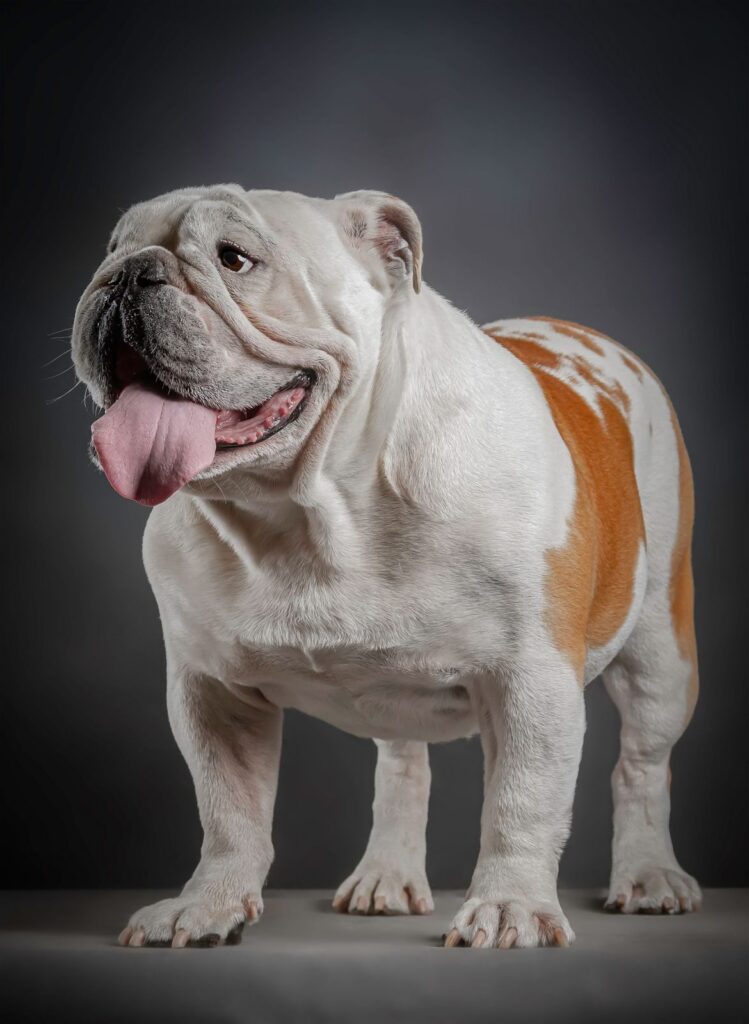
The build differs too. The Bulldog standard calls for a much heavier, low-slung dog with a very large head, heavy facial wrinkles and two loose folds of skin at the throat (the dewlap). Its gait is described as a loose-jointed, shuffling “roll.” The French Bulldog is lighter and more compact, and its standard asks for a “four tracking” gait with reach and drive.
Ears are the quickest way to tell them apart. The French Bulldog standard requires bat ears, and any other ear type is a disqualification. The Bulldog standard prefers the folded rose ear and says the ears should never be carried erect.
Temperament: companions first
Both breeds are bred today as companions. The AKC describes French Bulldogs as well-behaved, adaptable and affectionate, generally active, alert and playful but not overly boisterous. The Bulldog standard asks for a disposition that is equable, kind, resolute and courageous, with a calm, dignified demeanor, and specifies “not vicious or aggressive.” The Royal Kennel Club adds that Bulldogs are typically gentle and affectionate with family but can be strong-willed and need patient, positive training. French Bulldogs are often described in similar terms: intelligent, but with a stubborn streak.
In practice, individual personality, socialization and reward-based training matter more than breed labels.
Exercise and heat: similar limits
The Royal Kennel Club lists both breeds as needing up to an hour of exercise a day. That usually means short, gentle walks and play rather than running or long hikes.
Heat is the bigger concern. A VetCompass study of UK dogs in 2016 found that, compared with Labrador Retrievers, Bulldogs had about 14 times the odds of heat-related illness and French Bulldogs about 6.5 times. Both were among the breeds with the highest incidence of heatstroke, and the authors also linked higher bodyweight for the breed and a flat-faced skull shape to greater risk. If you live somewhere hot, either breed needs air conditioning, early-morning or late-evening walks and a willingness to skip exercise on warm days.
Health: two flat-faced breeds with shared problems
Both breeds are brachycephalic, meaning they have a shortened skull and muzzle. That shape is linked to brachycephalic obstructive airway syndrome (BOAS), where the soft tissues of the airway obstruct breathing. The Royal Kennel Club recommends breathing testing for BOAS before breeding Bulldogs.
Large VetCompass studies compared each breed with all other dogs under UK veterinary care in 2016. The figures below are odds compared with other dogs, not with each other, so they show each breed’s weak spots rather than which breed is “healthier.”
| Disorder | French Bulldog (vs. other dogs) | English Bulldog (vs. other dogs) |
|---|---|---|
| BOAS | About 31 times the odds | About 19 times the odds |
| Skin fold dermatitis | About 11 times the odds | About 38 times the odds |
| Other notable predispositions | Narrowed nostrils (stenotic nares), ear discharge, difficult birth (dystocia) | Cherry eye, protruding lower jaw, interdigital cysts, tail disorders |
A few other points from the research are worth knowing:
- Overall burden: English Bulldogs had about twice the odds of being diagnosed with at least one disorder in the study year compared with other dogs. French Bulldogs had increased odds for 20 of 43 common disorders, and the authors suggested the breed’s health may be lower than that of other dogs.
- Breeding difficulties: French Bulldogs had about 9 times the odds of dystocia (difficult birth) compared with other dogs. The English Bulldog study also names dystocia among the health problems linked to the breed’s body shape.
- Some lower risks: English Bulldogs had lower odds of dental disease and lipomas (fatty lumps) than other dogs, and French Bulldogs had reduced odds for 11 of 43 common disorders.
- Lifespan: The 2022 English Bulldog study cites earlier UK veterinary mortality data reporting a median longevity of 7.2 years. French Bulldog lifespan research is covered in the breed overview.
The authors of both studies concluded that many of these problems are tied to extreme body shape, and they called for breeding toward a more moderate build.
Cost: what to plan for
This guide does not quote puppy prices, because they vary widely by region and seller and change quickly. What matters more is the lifetime cost. Both breeds can need specialist care, such as airway surgery, eye treatment or ongoing skin and ear management, so budgeting for vet care or insurance is important either way. Our French Bulldog cost guide breaks down the typical expenses to plan for.
Which breed is right for you?
Choosing between a French Bulldog and an English Bulldog is less about which is “better” and more about whether your home and budget suit a flat-faced breed at all. A French Bulldog is smaller and easier to lift, which helps with car trips, stairs and vet visits. An English Bulldog is heavier and more laid-back in build, with deeper facial folds that need more frequent cleaning. Both need a cool home, gentle exercise, a lean body condition and an owner prepared for potential health costs.
Whichever you lean toward, look for a breeder who health-tests (including breathing assessments) and favors moderate features, or consider a breed rescue. Also weighing up the smaller Boston? Read French Bulldog vs Boston Terrier.
Vet note: Whatever the breed, noisy breathing at rest, struggling with mild exercise, collapsing or turning blue are not “normal for the breed.” Ask your vet to assess your dog’s airway, and if your dog is overheating, start cooling right away, then head to the vet.
FAQ
Is a French Bulldog just a small English Bulldog?
No. The French Bulldog descends from small English bulldogs, but it has developed into a separate breed with its own standard. The most visible differences are the upright bat ears, the lighter, more compact body and the 28-pound AKC weight limit.
Which is healthier, a French Bulldog or an English Bulldog?
Neither breed can honestly be called healthy compared with dogs that have a longer muzzle. UK veterinary studies found both have very high odds of BOAS and skin fold dermatitis, and the studies compared each breed with all other dogs rather than with each other. Individual health depends heavily on breeding, weight and care.
Are English Bulldogs calmer than French Bulldogs?
The breed standards describe the Bulldog as “pacific and dignified” and the French Bulldog as active, alert and playful. Individual dogs vary a lot, though, and both breeds need only moderate exercise.
Which breed is better for apartments?
Both can suit apartment life if the home stays cool. A French Bulldog’s smaller size makes carrying up stairs easier, which can matter for a breed that should avoid lots of jumping. Our honest Frenchie checklist can help you decide.
Sources
- Official Standard of the French Bulldog — American Kennel Club
- Official Standard of the Bulldog — American Kennel Club
- Bulldog breed information — The Royal Kennel Club
- French Bulldog breed information — The Royal Kennel Club
- French Bulldogs differ to other dogs in the UK in propensity for many common disorders: a VetCompass study — Canine Medicine and Genetics (Royal Veterinary College VetCompass), via PMC
- English Bulldogs in the UK: a VetCompass study of their disorder predispositions and protections — Canine Medicine and Genetics (Royal Veterinary College VetCompass), via PMC
- Incidence and risk factors for heat-related illness (heatstroke) in UK dogs under primary veterinary care in 2016 — Scientific Reports (Hall, Carter and O’Neill), via PMC