
With their bat ears, expressive faces and big personalities packed into a small, sturdy body, French Bulldogs have become one of the most popular companion breeds in the world. But behind the cute photos is a dog with specific needs, quirks and health considerations. Whether you are thinking about getting a Frenchie or already have one snoring at your feet, this overview covers the essentials: where the breed came from, what they are like to live with, how big they get and how long they typically live.
Key takeaways
- French Bulldogs are affectionate, people-focused companion dogs with a playful, sometimes stubborn streak.
- They are small but solid: the AKC standard sets a maximum weight of 28 pounds (about 13 kg), and other standards use similar limits.
- Lifespan is often cited as around 10 to 12 years. UK veterinary-record studies have produced lower estimates, from under 5 years to just under 10, partly because the breed’s population is so young; our French Bulldog life expectancy guide explains the numbers.
- Their flat faces mean they need careful management in heat and with exercise.
- They thrive on companionship and do best in homes where they are not left alone for long periods.
A brief history
The French Bulldog’s story begins in England, where small bulldogs were popular with lace workers in the Nottingham area during the 19th century. When many of these workers moved to France during the Industrial Revolution, they took their little bulldogs with them. In France, the dogs became fashionable companions in Paris, and over time they developed into a distinct breed, including the now-famous upright “bat ears.”
The breed gained popularity in the United States in the late 1800s, and American fanciers played a key role in establishing the bat ear as the breed standard. Today, the French Bulldog is consistently among the most registered breeds in the US and many other countries.

Temperament and personality
French Bulldogs were bred purely as companions, and it shows. Most Frenchies are deeply attached to their people and want to be wherever you are, including the bathroom.
Typical personality traits
- Affectionate: they love cuddles, lap time and following you from room to room.
- Playful and comical: many Frenchies have bursts of silly energy, often called “zoomies.”
- Adaptable: they generally do well in apartments and smaller homes, provided their needs are met.
- Alert but not noisy: they tend to bark less than many small breeds, though they “talk” with grumbles, yodels and snorts.
- Stubborn streak: they are intelligent, but they also have opinions. Training works best with patience, short sessions and lots of rewards.
With children and other pets
Well-socialized French Bulldogs are usually good with respectful children and can live happily with other dogs and cats. Supervision is always important, partly to protect the dog: Frenchies are sturdy, but their spines can be vulnerable to rough handling and falls, so small children should not carry them.
Their need for company
Because they are so people-oriented, French Bulldogs can struggle when left alone for long periods. Some develop separation-related behaviors such as barking, chewing or having accidents indoors. Our guide to French Bulldog separation anxiety covers prevention and training strategies.

Size and appearance
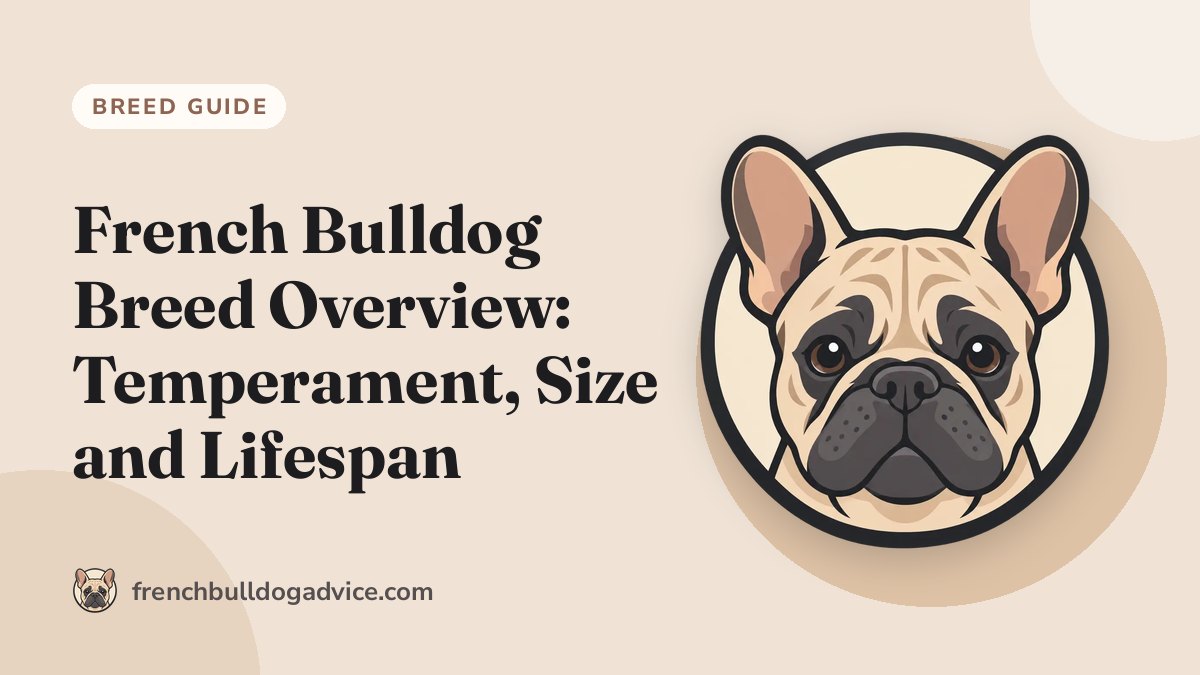
The French Bulldog is a small, muscular, heavy-boned dog with a short, smooth coat. Key features include the large bat ears, a square head, a short muzzle with a defined stop, and a compact, slightly pear-shaped body.
| Feature | Typical range |
|---|---|
| Height at shoulder | Commonly around 11 to 13 inches (28 to 33 cm); the FCI standard allows 27 to 35 cm for males and 24 to 32 cm for females |
| Adult weight | No more than 28 pounds (about 13 kg) under the AKC standard; the FCI standard allows 9 to 14 kg for males and 8 to 13 kg for females |
| Coat | Short, fine, smooth, single coat |
| Shedding | Low to moderate, with seasonal increases |
| Typical lifespan | Often cited as around 10 to 12 years, though UK veterinary data point to shorter lives (see below) |
The American Kennel Club standard states that a French Bulldog should not exceed 28 pounds. Other kennel clubs use slightly different ranges; the FCI standard, for example, sets 9 to 14 kg (about 20 to 31 pounds) for males and 8 to 13 kg (about 18 to 29 pounds) for females. Individual dogs vary, and a healthy body condition matters far more than a number on the scale.
Frenchies come in a range of accepted colors and patterns: fawn, cream and white, along with brindle and pied (piebald) patterns. For a deeper look, see French Bulldog colors explained.
Lifespan and health
A French Bulldog’s lifespan is commonly quoted as about 10 to 12 years, but research based on UK veterinary records paints a less rosy picture. A 2022 study of UK life tables estimated a life expectancy at birth of about 4.5 years for French Bulldogs, the shortest of the 18 breeds studied, although the authors noted the result may be skewed by the breed’s recent rapid rise in popularity, which means the population is weighted toward young dogs. An earlier study of UK French Bulldogs under veterinary care in 2013 likewise found a young median age at death. Individuals can live shorter or longer lives depending on genetics, health and care. Responsible breeding, a healthy weight, preventive veterinary care and sensible lifestyle choices all help.
The breed has several well-recognized health concerns that every owner should understand:
- Breathing problems: their flat faces put them at risk of BOAS (Brachycephalic Obstructive Airway Syndrome).
- Heat sensitivity: they overheat easily, so hot weather safety is essential.
- Spinal issues: they are prone to IVDD and other back problems.
- Skin and allergies: skin fold dermatitis is a recognized breed predisposition, and some Frenchies also develop allergies.
- Eye problems: such as cherry eye and corneal ulcers, partly due to their prominent eyes.
- Ear infections: ear canal inflammation (otitis externa) was the most commonly recorded disorder in a large UK study of French Bulldogs.
- Breeding difficulties: a UK study of emergency clinic records found French Bulldog females had 15.9 times the odds of a difficult birth (dystocia) compared with crossbred females, the highest of any breed studied, and those with problems were more likely to need a C-section. A 2021 study of general practice records found about 9 times the odds compared with all other dogs; the figures differ because the studies used different comparison groups.
None of this means a Frenchie will be unhealthy, but it does mean owners should budget for vet care and consider pet insurance early, before any conditions are diagnosed.
Care needs at a glance
Exercise
French Bulldogs need daily activity, but not a lot of it. Short walks and indoor play are usually enough. Avoid strenuous exercise, especially in warm weather. See our exercise needs guide for details.
Grooming
Their short coat is easy to maintain with a weekly brush. The more important routine is cleaning and drying their facial folds and checking ears, nails and paws. Our skin fold care guide and grooming guide walk you through it.
Feeding
Frenchies love food and can gain weight easily. Measured meals and limited treats help keep them lean, which supports both breathing and spinal health. See best food for French Bulldogs.
Training
Positive, reward-based training works best. House-training can take patience, so consistency is key. Our house-training guide can help.
Who is the French Bulldog best suited to?
Frenchies are a great match for people who want an affectionate, low-exercise companion and who are home a fair amount. They suit apartment living, quieter households and owners in cooler climates or with reliable air conditioning. They are less suited to people looking for a running partner, those who are away all day, or anyone unprepared for potentially significant veterinary costs. If you are still deciding, our honest checklist may help.
FAQ
Are French Bulldogs good for first-time owners?
They can be, provided the owner researches the breed’s health needs and is prepared for vet costs, heat precautions and some stubbornness in training. Their small size and moderate exercise needs make day-to-day care manageable.
How big do French Bulldogs get?
Most adults stand around 11 to 13 inches at the shoulder. The AKC standard sets a maximum of 28 pounds, while the FCI standard allows 9 to 14 kg for males and 8 to 13 kg for females.
Do French Bulldogs bark a lot?
They are generally not big barkers compared with many small breeds, though they will alert you to visitors. Expect plenty of other noises, including snoring, grumbling and snorting.
How long do French Bulldogs live?
Lifespan is often cited as about 10 to 12 years, although UK studies of veterinary records have found much shorter average lifespans. Keeping your dog lean, managing heat carefully and staying on top of preventive vet care all give your Frenchie the best chance of a long, comfortable life.
Sources
- Official Standard of the French Bulldog — American Kennel Club
- French Bulldog History: A Complicated Past From Brothels to Royals — American Kennel Club
- FCI Standard No. 101: French Bulldog — Fédération Cynologique Internationale
- Demography and disorders of the French Bulldog population under primary veterinary care in the UK in 2013 — Canine Genetics and Epidemiology (Royal Veterinary College VetCompass), via PMC
- Life tables of annual life expectancy and mortality for companion dogs in the United Kingdom — Scientific Reports (Royal Veterinary College VetCompass), via PMC
- French bulldogs more prone to birthing problems than other breeds — Royal Veterinary College (VetCompass)
- French Bulldogs differ to other dogs in the UK in propensity for many common disorders: a VetCompass study (O’Neill et al., 2021) — Canine Medicine and Genetics (Royal Veterinary College VetCompass), via PMC