
The two breeds share a name, a flat face and a famous snore, but a Frenchie is not simply a shrunken Bulldog. They differ clearly in size, ears and build, and share most of their health worries.
Quick answer: French Bulldogs are smaller than English Bulldogs: the AKC caps them at 28 pounds, while English Bulldogs are about 50 pounds for males and 40 pounds for females. Frenchies have upright bat ears; English Bulldogs have folded rose ears and a heavier, low-slung build. Both are flat-faced breeds with high risks of breathing problems, overheating and skin fold infections.
French Bulldog vs. English Bulldog at a glance
Wording comes from the AKC standards and The Royal Kennel Club (both call the larger breed the “Bulldog”); health figures come from VetCompass studies.
| Feature | French Bulldog | English Bulldog (Bulldog) |
|---|---|---|
| Weight (AKC standard) | Must not exceed 28 lb (about 13 kg) | About 50 lb for males, about 40 lb for females |
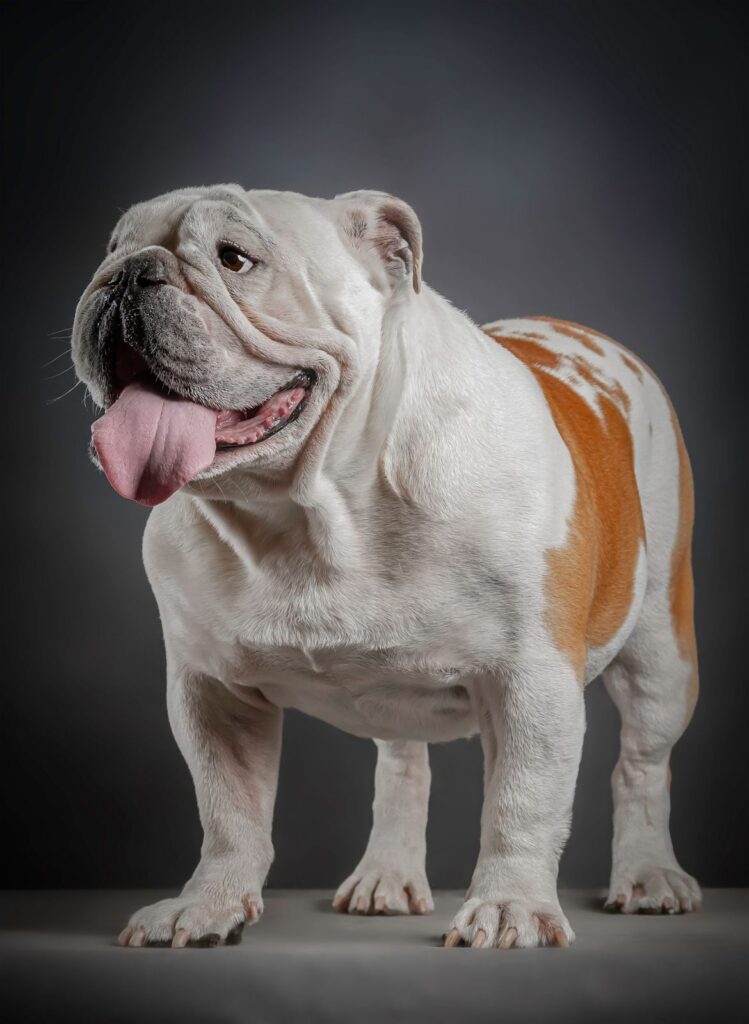
| Ears | “Bat ears”: broad at the base, rounded at the top, carried erect | “Rose ears”: small, thin and folded; never erect |
| Build | Compact, muscular and heavy-boned, with a square head | Heavy, thick-set and low-slung, with a massive head, wide shoulders and a rolling gait |
| Temperament (AKC standard) | Affectionate, even-tempered, adaptable; active, alert and playful but “not unduly boisterous” | Equable and kind, resolute and courageous; “pacific and dignified” |
| Exercise (Royal Kennel Club) | Up to 1 hour per day | Up to 1 hour per day |
| Grooming (Royal Kennel Club) | Once a week; keep facial folds clean and dry | Once a week; heavier facial wrinkles and a dewlap need regular fold care |
| Heat tolerance | Poor; about 6.5 times Labradors’ odds of heat-related illness in one UK study | Poor; about 14 times Labradors’ odds in the same study |
| Lifespan | Royal Kennel Club: over 10 years | Royal Kennel Club: under 10 years; a 2022 VetCompass study cites a median of 7.2 years |
Size, build and ears
Real dogs follow the standards: VetCompass median weights were about 12.5 kg (roughly 27 pounds) for French Bulldogs and 25.5 kg (roughly 56 pounds) for English Bulldogs.
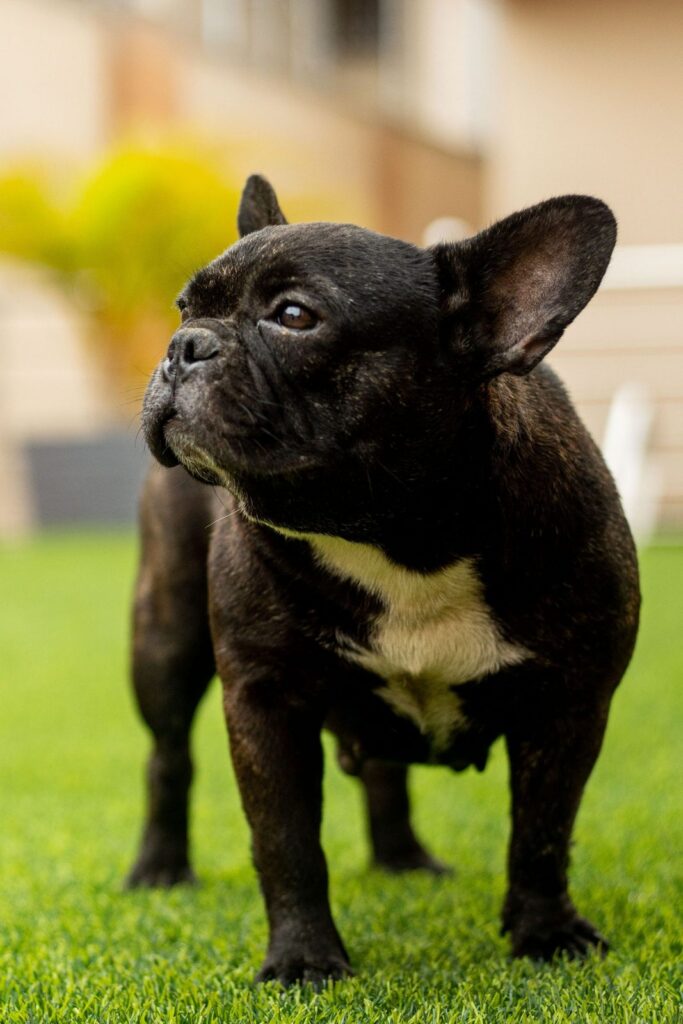
The Bulldog moves with a loose, shuffling “roll”; the lighter Frenchie has a “four tracking” gait. Ears settle it at a glance: bat ears are required for Frenchies, and Bulldog ears are never erect.
The family link is real: the Bulldog descends from bull-baiting dogs, and small bulldogs taken to France by Nottingham lace makers became the bat-eared Paris favorite (see French Bulldog history and our French Bulldog breed overview).
Temperament and exercise
Both are bred as companions. Bulldogs are typically gentle with family but strong-willed; Frenchies are intelligent with a stubborn streak.
Exercise needs match: short, gentle walks and play rather than runs or hikes. Heat is the real limit. Both ranked among the UK breeds with the highest heatstroke incidence in 2016, with heavier bodyweight and a flat skull adding risk. In a hot climate, either breed needs air conditioning, walks at the cool ends of the day and skipped exercise on warm days.
Health: two flat-faced breeds with shared problems
Both are brachycephalic, with a shortened skull and muzzle linked to brachycephalic obstructive airway syndrome (BOAS), and The Royal Kennel Club recommends breathing tests before breeding Bulldogs. These VetCompass odds compare each breed with all other UK dogs, not with each other.
| Disorder | French Bulldog (vs. other dogs) | English Bulldog (vs. other dogs) |
|---|---|---|
| BOAS | About 31 times the odds | About 19 times the odds |
| Skin fold dermatitis | About 11 times the odds | About 38 times the odds |
| Other notable predispositions | Narrowed nostrils (stenotic nares), ear discharge, difficult birth (dystocia) | Cherry eye, protruding lower jaw, interdigital cysts, tail disorders |
English Bulldogs had about twice the odds of at least one diagnosed disorder in the study year,. French Bulldogs had increased odds for 20 of 43 common disorders, plus about 9 times the odds of difficult birth. Both teams called for breeding toward a more moderate build.
Which breed is right for you?
A Frenchie is easier to lift for car trips, stairs and vet visits; a Bulldog’s deeper folds need more cleaning. Both need a cool home, gentle exercise, a lean body and an owner ready for airway, eye, skin or ear bills, so plan with our French Bulldog cost guide. Look for a breeder who tests breathing and favors moderate features, or a breed rescue. Also weighing up the smaller Boston? Read French Bulldog vs Boston Terrier, or see our French Bulldog vs Pug comparison.
Vet note: In either breed, noisy breathing at rest, struggling with mild exercise, collapsing or turning blue are not “normal for the breed.” Ask your vet to assess the airway, and if your dog is overheating, start cooling right away, then head to the vet.
FAQ
Which is healthier, a French Bulldog or an English Bulldog?
Neither compares well with longer-muzzled dogs; both have very high odds of BOAS and fold dermatitis. Health depends heavily on breeding, weight and care.
Which breed is better for apartments?
Either can suit a cool apartment; a Frenchie is easier to carry up stairs. Our honest Frenchie checklist can help you decide.
Sources
- Official Standard of the French Bulldog — American Kennel Club
- Official Standard of the Bulldog — American Kennel Club
- Bulldog breed information — The Royal Kennel Club
- French Bulldog breed information — The Royal Kennel Club
- French Bulldogs differ to other dogs in the UK in propensity for many common disorders: a VetCompass study — Canine Medicine and Genetics (Royal Veterinary College VetCompass), via PMC
- English Bulldogs in the UK: a VetCompass study of their disorder predispositions and protections — Canine Medicine and Genetics (Royal Veterinary College VetCompass), via PMC
- Incidence and risk factors for heat-related illness (heatstroke) in UK dogs under primary veterinary care in 2016 — Scientific Reports (Hall, Carter and O’Neill), via PMC