
Planning a trip and wondering whether your Frenchie can come along? Flying with a French Bulldog is possible, but it takes more planning than flying with most dogs. That flat face that makes Frenchies so charming also makes them more vulnerable to heat, stress and breathing trouble in transit, and many airlines no longer accept snub-nosed breeds in the hold at all. This guide explains why the risks are higher, what airline rules typically look like, how to prepare, and when leaving the plane out of your plans is the kinder choice.
Key takeaways
- Flat-faced dogs face higher risks in air travel because of their narrow airways and poor heat tolerance.
- Many airlines refuse snub-nosed breeds as checked pets, so the cabin is usually the only option.
- In-cabin carriers must fit under the seat, and many adult Frenchies are too big to fit comfortably.
- Sedation is generally discouraged for flat-faced dogs; ask your vet about safer ways to reduce stress.
- Airline and entry rules change often, so confirm every detail before you book.
Can French Bulldogs fly safely?
Some can, but the margin for error is smaller than for long-nosed breeds. French Bulldogs are brachycephalic: their short skulls leave soft tissue crowded into a narrow airway. Many have some degree of brachycephalic obstructive airway syndrome (BOAS), which means they already work harder to breathe at rest. Add stress, a warm cabin or tarmac, and hours inside a carrier, and that extra effort can tip into a real emergency.
Heat is a big part of the problem. Dogs cool themselves mainly by panting, and a flat face makes panting less efficient. A stressed dog pants more, gets warmer, and pants harder still. Our guide to French Bulldog heat safety explains this cycle in detail.
The data back this up. A CDC study of dogs imported into the United States from 2010 to 2018 found that brachycephalic breeds had nearly four times the odds of death or illness during travel compared with other dogs (adjusted odds ratio 3.88). Compared with dogs hand-carried on flights, the odds were also higher for dogs shipped as air cargo (adjusted odds ratio 2.41) and highest for dogs flown as checked baggage (adjusted odds ratio 5.74).
French Bulldog airline policy: what to expect
Every airline sets its own rules, and they change. As of 2026, the general pattern at major US airlines looks like this, but always check the airline’s current pet page before booking.
Checked bags and cargo
Many airlines will not carry snub-nosed breeds in the hold. American Airlines, for example, says (as of 2026) that it does not accept brachycephalic or snub-nosed dogs “of any mix” as checked pets, and its list includes “Bulldog (all breeds).” That restriction applies to checked pets; it is not an in-cabin ban. American also limits checked pets to active-duty military and State Department Foreign Service staff traveling on official orders, and it applies heat restrictions to pets traveling outside the cabin.
In the cabin
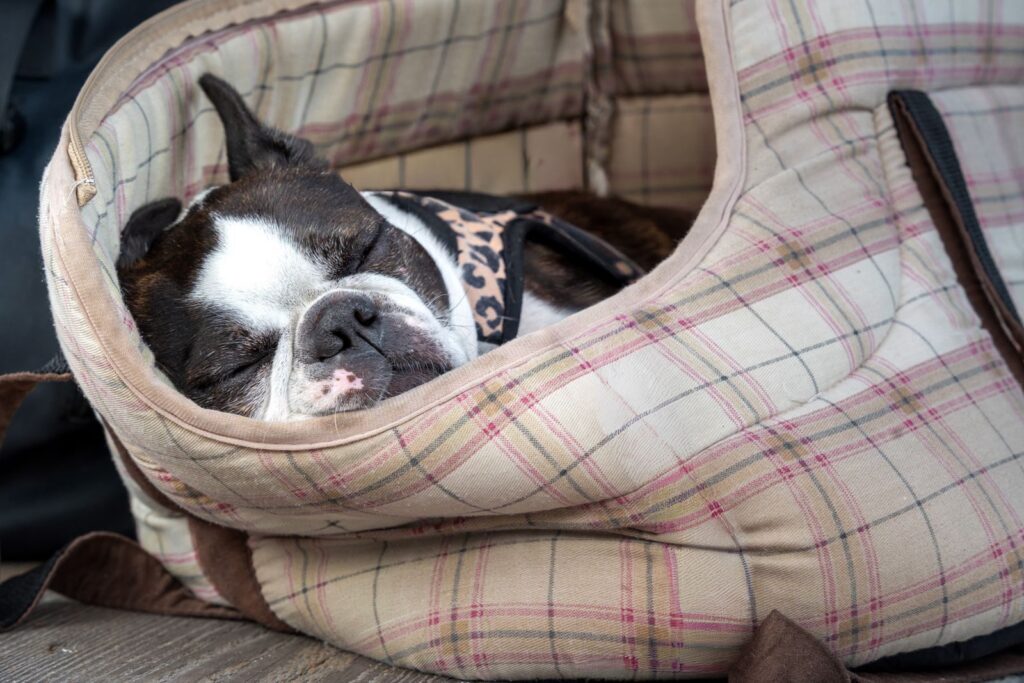
For most Frenchie owners, a French Bulldog in cabin is the realistic option. The basic rules tend to be similar from airline to airline:
- The carrier must fit under the seat in front of you and stay there for the whole flight.
- Your dog must fit comfortably inside it. Delta, for example, says your pet must be able to move around without touching or sticking out of the sides.
- Size limits are tight. As of 2026, American and Delta both list 18 x 11 x 11 inches as the recommended size for a soft-sided carrier.
- There is a fee, and the number of pets allowed on each flight is limited, so book your dog’s spot early.
- Some seats are off-limits, such as bulkhead and exit rows, because there is no under-seat space.
Some airlines also set a weight limit for the pet and carrier combined. American, for instance, sets a 20-pound limit for its dedicated pet compartments on one premium-cabin aircraft type. The authors of a 2023 survey on dogs and air travel noted that, in their experience, most international flights restrict cabin travel to small dogs under 8 kg (about 17.6 pounds).
| Travel option | What it usually means for a Frenchie |
|---|---|
| In the cabin, under the seat | The main option, if your dog fits the carrier and any weight limit |
| Checked baggage | Often banned for snub-nosed breeds, and higher risk in the CDC data |
| Cargo or pet shipping service | Restricted for flat-faced breeds at many airlines; also higher risk |
| Driving or ground transport | Often the safest choice, because you can watch your dog and stop whenever you need to |
The size problem
Here is the catch: French Bulldogs are compact, but they are not tiny. The French Bull Dog Club of America breed standard allows weights up to 28 pounds, and many healthy adults are well above typical cabin weight limits. Width matters too. A broad-chested Frenchie in an 11-inch-high carrier may not be able to stand or turn around. Before you book, measure your dog, weigh your dog in the carrier, and check whether they can lie down and shift position without pressing against the sides. A cramped carrier adds stress and heat.
Preparing for flying with a French Bulldog
Start with a vet visit
Book an appointment well ahead of your trip. Your vet can assess your dog’s breathing and general fitness to fly and tell you honestly whether air travel is a reasonable risk for your dog. Dogs with moderate or severe BOAS signs, heart problems or excess weight may be better off staying on the ground. Ask whether your airline or destination needs a health certificate. For international trips, talk to your vet as soon as you decide to travel, since some countries require vaccines, tests or paperwork that take weeks or months to complete.
Ask your vet about sedation, not the internet
Sedating a flat-faced dog for a flight is generally discouraged. American Airlines, citing American Veterinary Medical Association (AVMA) guidance, does not accept sedated or tranquilized pets, because they face a higher risk of breathing and heart problems at altitude. The authors of the 2023 survey add that any anti-anxiety medication should be tested well before travel and used only under the guidance of a vet familiar with these medications. Never give your dog any medication for travel without your vet’s advice.
Make the carrier a happy place
Start weeks or even months ahead. Leave the carrier open at home, toss treats inside, feed meals near it, and reward calm time inside with the door closed. The same reward-based steps used in French Bulldog crate training work well here. A dog who already sees the carrier as a safe den will usually cope better with airport noise and crowds.
Plan the flight itself
- Choose direct flights. The 2023 survey authors suggest choosing the most direct route possible, since connections with multiple takeoffs and landings may be more stressful.
- Avoid hot months and hot routes. Fly early in the morning or late in the evening when it is cooler, especially in summer.
- Skip the heavy meal. Offer a light meal a few hours before travel rather than a full meal right before you leave.
- Bring water. Offer small sips during the trip, and use a cooling mat if it fits in the carrier.
- Keep the carrier ventilated. Never cover the mesh panels completely.
Watch for signs of distress
Some panting is normal for a nervous Frenchie, but know the difference between mild stress and trouble. In the 2023 survey, owners most often reported panting, trembling and whining as signs of stress. Our article on why French Bulldogs pant so much covers what is normal. Tell the cabin crew right away if your dog shows:
- Loud, harsh or noisy breathing that keeps getting worse
- Gums or tongue turning very dark red, bluish or gray
- Heavy drooling, collapse, or not responding to you
- Vomiting or repeated gagging
These can be signs of overheating or an airway crisis. If your dog is overheating, start cooling right away with cool water on the neck, belly and inner thighs and call a vet: cool first, transport second.
Flying internationally with a Frenchie
International trips add a second set of rules: those of your destination country and, when you come home, the United States. As of 2026, the CDC says dogs entering the US that have only been in dog rabies-free or low-risk countries for the previous six months must be at least six months old, have a microchip that a universal scanner can detect, appear healthy on arrival, and travel with a receipt from the online CDC Dog Import Form. Dogs that have been in high-risk countries face extra requirements. Other countries may require specific vaccines, blood tests, waiting periods or quarantine. Start planning months ahead and confirm every step with the official government sources and your vet.
Alternatives to flying
For many French Bulldogs, the safest flight is the one they don’t take. Consider these options:
- Driving. You control the temperature, can watch your dog the whole time, and can stop whenever needed. Never leave your Frenchie alone in a parked car.
- Pet-friendly ground transport. Some trains, ferries and professional pet transport services carry dogs. Check their policies and how they manage temperature and supervision.
- Staying home. A trusted pet sitter or a well-run boarding facility may be less stressful than a long journey, especially for a short trip.
Vet note: Not every Frenchie is a good candidate for air travel. A pre-trip check lets your vet assess your dog’s airway, weight and heart, and talk through ways to manage stress that are safe for a flat-faced dog. If your vet advises against flying, take that advice seriously.
FAQ
Can French Bulldogs fly in the cabin?
Often, yes, if your dog fits comfortably in a carrier that goes under the seat and meets the airline’s size and any weight limits. Many adult Frenchies are too big, so measure and weigh your dog before booking.
Why do airlines ban French Bulldogs from cargo?
Flat-faced breeds are more likely to have breathing trouble and overheat in transit. A CDC study of imported dogs found brachycephalic breeds had nearly four times the odds of death or illness in transit, which is why many airlines no longer accept them as checked pets.
Should I sedate my French Bulldog for a flight?
Not without your vet’s direct advice. Sedation is generally discouraged for flat-faced dogs, and some airlines refuse sedated pets. Your vet can suggest safer ways to manage stress, such as carrier training.
How early should I start preparing?
For domestic trips, start carrier training and book a vet visit several weeks ahead. For international trips, start months ahead, because vaccines, microchips, tests and paperwork can take time.
Sources
- Risk factors for death and illness in dogs imported into the United States, 2010–2018 — Transboundary and Emerging Diseases (CDC authors), via PMC
- How Well Do Dogs Cope with Air Travel? An Owner-Reported Survey Study — Animals (MDPI), via PMC
- Traveling with pets — American Airlines
- Pet Travel Overview — Delta Air Lines
- Entry Requirements for Dogs from Dog-Rabies Free or Low-Risk Countries — Centers for Disease Control and Prevention
- Breed Standard — French Bull Dog Club of America