
French Bulldog puppy classes are one of the easiest ways to combine early training with safe socialization, but quality varies a lot. Here is when to start, what a good class looks like, the red flags, and what a Frenchie needs that other puppies may not.
Quick answer: A French Bulldog puppy can usually start puppy classes at 7 to 8 weeks, once they have had at least one set of vaccines at least 7 days before the first class and a first deworming, according to AVSAB. Choose a small, reward-based class on easy-to-clean indoor floors, with supervised play and a trainer who avoids punishment.
Key takeaways
- AVSAB calls the first three months the most important window for puppy socialization.
- Classes can start at 7-8 weeks: one set of vaccines 7+ days before class, plus a first deworming.
- Pick reward-based classes only. Avoid choke, prong and shock collars and any “dominance” talk.
- Look for small groups, clean indoor floors and supervised play between well-matched puppies.
- Frenchies need a cool room, short sessions, breathing breaks and a harness instead of a collar.
When can a French Bulldog puppy start training classes?
Waiting until the vaccine course is finished means missing much of the first three months, which AVSAB calls the most important window for puppy socialization. AVSAB says socialization before full vaccination should be the standard of care, because maternal immunity, first vaccines and appropriate care make the risk of infection relatively small compared with the chance of death from a behavior problem.
AVSAB’s guidance for classes is specific:
- Age: puppies can generally start socialization classes as early as 7 to 8 weeks.
- Vaccines: at least one set of vaccines, given at least 7 days before the first class, and kept up to date throughout the course.
- Parasites: a first deworming before starting, and each puppy should be free of disease and parasites.
- Venue: where possible, surfaces that are easily cleaned and disinfected, such as indoor floors.
AVSAB also advises avoiding dog parks and other busy, unsanitized places for now. For how class timing fits with your puppy’s injections, see the French Bulldog puppy vaccination schedule, and ask your vet whether they are happy with a class’s vaccine rules.
Why French Bulldog puppy classes matter
The American Veterinary Society of Animal Behavior (AVSAB) describes the first three months of life as the primary and most important time for puppy socialization, because it is the period when sociability outweighs fear. Incomplete socialization during this time can raise the risk of fear, avoidance and aggression later in life.
A good class offers what is hard to recreate at home: calm, controlled time around other puppies and new people, where the risk of illness is kept low. AVSAB says classes before three months of age can improve training and strengthen your bond. Our guide to socializing a French Bulldog has a week-by-week plan for outside class.
What a good puppy class looks like
The RSPCA notes that anyone can call themselves a dog trainer, so check before you book. Signs of a well-run class:
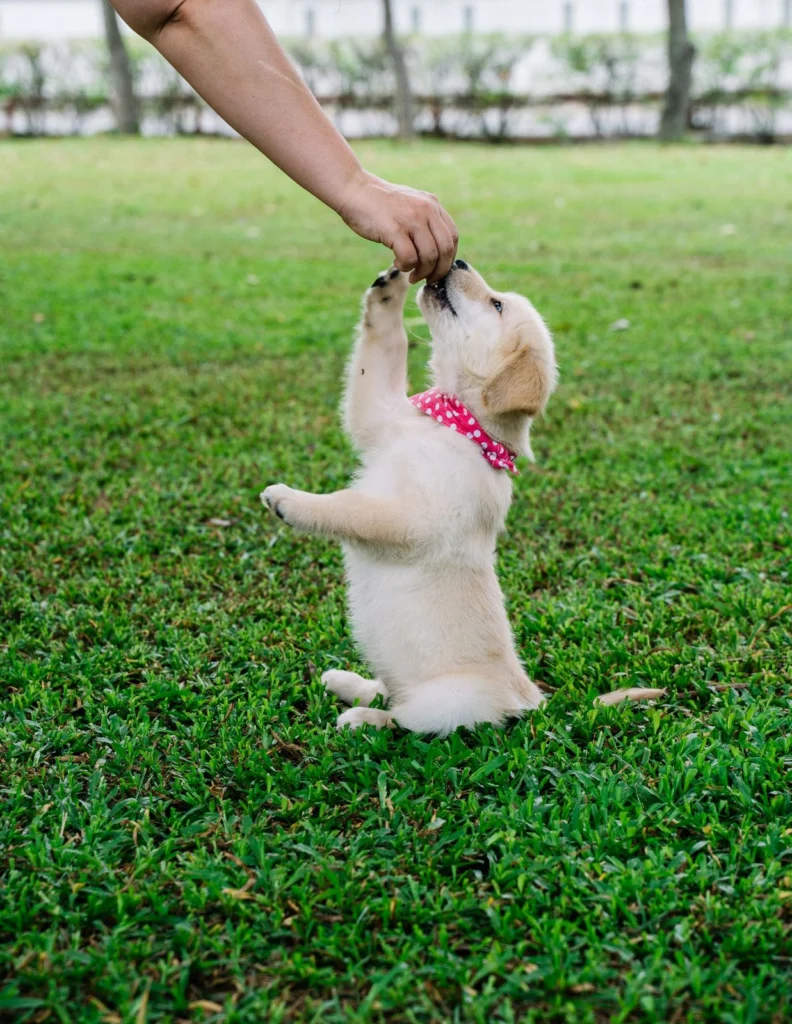
- Reward-based methods only. AVSAB says classes and home training should rely on positive reinforcement with frequent rewards: praise, petting, play or treats.
- Small groups. AVSAB advises small classes so each owner gets individual help, or assistants to support the instructor. The RSPCA cites the Association of Pet Dog Trainers (APDT UK) recommendation of no more than 8 puppies per class with an instructor and one assistant.
- Health rules. Vaccine requirements, and sick puppies stay home.
- A calm atmosphere. The RSPCA says lots of shouting or barking points to high stress levels.
- Supervised, matched play. An AKC article stresses supervised, rather than free-for-all, play in puppy class, so shy puppies can watch first and join in when they are ready. For playdates, it suggests puppies that are well matched in size and play style.
- You are welcome to watch. AVSAB suggests always asking to observe a class first. If a trainer will not let you, ask yourself (and the trainer) why.
Trainer credentials to look for
Credentials don’t guarantee great teaching, but they show a trainer has been assessed. In the US, the Santa Fe Humane Society suggests looking for trainers certified through the Certification Council for Professional Dog Trainers (for example CPDT-KA or CPDT-KSA, which require passing an exam and at least 300 hours of training experience), the International Association of Animal Behavior Consultants (IAABC), or the Karen Pryor Academy (KPA CTP). In the UK, the RSPCA points owners to the Animal Behaviour and Training Council (ABTC), which sets standards and keeps a register of assessed instructors. We don’t endorse individual businesses; use these registers as a starting point, then watch a class.
Red flags: when to walk away
| Red flag | Why it matters |
|---|---|
| Choke, prong (pinch) or shock collars | AVSAB advises avoiding trainers who routinely use them; punishment risks increased fear and inhibited learning. |
| Talk of “dominance,” “alpha” or being the pack leader | The Santa Fe Humane Society advises avoiding trainers who talk this way. AVSAB says positive, consistent training is linked with fewer behavior problems than methods that involve punishment or encourage human dominance. |
| Alpha rolls, leash pops, pushing a puppy into position | AVSAB advises avoiding trainers who use physical force such as alpha rolling or pushing a dog into position, and the Santa Fe Humane Society adds leash pops and any physical manipulation. |
| Crowded, free-for-all rough play | The AKC warns that shy puppies who are repeatedly rolled, bitten and chased can become more fearful, not more confident. |
| Guaranteed results | AVSAB notes that behavior is variable, so a conscientious trainer won’t guarantee outcomes. |
During play, the AKC says to watch for a tucked tail, trembling, a hunched posture, pinned-back ears or whale eye (the whites of the eyes showing). The AKC suggests a “consent test”: gently hold back the bolder puppy and see whether the other comes back for more or walks away.
Frenchie-specific needs in puppy classes
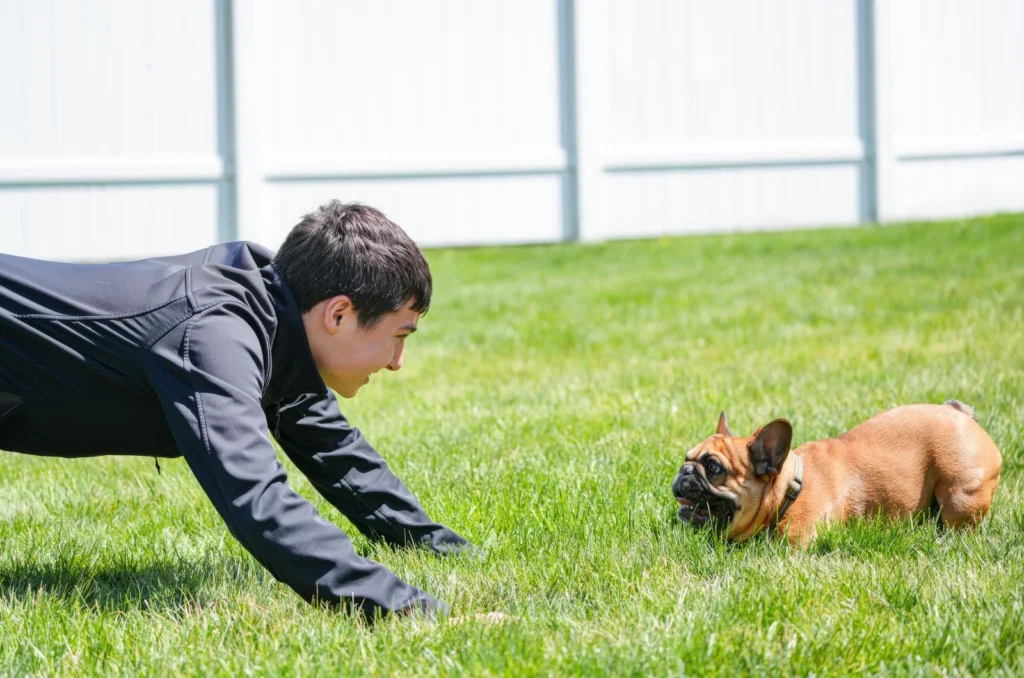
As a flat-faced breed, Frenchies can struggle to cool down and breathe during exertion, so a few adjustments help:
- A cool room. Ask about ventilation or air conditioning, especially in summer. Skip outdoor classes on hot or humid days, and learn the warning signs in our French Bulldog heat safety guide.
- Breathing breaks. Loud, fast panting, noisy breathing or a puppy who lies down and won’t re-engage means it’s time for a rest.
- Short sessions. Dogs Trust recommends keeping training sessions to five to 10 minutes at a time.
- Harness, not collar. Clip the leash to a well-fitted harness to keep pressure off the throat. See our guide to the best harness for French Bulldogs.
- Water and small treats. Bring fresh water and tiny, soft treats.
- Gentle play partners. Ask for play with puppies of a similar size and energy, and avoid long, chase-heavy games.
What puppies typically learn in class
Content varies, but typical puppy-class topics include:
- Responding to their name and checking in with you
- Sit, down and a first recall (“come”)
- Early loose-leash walking on a harness
- Settling calmly on a mat while other things happen
- Gentle mouth manners and handling of paws, ears and mouth
- Meeting new people and puppies calmly
Online and private options
If there’s no suitable group class nearby, or your puppy finds groups overwhelming, private sessions let a trainer tailor the pace and work in your home. Online courses help with cues and routines but can’t replace real-life socialization, so pair them with safe outings. The same rules apply: reward-based methods and no aversive equipment.
Vet note: Check with your vet before the first class that your puppy’s vaccines and deworming meet the class’s requirements and that your vet is comfortable with its health rules. Keep your puppy home if they have diarrhea, vomiting, coughing or seem unwell. Breathing that stays noisy or labored after a short rest is worth discussing with your vet.
FAQ
When can my French Bulldog puppy start puppy classes?
According to AVSAB, usually from 7 to 8 weeks, as long as your puppy has had at least one set of vaccines at least 7 days before the first class, a first deworming, and stays up to date with vaccines throughout the course.
Is it safe to go to puppy class before all vaccines are done?
AVSAB considers socialization before full vaccination the standard of care when classes follow health rules. Ask your vet about local disease risks.
Is my Frenchie too stubborn for classes?
No. Frenchies can be strong-willed, but they usually respond well to reward-based training with short sessions and tasty treats. Punishment tends to make learning harder, not easier.
How do I find a good French Bulldog puppy class near me?
Use trainer registers as a starting point: CCPDT, IAABC or Karen Pryor Academy in the US, or the ABTC in the UK. Then ask to watch a class first and check for reward-based methods, small groups and clear vaccine rules.
Should my French Bulldog wear a collar or harness to class?
A harness for the leash is the safer choice for a flat-faced breed. Keep an ID tag on a light collar or on the harness.
Sources
- AVSAB Position Statement on Puppy Socialization — American Veterinary Society of Animal Behavior
- How to Choose a Trainer — American Veterinary Society of Animal Behavior (hosted by The Ohio State University Indoor Pet Initiative)
- Choosing a dog trainer or training class — RSPCA
- How to Find a Qualified Trainer — Santa Fe Humane Society
- Getting It Right When It Comes to Puppy Play — American Kennel Club
- Top 10 dog training tips — Dogs Trust