
Your Frenchie suddenly freezes, stretches out their neck and starts making loud, honking snorts, as if they can’t get air in. It is frightening the first time you see it. In many cases, though, this is reverse sneezing, a reflex that veterinary sources describe as usually harmless. French Bulldog reverse sneezing is common enough that knowing what it looks like, what sets it off and when it might point to something else will help you stay calm and know when to call your vet.
Key takeaways
- Reverse sneezing is a reflex: the dog pulls air in through the nose in loud snorts, usually for seconds up to about a minute.
- PDSA lists flat-faced breeds, including French Bulldogs, as prone because of their overlong soft palate.
- During an episode, stay calm, speak softly and gently stroke your dog’s neck or head.
- A dog who reverse sneezes should be completely normal before and after. Trouble breathing between episodes is not reverse sneezing.
- Film episodes for your vet, and get help fast for blue gums, collapse or nonstop breathing distress.
What is reverse sneezing?
In a normal sneeze, air is pushed out through the nose. In a reverse sneeze, the dog rapidly pulls air in through the nose instead. VCA Animal Hospitals notes that the clinical name is paroxysmal respiration, and a 2022 veterinary study from the University of Murcia describes it as a reflex triggered by irritation of the nasopharynx, the space behind the nose at the back of the throat.
Researchers think the spasm may help move mucus from the back of the nasal passages down into the throat, where it can be swallowed. In other words, it is often the body’s way of clearing an irritation, not a sign that your dog is suffocating.
What it looks and sounds like
- A sudden run of loud snorting, honking or “sucking” sounds through the nose
- Your dog stands still, extends the head and neck, and may hold the elbows out from the chest
- Mouth usually closed, with rapid, effortful breaths in
- Episodes lasting several seconds to about a minute (PDSA gives 30 to 60 seconds as typical)
- A dog who goes straight back to normal afterward, as if nothing happened
PDSA points out that it can look as though the dog is choking or struggling to catch their breath, which is why so many owners rush to the vet. Being normal before and after is the most useful clue that you are watching a reverse sneeze.
Common triggers of French Bulldog reverse sneezing
VCA says the exact cause is unknown, but any irritation of the nose, sinuses or back of the throat can set off an episode. Triggers named by VCA and PDSA include:
- Excitement, such as greeting you at the door or the start of play
- Pulling on the leash, especially with a collar pressing on the throat
- Eating or drinking
- Airborne irritants: dust, pollen, smoke, strong odors and air fresheners
- Allergies and excess mucus or nasal secretions
- Foreign material such as grass seeds
- An elongated (overlong) soft palate
- Less commonly, nasal mites or masses in the nose or throat
If episodes seem to come with the seasons or with itchy skin and paws, allergies may be part of the picture. Our guide to French Bulldog allergies explains how vets investigate them.
Why flat-faced breeds like Frenchies may be prone
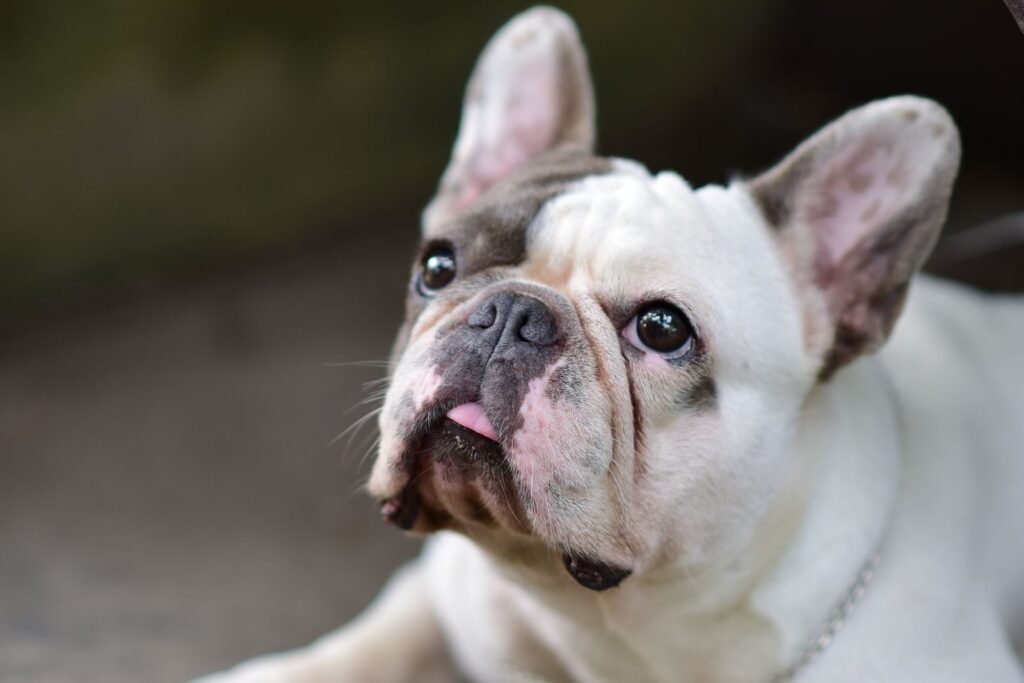
PDSA specifically lists French Bulldogs, along with Pugs, Bulldogs, Pekingese and Shih Tzus, as breeds prone to reverse sneezing, because an overlong soft palate is common in flat-faced dogs and can irritate the back of the throat. VCA also lists an elongated soft palate among possible triggers. An elongated soft palate is one of the main parts of brachycephalic obstructive airway syndrome, which we cover in depth in our guide to BOAS in French Bulldogs.
The evidence has limits. VCA notes that dogs with narrow nasal passages and long noses also seem commonly affected, and in the Murcia study of 30 dogs, half weighed under 5 kg (about 11 lb) and no French Bulldogs were included. There is no large study measuring how often Frenchies reverse sneeze compared with other breeds.
What to do during an episode
Most episodes stop on their own. Your job is mainly to keep things calm:
- Stay calm yourself. Your dog will pick up on panic, and excitement can drag the episode out.
- Speak softly and gently stroke the neck or head. Both VCA and PDSA suggest this, and PDSA adds that some people find gently rubbing the throat helps.
- Offer something to lick or a little water once it eases. VCA says swallowing may help clear an irritant.
- Move away from the trigger if there is an obvious one, such as smoke, a strong scent or a tight collar.
- Grab your phone and film it if you can do so safely (see below).
PDSA mentions that some people gently cover one or both nostrils for a moment to make the dog swallow. In a French Bulldog, whose nostrils and airway may already be narrow, it is safer not to block the nose at all: never cover the nostrils or hold the mouth closed, and stick to calm soothing instead. Do not try to pull the tongue or sweep the mouth unless you can actually see an object, which would make it a choking situation rather than a reverse sneeze.
Film it for your vet
PDSA notes that dogs rarely reverse sneeze during a vet visit, so a video is very helpful. In the Murcia study, owner videos were one of the ways vets confirmed that a dog was truly reverse sneezing. Record a whole episode if you can, plus a short clip of your dog breathing calmly afterward, and note the date, time and what was happening just before.
Reverse sneezing vs. BOAS distress, collapsing trachea or choking
Several problems can produce scary noises in a Frenchie. This table gives a general guide, but only your vet can make a diagnosis. If your dog is gagging, coughing or retching rather than snorting, see why a French Bulldog gags.
| Problem | Typical sound and look | Between episodes | What to do |
|---|---|---|---|
| Reverse sneezing | Loud snorting breaths in through the nose, neck stretched out, mouth closed | Completely normal before and after; lasts seconds to about a minute | Stay calm, soothe, film it; mention it at the next checkup |
| BOAS breathing distress | Noisy breathing, open-mouth breathing, snoring or rasping even when awake; worse with exercise, heat or excitement | Noise and effort often continue; tires easily; may faint or collapse after exercise | Rest in a cool place; emergency care if effort does not settle, gums change color or the dog collapses |
| Collapsing trachea | A dry, honking, repeated cough (a cough, not snorting through the nose); labored breathing | Chronic cough that comes back; more common in toy and miniature breeds and overweight dogs | See your vet; emergency if breathing is labored or gums change color |
| Choking | Difficulty breathing, choking sounds, pawing at the mouth, gagging or drooling | Does not resolve; dog is distressed throughout | Emergency: call your vet straight away |
The key difference is recovery: a reverse sneezing Frenchie bounces back within moments. If you are ever unsure, treat it as an emergency.
Red flags: when to call the vet
An occasional, short episode in an otherwise healthy dog is usually not a worry. The Murcia researchers still advise that reverse sneezing be seen as a possible marker of irritation at the back of the nose, especially when it is frequent. In their study, most dogs had an underlying problem: inflammatory airway disease was most common, followed by anatomical problems, with nasal or throat foreign bodies in 10% of cases. VCA lists infections, collapsing trachea, nasal tumors or polyps, and foreign bodies as conditions vets may need to rule out.
Book a vet visit if:
- Reverse sneezing starts out of the blue, especially in an older dog
- Episodes become more frequent, longer or more intense over time
- Your dog takes a long time to recover after an episode
- There is nasal discharge, nosebleeds, frequent normal sneezing, coughing or pawing at the face
- Episodes affect your dog’s quality of life
Get emergency help immediately if your dog:
- Has blue, purple, gray or very pale gums or tongue
- Faints or collapses during or after an episode
- Has trouble breathing between episodes, or the “episode” does not stop
- Shows signs of choking or overheating
Depending on what they find, your vet may suggest imaging or a camera examination of the nose and throat under anesthesia, and may prescribe medication for inflammation, allergies or congestion. For a broader look at the breed’s common conditions, see our French Bulldog health guide.
Can you reduce episodes?
You cannot switch off a reflex, but you can limit common triggers:
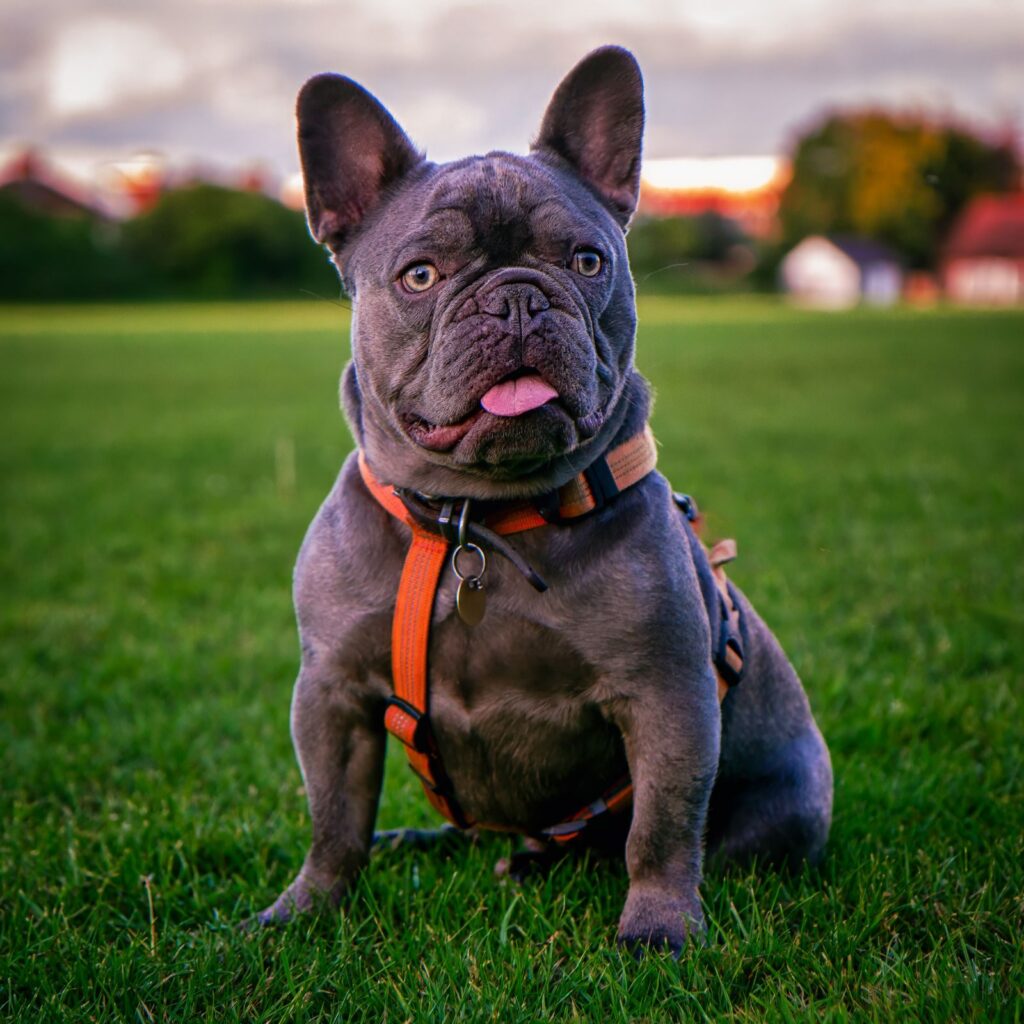
- Walk your Frenchie on a well-fitted harness rather than a collar to keep pressure off the throat.
- Keep greetings and play a little calmer if excitement sets off episodes.
- Avoid smoking around your dog, and go easy on air fresheners, scented sprays and dusty products.
- Keep a simple log of episodes and possible triggers to share with your vet.
Vet note: This article is general information, not a diagnosis. Occasional, brief reverse sneezing in a dog who is otherwise well is usually harmless, but French Bulldogs are prone to airway problems, so mention any episodes at your dog’s next checkup and bring a video. If your dog struggles to breathe between episodes, collapses, or has blue, gray or pale gums, treat it as an emergency.
FAQ
Is reverse sneezing dangerous for my French Bulldog?
A typical episode is not considered dangerous. VCA describes it as having no ill effects, with the dog completely normal before and after. It becomes a concern when episodes are frequent, worsening or come with other signs, because it may then point to an underlying problem in the nose or throat.
How long does a reverse sneezing episode last?
Usually from a few seconds to about a minute. PDSA gives 30 to 60 seconds as typical. If an episode goes on much longer, or your dog doesn’t recover quickly, contact your vet.
Does reverse sneezing mean my Frenchie has BOAS?
Not necessarily. Any dog can reverse sneeze. An elongated soft palate, which is part of BOAS, is one possible trigger, so it is worth asking your vet to assess your dog’s airway, especially if there is also noisy breathing, snoring while awake or poor exercise tolerance.
Why does my Frenchie reverse sneeze when excited or on walks?
Excitement and pressure on the throat from pulling on a leash are both common triggers. Calmer greetings and a harness instead of a collar may help.
Sources
- Reverse Sneeze in Dogs — VCA Animal Hospitals
- Reverse Sneezing in Dogs — PDSA
- Reverse Sneezing in Dogs: Observational Study in 30 Cases — Veterinary Sciences (Talavera et al., 2022)
- Brachycephalic Airway Syndrome in Dogs — VCA Animal Hospitals
- Tracheal Collapse in Dogs — Merck Veterinary Manual
- First aid for choking — PDSA